China began restoring vegetation across the Loess Plateau in 1999; scientists later found groundwater drought intensified as vegetation expanded between 2003 and 2015
China began a large-scale vegetation restoration programme in 1999 to improve the environment.
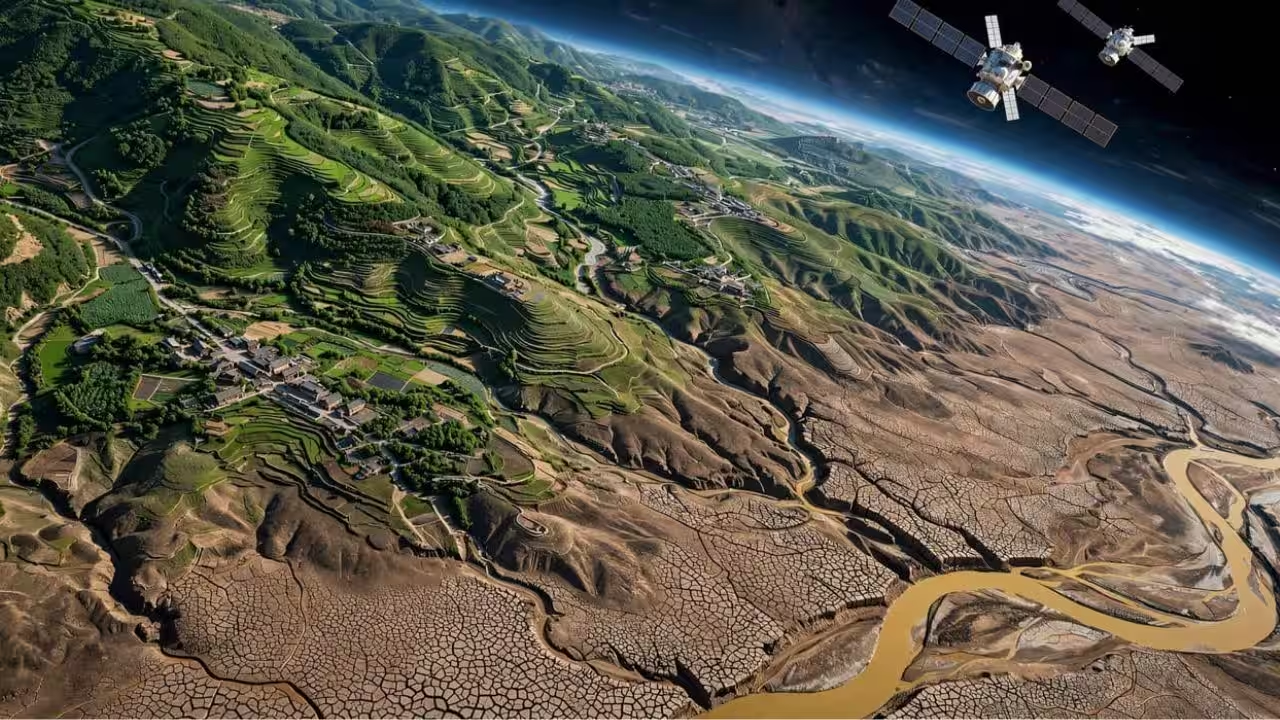
China began a large-scale vegetation restoration programme in 1999 to improve the environment. On the Loess Plateau, however, the rapid growth of vegetation coincided with a decline in groundwater storage and worsening groundwater drought. The region in north-west China already faces frequent droughts and severe water shortages, making the availability of groundwater important for vegetation and the wider ecosystem. Researchers studied this relationship between 2003 and 2015 to understand how expanding vegetation affected groundwater drought.According to research published in the Journal of Hydrology titled ‘Effects of vegetation restoration on groundwater drought in the Loess Plateau, China’, vegetation growth had a stronger association with groundwater drought than weather conditions.How did groundwater drought change during vegetation restoration on the Loess PlateauThe Loess Plateau experienced rapid vegetation growth from 2003 to 2015, while groundwater storage declined significantly. The researchers found that this decrease was statistically significant, with a p-value below 0.01. Groundwater drought also intensified during this period, affecting a larger area and becoming more severe.The Loess Plateau is a water-limited region where drought frequently affects agriculture and the wider environment. Its fragile ecological conditions make water availability important for sustaining vegetation. The researchers examined changes in groundwater drought alongside vegetation growth to understand their relationship during long-term restoration.How did satellite data help researchers track groundwater droughtThe researchers used observations from the Gravity Recovery and Climate Experiment (GRACE) satellite mission alongside data from the Global Land Data Assimilation System (GLDAS). GRACE measures changes in terrestrial water storage, which includes groundwater, soil moisture, surface water, snow, ice, and biomass. The researchers estimated groundwater storage anomalies by separating the contributions of other water-storage components.They then used a groundwater storage anomaly-based drought severity index, known as GWSA-DSI, to assess groundwater drought conditions across the plateau. This approach allowed them to examine changes over a wider geographical area than studies relying only on groundwater observation wells. The researchers analysed groundwater drought patterns at different spatial and temporal scales and compared them with changes in the Normalised Difference Vegetation Index (NDVI), a measure used to track vegetation growth.How vegetation growth and water scarcity shaped the Loess PlateauThe study found that NDVI was more strongly correlated with groundwater drought than meteorological factors at annual, seasonal, and monthly scales. This relationship was particularly notable near key vegetation restoration areas. The researchers also found that vegetation growth was a dominant factor affecting groundwater drought across the Loess Plateau.In areas where vegetation and groundwater drought showed a significant correlation, the groundwater consumption rate associated with vegetation dynamics was higher than in areas without a significant correlation. These findings indicate that vegetation restoration and groundwater conditions were closely linked during the study period.The Loess Plateau covers approximately 640,000 square kilometres across seven Chinese provinces and autonomous regions in the upper and middle sections of the Yellow River Basin. It is the largest and most concentrated loess region in the world and has long faced severe soil erosion and environmental degradation.You use AI every day. Now get your AI Quotient. Take the AIQ test.
Topics in this story
Gathered from external sources. Rights to this text belong to whoever originally published it.