One man collected it all: Inside Hyderabad’s Salar Jung Museum, one of India’s largest single-collector museums, including the Veiled Rebecca and mysterious musical clock
Imagine an art collection so precious and so rare that a museum can be built around it.
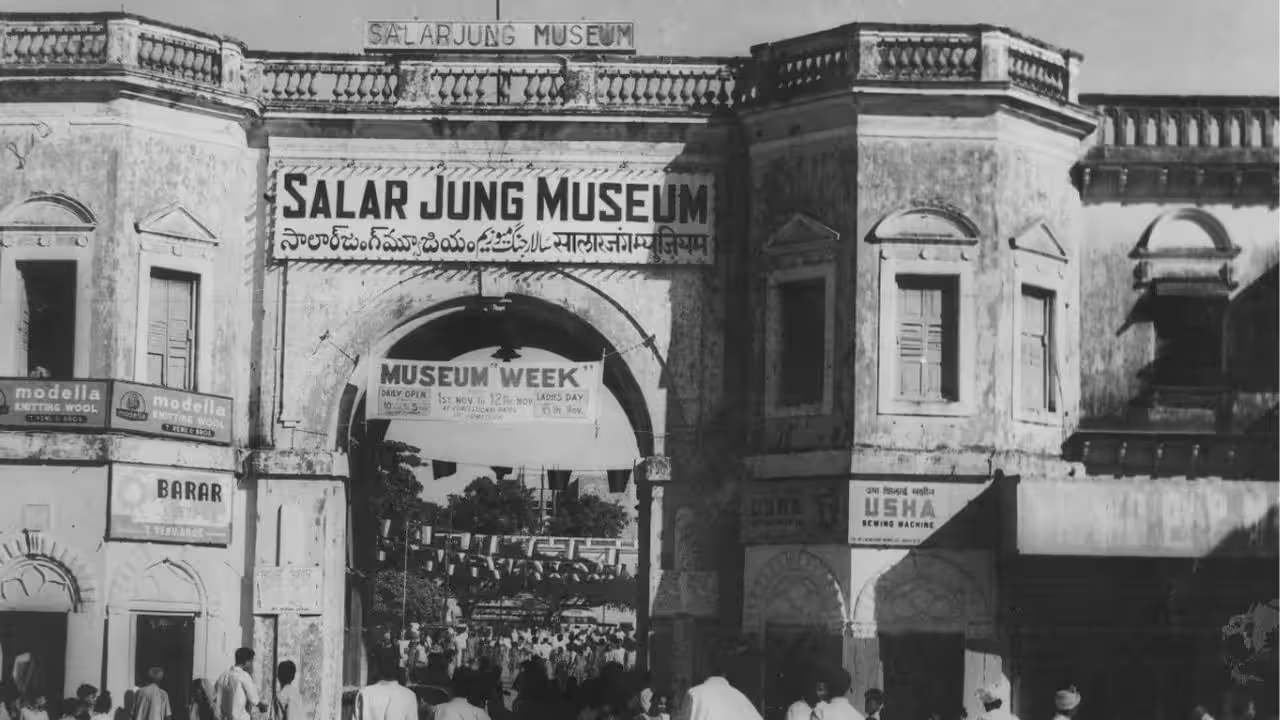
Imagine an art collection so precious and so rare that a museum can be built around it. Well, it happened with the massive art collection of Nawab Mir Yousuf Ali Khan, popularly known as Salar Jung III. Three generations of the Salar Jung family were known for their passion for collecting art and literature. After Salar Jung III died in 1949, his art collection was left without an inheritor. The late Nawab’s family decided to present this treasure to the nation, and thus, the government established a museum around the collection. The museum opened to the public in 1951, and the Salar Jung Museum Act was passed in 1961, declaring it an ‘Institution of National Importance’ by the Government of India.Located on the southern bank of the Musi River and close to the Charminar, the museum offers an unexpected way to explore Hyderabad. Beyond the famous Hyderabadi biryani, dense bazaars and historic monuments lies a world assembled by a man who seemingly couldn't resist bringing a fascinating object home.The man behind the mountain of treasuresThe museum was established in 1951, but the art was collected over decades and came from around the world. After stepping down from the post of Dewan (Prime Minister), Salar Jung III dedicated his life to building a collection of art from around the world. Dewan Deodi, the ancestral residence of the Salar Jung family, was visited by merchants and travellers from all corners of the world, who brought works of art to his attention and offered them for sale.Before him, his family members were also nobles who served as important ministers under the Nizams of Hyderabad. While Salar Jung I (Mir Turab Ali Khan) modernised Hyderabad’s infrastructure and education, Salar Jung III (Mir Yousuf Ali Khan) gathered much of the art we see in the museum today. He was responsible for creating one of the world’s largest private collections.His own travels were also added to the collection. European paintings, Persian carpets, Chinese porcelain, Japanese art, Indian sculptures and exquisite decorative objects eventually found their way into his orbit. The museum, containing a lifetime’s collection, opened to the public on December 16, 1951, and Jawaharlal Nehru, India's first Prime Minister, inaugurated it. It moved to its present building in 1968, which Dr Zakir Husain, President of India, inaugurated.Today, the museum's official collection figures include more than 46,000 art objects, over 8,000 manuscripts and upwards of 60,000 printed books, spread across galleries devoted to Indian, European, Middle Eastern and Far Eastern art. In other words, you could visit the famous highlights and still leave feeling that you have only scratched the surface.Veiled Rebecca: Marble that plays tricks on your eyesIf there is one artwork that deserves a moment of undivided attention, it is the celebrated Veiled Rebecca.At first glance, the sculpture looks like a woman draped in a delicate, almost transparent veil. Look closer, and the real wonder becomes apparent: the veil, its folds and the figure beneath it have all been carved from a single block of marble. The stone seems impossibly soft, as though the artist could have lifted the fabric away with a gentle tug.Created in 1863 by Italian sculptor Giovanni Maria Benzoni, the work depicts Rebecca, a biblical figure. Salar Jung I acquired it during a visit to Italy in 1876. It is one of the museum's prized masterpieces and a striking example of 19th-century Neoclassical sculpture.The cleverness lies in the details: the delicate creases, the fall of the fabric and the way light moves across the marble. You know it is solid stone, yet your eyes insist on seeing cloth. It is the sort of artwork that makes you wonder how much patience, skill and sheer confidence it takes to carve something so fragile-looking out of such an unforgiving material.The musical clock that steals the showThen comes the museum's most entertaining exercise in patience: the musical clock.In the clock gallery, visitors gather around a remarkable 19th-century timepiece, waiting for its miniature timekeeper to make an appearance. When the hour arrives, a small mechanical figure emerges from the clock's upper section and strikes a gong the corresponding number of times. The little performance lasts only a short while, but the anticipation in the room can make it feel like a theatrical event.The clock was acquired by Salar Jung III from the English firm Cook and Kelvey. With its intricate mechanism and moving parts, it is a reminder that clocks were once as much about craftsmanship and spectacle as they were about telling time.There is something delightfully old-fashioned about the whole experience. In an age when a glance at your phone gives you the time instantly, people still gather to watch a tiny figure do its hourly job.Travel tip: Check the clock's display schedule with museum staff when you arrive, so you can plan your visit around its performance rather than accidentally missing the moment.Plan your visitLocation: Salar Jung Road, Darulshifa, Hyderabad, Telangana 500002.Usual visiting hours: 10 am–6 pm; Friday is the weekly holiday. The museum is also closed on gazetted holidays, so check the official website before visiting.You use AI every day. Now get your AI Quotient. Take the AIQ testGet the latest Lifestyle News and more. Download the TOI app.
Topics in this story
Gathered from external sources. Rights to this text belong to whoever originally published it.