In 1994, Arthur and Helen Chapman bought a former Black schoolhouse in Maryland; today, its original blackboard remains
US News: Arthur and Helen Chapman bought Lutherville Colored School No. 24 in Maryland in 1994, when the former two-room schoolhouse had already spent decades .
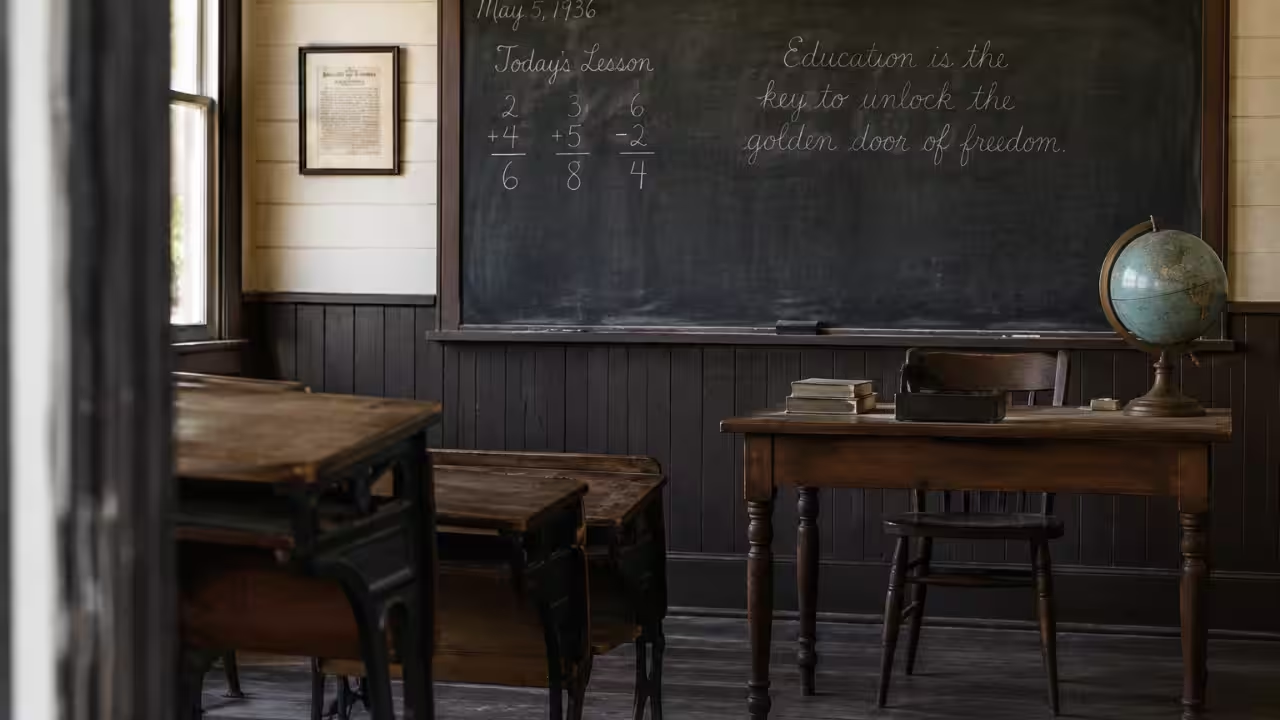
Arthur and Helen Chapman bought Lutherville Colored School No. 24 in Maryland in 1994, when the former two-room schoolhouse had already spent decades out of use. They restored the building and turned it into a museum of African American history. One of the classrooms still contains the original blackboard used by students at the school even after two decades.A two-room school for Black childrenThe schoolhouse was constructed around 1908 and opened in 1909 on School Lane in Lutherville, Baltimore County. It was built for Black children during the era of segregated public education and served students in grades one through seven. The building had two classrooms. The first three grades occupied one room, while grades four through seven used the larger room. Students came from Lutherville and nearby communities including Cockeysville, Beaver Dam, Riderwood, Ruxton, Brightside and Bare Hills.The school did not have indoor bathrooms, so students and teachers used an outhouse. Teaching materials were also limited compared with those available at white schools in the county, according to Baltimore Heritage’s historical account.High school was not an option nearbyFor Black students who wanted to continue their education beyond the elementary grades, opportunities were restricted. Baltimore County did not have a public high school for Black students until Carver High School opened in Towson in 1939. Before that, some students had to attend schools in Baltimore City. For families who could not afford transportation or other costs, continuing their education could be difficult. Lutherville Colored School No. 24 eventually closed in 1955, and the building was later used by Baltimore County for storage.The Chapmans bought the abandoned schoolhouseArthur and Helen Chapman purchased the former school from Baltimore County in 1994. The couple had a family connection to the building through Marie E. Jackson, a former student who had lived across the street. The Chapmans spent more than $100,000 restoring the structure, according to the museum’s own account. They dedicated it as a museum in 1996 in Jackson’s honor.The restoration preserved the building as a schoolhouse rather than turning it into a conventional private residence or commercial property. The museum’s collection includes schoolbooks, report cards, oil lamps, furniture and oral histories connected to the school and the surrounding Black community.The original classroom is still thereThe original blackboard and cement foundation survived, and one classroom has been arranged to show how the school looked during its operating years. The Associated Press documented the preserved blackboard when it reported on Maryland’s former segregated schools. Books, desks and other classroom materials are displayed alongside information about the students who attended.The preservation also keeps the school’s place in Baltimore County’s segregated education system visible. After Brown v. Board of Education in 1954, Maryland’s segregated school system began moving toward integration, and Lutherville Colored School No. 24 closed the following year.A schoolhouse that became a museumThe museum has remained connected to the community more than a century after the school opened. Former students and their families have returned for gatherings, while the building has been used to preserve photographs, documents and memories associated with the school. Arthur and Helen Chapman died in 2021. Their son, David Chapman, later took over ownership, while Karen Darden has helped operate the museum and organize events. The former Lutherville Colored School No. 24 remains at its original location, with its classroom and blackboard preserved as part of the museum.Catch the latest World News and Live updates. Download the TOI app.
Topics in this story
Gathered from external sources. Rights to this text belong to whoever originally published it.