Map shows countries paying people to have babies as birth rate drops
In one country, children can receive up to $55,000 by the time they turn 17.
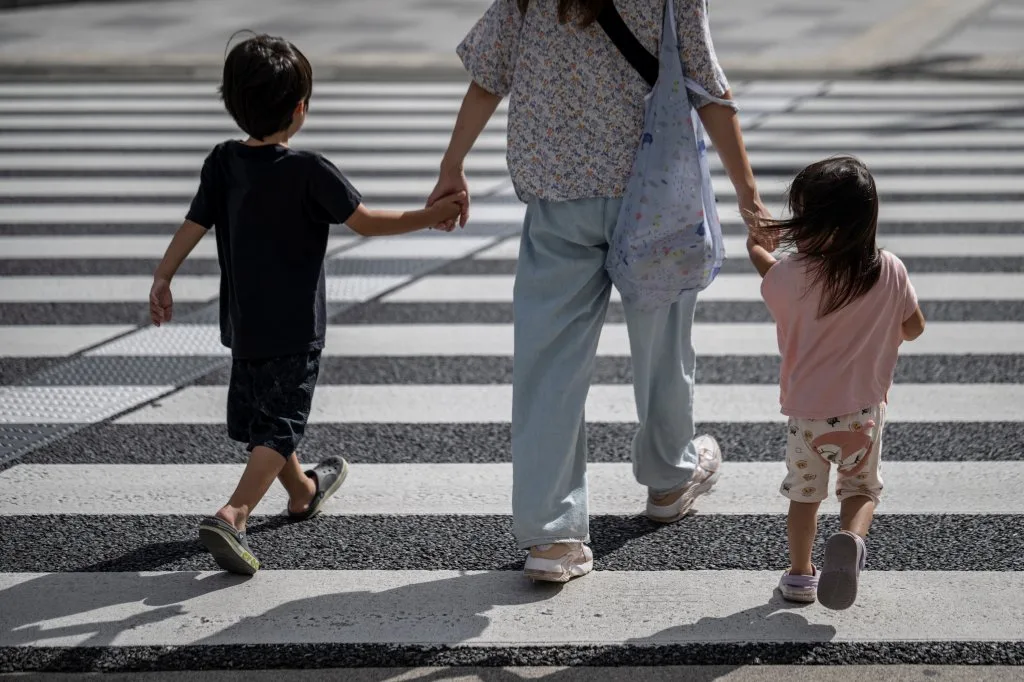
Governments around the world are increasingly offering cash payments, tax breaks, housing subsidies and childcare support in an effort to persuade citizens to have more children as birth rates fall and populations age.
Declining birth rates can strain a country's economy because there aren't enough people being born to support the aging population. That means greater strains on social programs like Social Security and Medicare in the United States since more and more people are using the programs, but not enough people are paying into them. Declining birth rates are a global problem, and a growing number of countries are rolling out increasingly generous pro-family incentives, ranging from direct payments for newborns to years of childcare assistance.
Singapore has spent years expanding financial support for families as it grapples with one of the world's lowest fertility rates. Prime Minister Lawrence Wong recently announced a major expansion of family support measures, emphasizing that the government wants to provide assistance well beyond a child's birth and into the early years of parenting.
Each child will receive almost S$70,000, the equivalent of about $55,000 USD, in direct financial support by the time they turn 17. The program will replace the current program, which includes the Baby Bonus Scheme.
Under the Baby Bonus Scheme, parents are given cash gifts throughout the first six-and-a-half years of a child's life. The first and second child get a total of S$11,000, equivalent to about $8,660 USD, disbursed in six-month increments, and every other child gets S$13,000, equivalent to about $10,236 USD.
Under the Large Families Scheme, which will also be replaced when the new package goes into effect, families can receive an additional $16,000 for each third or subsequent child born after February 18, 2025.
Despite those efforts, Singapore's birth rate remains among the lowest globally. The cash incentives began in 2001 and haven't been able to reverse the declining trend in birth rates.
"Ultimately, the decision to have children is a deeply personal one. Policies alone cannot make this happen. But what we can do is make it easier for Singaporeans who want children to start and raise a family," Wong said in a statement.
China has dramatically shifted from restricting births to actively encouraging them.
After decades of the one-child policy, Chinese officials are now trying to boost fertility as births have fallen and the population has begun shrinking. In 2025, Beijing rolled out a nationwide childcare subsidy that provides families with 3,600 yuan, or about $500, annually for each child under age three.
The subsidy is part of a broader campaign to encourage childbirth and ease the cost of raising children. Chinese authorities have also supported local initiatives that offer even larger payments, including monthly stipends and bonuses for families with multiple children.
"International practices show that cash subsidies are an indispensable part of pro-birth measures," Zhang Benbo, a researcher at a think tank under the National Development and Reform Commission, said in a statement at the time.
The national program is expected to benefit millions of households each year and reflects mounting concern over China's aging population and shrinking workforce.
Japan has become one of the world's most prominent examples of a nation battling demographic decline.
The country's aging population and persistently low fertility rate have prompted officials to expand financial support for families. Government measures include monthly child allowances, a childbirth lump-sum grant that has been increased to 500,000 yen, equivalent to $3,139 USD, and expanded childcare services.
Japan is also launching new childcare and education support initiatives in 2026. These reforms aim to reduce the financial burden of raising children by expanding access to childcare regardless of employment status and broadening financial assistance for families. While unveiling a policy to promote people having kids in 2023, Children's Policies Minister Masanobu Ogura said the next few years are possibly "a last chance" for Japan to change the trajectory of its declining birth rate.
"While diverse views about marriage, childbirth and childrearing should be respected, we want to make a society where young generations can marry, have and raise children as they wish," Ogura said, according to the Associated Press. "The basic direction of our measures to tackle low births is to reverse the trend of declining births by supporting individuals' pursuit of happiness."
Officials have repeatedly said the country's future economic strength depends in part on stabilizing population trends.
South Korea has spent billions of dollars attempting to increase what has frequently been ranked as the world's lowest fertility rate. The government offers an extensive package of benefits that includes monthly allowances for parents, direct birth grants, childcare support, expanded parental leave and housing assistance.
South Korea launched a program in 2022 that gave mothers 2 million won, the equivalent of about $1,500 USD, when they gave birth and then an additional 700,000 won, equivalent to about $500 USD, each month until their child turns one. Then, parents get 350,000 won, equivalent to about $260 USD, per month until they turn 2.
A major South Korean company is also offering its employees incentives to have kids. The Lotte Group, a massive conglomerate, gives employees with three or more children a free 7-9 seat family vehicle, and housing group Booyoung offers employees a $75,000 bonus for each new child they have.
"Korea will face a crisis of national existence 20 years from now, including a decline in the economically productive population and a shortage of defense personnel to ensure national security and maintain order," Booyoung chairman Lee Joong Keun told CBS News in 2024.
South Korea is still struggling with its birth rate, but the number of babies born in South Korea increased in 2024, the first time in nine years.
Sweden doesn't pay a cash bonus for having kids, but provides parents with a monthly allowance depending on the number of children they have. Each eligible child is given 1,250 SEK, the equivalent of $132 USD, and families with two or more children are eligible for the Large Family Supplement.
Parents with two kids receive an additional 150 SEK per month, equivalent to $15 USD; three-child families get 730 SEK, equivalent to $77 USD; four-child households get 1,740 SEK per month, equivalent to $183 USD, and families with five or more children get an extra 1,250 SEK per month per child, equivalent to about $132 USD.
The country offers generous paid parental leave, subsidized childcare and income support designed to make balancing careers and family life easier.
Estonia has combined direct payments with broader family support programs aimed at encouraging larger families.
Parents receive childbirth allowances and other child-related benefits, with support increasing for households with multiple children. The country also offers paid parental leave and childcare policies that policymakers say help reduce the cost of raising children.
Families with one or two eligible children receive 80 euros per child per month, equivalent to $93 USD, and families with three or more eligible children receive 100 euros per child per month, equivalent to $116 USD. The payments are made to parents until children turn 19.
Estonia's family policy has long been cited internationally as an example of how financial assistance can be paired with social programs to support parents. Government officials have repeatedly emphasized that encouraging family formation requires both direct financial support and practical assistance.
Estonia's birth rate has been on the decline since 2021. The child allowance started in 1992.
Finland has adopted a combination of cash benefits and family support services to encourage child-rearing. One of the country's most famous family programs is the baby box, which provides new parents with essential supplies for newborns. Families can also receive financial assistance and monthly benefits.
Parents of eligible children receive monthly payments until the child turns 17. Families with one child receive 94.88 euros, equivalent to $110 USD, 104.84 euros for the second child, 133.79 euros for the third child, equivalent to $156.11 USD, 173.24 euros for the fourth child, equivalent to $202.15 USD, 192.69 Euros for the fifth child, equivalent to $224.84 USD.
Despite being family-friendly, Finland has one of the lowest birth rates among the Nordic countries.
"So we cannot really any longer say that it's our good family policies that explain good fertility in the Nordics," Anneli Miettinen, a research manager at Kela, told NPR in 2025.
The United Arab Emirates offers some of the most generous childbirth-related financial support programs available to citizens.
Emirati families can qualify for substantial financial assistance tied to childbirth, while lower-income households may also receive monthly child allowances. Additional benefits are available for larger families, including support related to housing and debt relief.
Depending on where a person lives, a UAE native citizen can receive up to AED 220,000, equivalent to about $60,000 USD, after the birth of their child.
One of the country's notable programs includes the NAFIS child allowance initiative, which provides monthly payments for eligible children. These policies are designed to reduce family expenses and encourage population growth among Emirati citizens. Families can get AED 600 per qualifying child each month, equivalent to $163 USD.
The benefits generally apply only to UAE nationals rather than expatriate residents, reflecting the government's focus on supporting citizen families.
Can Cash Incentives Reverse Falling Birth Rates?
While governments continue expanding family benefits, researchers remain divided on how much direct financial incentives can raise birth rates.
Studies have found that generous payments and childcare support can influence family planning decisions, particularly when combined with broader policies that reduce the long-term cost of raising children. Data show that it can cause an immediate bump, but often doesn't fix long-term population declines. As fertility rates remain below replacement levels across much of the developed world, policymakers are increasingly experimenting with new approaches.
Contact Newsweek editors on this story: Gray R. Thomas
Correction 08/25/26 8:10 p.m.ET: This story has been corrected to clarify that housing group Booyoung is offering employees $75,000 and that Lee Joong Keun is chairman of Booyoung, not Lotte.
Lane Kiffin, LSU Could Face Major SEC Punishment for Playing NFLers
Girl Scouts Respond After 'Muslim Badges' Spark Backlash
Trump Approval Rating as Consumer Confidence Drops 70 Days Before Midterm
Topics in this story
Gathered from external sources. Rights to this text belong to whoever originally published it.