Drumcree: Garvaghy Road dispute could lead to issues with marches in other areas, say residents
There have been 11 days of deadlock between Garvaghy Road residents and the local Orange Order over the proposed march in Portadown, County Armagh.
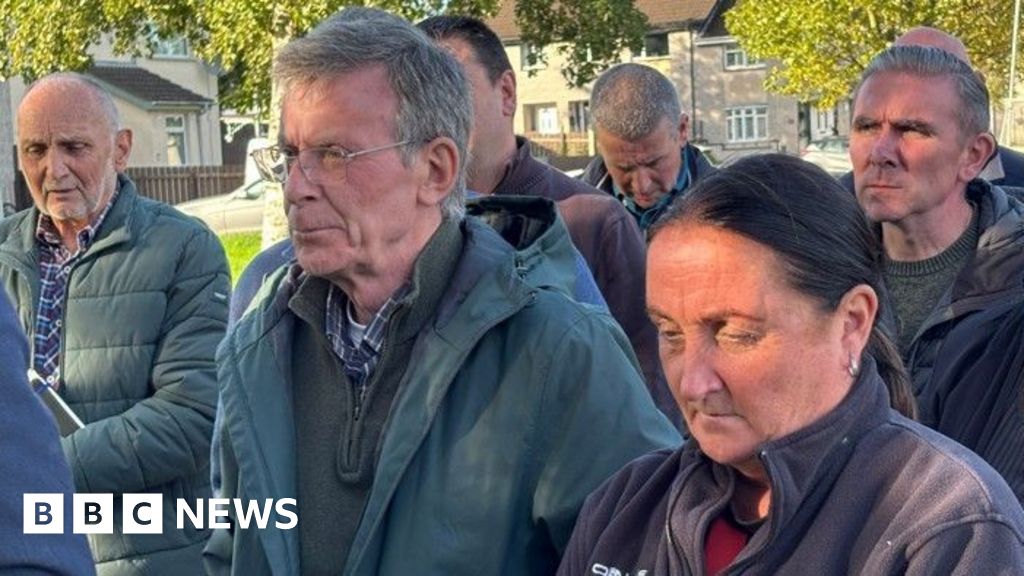
A stand-off over a decision to allow a parade down a predominantly nationalist road could lead to issues with Orange Order marches in other areas, according to a residents' group.
There have been 11 days of deadlock between Garvaghy Road residents and the local Orange Order over the proposed march in Portadown, County Armagh.
The Garvaghy Road Residents Coalition (GRRC) met 11 nationalist residents' groups on Wednesday. Afterwards, Linda O'Neill of the GRRC said: "This is no longer just about the Garvaghy Road."
Earlier, it emerged Oasis' Noel Gallagher, Oscar winner Susan Sarandon and Line of Duty star Adrian Dunbar were among dozens to sign a letter in support of residents.
Other people to have signed the letter supporting residents in the Drumcree dispute include musician Paul Weller, Derry Girls star Siobhán McSweeney and The Smiths' Johnny Marr.
On Wednesday, residents from the Garvaghy Road met groups including the Bogside Residents Association in Londonderry, and the Lower Ormeau Concerned Community, and Crumlin Road and Ardoyne Residents Association, both of which are in Belfast.
In a statement last month , the groups expressed their full support for the Garvaghy Road residents.
They said they had developed "accommodations" around Orange parades in their respective areas over time.
The statement last month added: "Our concern is that such accommodations could unravel if the Orange Order continue to insist on parading down Garvaghy Road, or indeed pursue the same demands in other nationalist/Catholic areas."
On Wednesday, O'Neill said: At the minute the support from all over Ireland, particularly all of the other communities in the north of Ireland coming here and supporting us, are propping up our community right now; we have never seen support and solidarity like it.
"The Orange Order needs to take responsibility, and so do the Parades Commission for making this issue bigger than the Garvaghy Road, this is no longer just about the Garvaghy Road, this is about all of us."
Solicitor Pádraig Ó Muirigh said the meeting had been organised as an "act of solidarity and support" for the Garvaghy residents from residents who are "dealing with similar disputes across the country".
He said that many were concerned the progress that had been made over the years regarding marches might unravel due to the "recklessness of the Orange Order and the ineptitude of the parades commission".
Speaking at a separate press conference, Portadown District Master Nigel Dawson said they would "not be bullied or threatened by any residents' group who step outside the law".
He said he was "very confident" in the support across Northern Ireland for their march adding "there's no threat to our parades. They're legal".
"My message to the real residents of Garvaghy road is [that] I understand the pressure you're under.
"People came into your part of the town...unasked for, unwanted and it's time they left, and left the residents in peace, and perhaps a resolution could be resolved."
Earlier on Wednesday, the Orange Order said that the "lawful 35 continue to stand ready to exercise the legal right" they "have established for the first time in 28 years".
"We once more urge the PSNI to actually take positive steps to implement the determination. We have seen no such proper efforts being made, and in due course, a court will also have to scrutinise this."
"We will not give up that legal right, as to do so would be to legitimise mob rule. We will continue our dignified, peaceful and lawful stand."
The letter backing the Garvaghy Road residents was addressed to Northern Ireland Secretary Sir Chris Bryant and urged him to work with the Irish government to appoint an "independent international mediator" to "facilitate a robust, durable solution".
Dexy's Midnight Runners frontman Kevin Rowland, who also signed the letter, told BBC News NI that it "originated from an honest response to the situation on the Garvaghy Road".
"The letter speaks for itself. It came about from conversations from those of us looking on from afar.
"It was an organic process inspired by the courage of the residents.
"As concerned individuals, we are not seeking to build an organisation or alternative platform to the voices of the residents. We would only wish to amplify their voices."
Others among the 48 signatories include Trainspotting writer Irvine Welsh, movie director Ken Loach, Graham 'Suggs' McPherson from Madness, Kneecap, Imelda May, Maxine Peake and trade unionist Mick Lynch.
The Northern Ireland Office (NIO) confirmed it had received the letter and said the secretary of state continued to engage with all parties for a resolution.
Taoiseach (Irish prime minister) Micheál Martin clashed with Sinn Féin leader Mary Lou McDonald in the Dáil (lower house of Irish parliament) over the Drumcree parading dispute on Wednesday.
McDonald urged him to "apply all necessary pressure" on the UK government to end the "dangerous limbo and stalemate" over the Orange Order march.
The taoiseach said the situation in Portadown was "not as simplistic" as McDonald had suggested - and accused her of using the issue for "electoral reasons".
Martin said he has "remained in contact" with Prime Minister Andy Burnham in recent days and expressed hope for a "mediated resolution".
There has been more than a week of deadlock in Portadown since the decision to allow an Orange Order march down the Garvaghy Road on Sunday, 27 September.
That morning, up to 1,000 people - including politicians such as Northern Ireland First Minister Michelle O'Neill - blocked the road, preventing Orangemen marching from Drumcree Church a mile to the west.
Since then, residents have maintained a constant presence around the road while Orangemen have also repeatedly tried to march the route before being turned back by police.
The stand-off has caused considerable political fallout in Northern Ireland, with First Minister O'Neill facing a vote of no confidence over her involvement in the protest.
The vote is due to fail due to it requiring cross-community support at the Northern Ireland Assembly.
Police are investigating the demonstrations in a "large-scale" criminal inquiry .
Drumcree was one of Northern Ireland's most serious parading disputes, when stand-offs in the mid-to-late 1990s over attempts by the Orange Order to march along the Garvaghy Road were accompanied by riots, roadblocks and killings.
When the Orange Order was prevented by police from walking down the route in July 1995, there was a tense stand-off. It was the same for the next three years.
The Parades Commission began operating in 1998 to regulate parades and try to defuse tension around marches.
Its decision not to allow a march down the Garvaghy Road that summer has been challenged by the order for the past three decades.
Earlier this year the Parades Commission decided that the march could go ahead with restrictions in place after its original decision to stop the march was overturned in court.
Meanwhile, the Court of Appeal is considering its ruling in a legal challenge brought by the residents to block the march going ahead.
Topics in this story
Gathered from external sources. Rights to this text belong to whoever originally published it.