In 1881, Judge Owen Denny shipped 60 Chinese pheasants to America because he liked their meat; the survivors helped establish a wild population in Oregon
US News: Judge Owen Nickerson Denny wanted Chinese pheasants in Oregon partly because he liked eating them. In 1881, while serving as the United States consul .
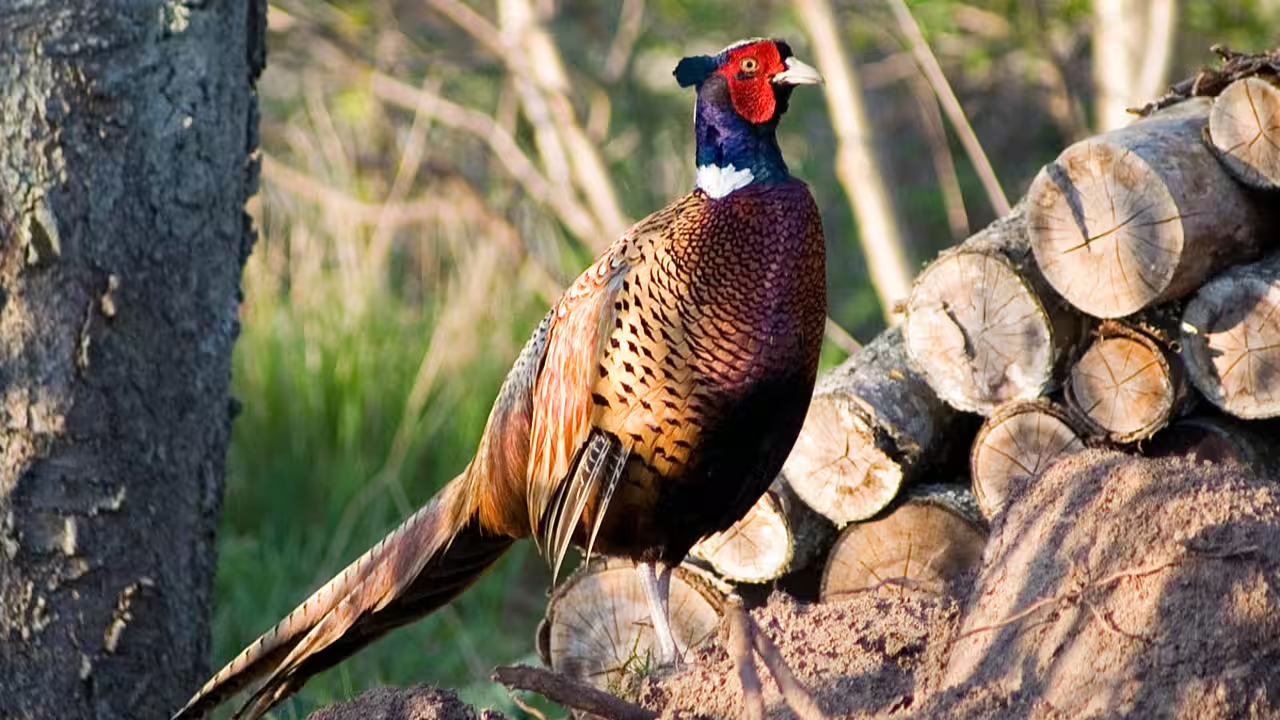
Judge Owen Nickerson Denny wanted Chinese pheasants in Oregon partly because he liked eating them. In 1881, while serving as the United States consul general in Shanghai, he arranged for about 60 ring-necked pheasants to be shipped from China to Washington state. Most survived the ocean voyage, but the difficult journey from Port Townsend to Oregon killed many of them. The few that remained were released along the lower Columbia River. Denny sent more birds the following year, and the 1882 release in Oregon’s Willamette Valley became the first successful introduction of ring-necked pheasants in the United States, according to the Oregon Department of Fish and Wildlife.Denny first encountered the birds in ChinaDenny was an Oregon native who had entered the diplomatic service and was serving in China when he became interested in the pheasants living around Shanghai. The birds were already being trapped by Chinese farmers and sold as food. Historical accounts record that Denny considered the birds good eating and wanted to see them established in Oregon. He eventually arranged to have them captured and transported across the Pacific along with other Chinese birds and plants. HistoryLink, a Washington historical organization, records Denny’s own explanation of the decision. He wrote that the pheasants were delicious and that he imagined what it would be like to release them in Oregon.The first shipment went badlyThe pheasants left China aboard the Otago, a ship that reached Port Townsend on March 13, 1881. Most of the birds survived the ocean crossing. The birds had to be transported from Port Townsend to Portland, and the unfamiliar movement of trains and boats caused them to panic. According to a historical account compiled by HistoryLink, the pheasants beat themselves against the bars of their cages during the journey. Only a small number survived the trip to Oregon, which were released on the lower Columbia River near Portland, but historians have disagreed about how successfully this first group established itself. Some later accounts credited the surviving birds with reproducing, while others considered the first attempt unsuccessful.The 1882 release established the Oregon populationDenny arranged another shipment in 1882, this time sending ring-necked pheasants directly toward Oregon. The birds were released in the Willamette Valley, where farmland, grain and vegetation provided suitable habitat. The Oregon Department of Fish and Wildlife identifies that 1882 release as the first successful introduction of ring-necked pheasants in the United States. The birds adapted to the agricultural landscape and their numbers grew rapidly. Denny made another shipment in 1884, with additional birds released on Protection Island near Port Townsend. The pheasants continued to spread through Oregon and Washington.The birds multiplied quicklyHistoryLink records that ring-necked pheasants had spread through Oregon and Washington by the late 19th century. Oregon eventually opened its first pheasant hunting season in 1892, and reports from the period said hunters killed about 50,000 birds on the first day. The birds were initially known in Oregon as China pheasants or Denny pheasants. Their descendants spread beyond the original release sites, through the help of further introductions and transfers to other parts of the country. The Oregon Department of Fish and Wildlife describes the Willamette Valley as the site of the first successful U.S. introduction and notes that the birds soon expanded into the tens of thousands.From Oregon to other statesThe success of the Pacific Northwest population encouraged people elsewhere in the United States to introduce pheasants for hunting. The ring-necked pheasant is native to Asia, not North America. The U.S. Food and Drug Administration notes that after Denny’s introduction, ring-necked pheasants were released in practically every U.S. state.Not every American pheasant population can be traced directly to Denny’s original birds, however. Later introductions involved other pheasant stocks and releases by game farms and private organizations. Still, the Oregon population became the model for establishing the species in the wild in the United States. Oregon wildlife officials describe ring-necked pheasants as farmland birds that depend heavily on cereal grains and other seeds, with taller vegetation providing cover.Catch the latest World News and Live updates. Download the TOI app.
Topics in this story
Gathered from external sources. Rights to this text belong to whoever originally published it.