‘Seasonal’ tariffs would make America’s food supply less secure
Former Reps. Christopher Shays and Richard Swett argue that the Trump administration should reject proposed seasonality protections for Florida produce growers to avoid disrupting the North American food supply chain and inviting Mexican retaliation.
As the U.S. and Mexico entered their fourth round of trade talks — with nearly $1 trillion in annual goods and services exchange at stake — an old protectionist idea has returned at exactly the wrong moment.
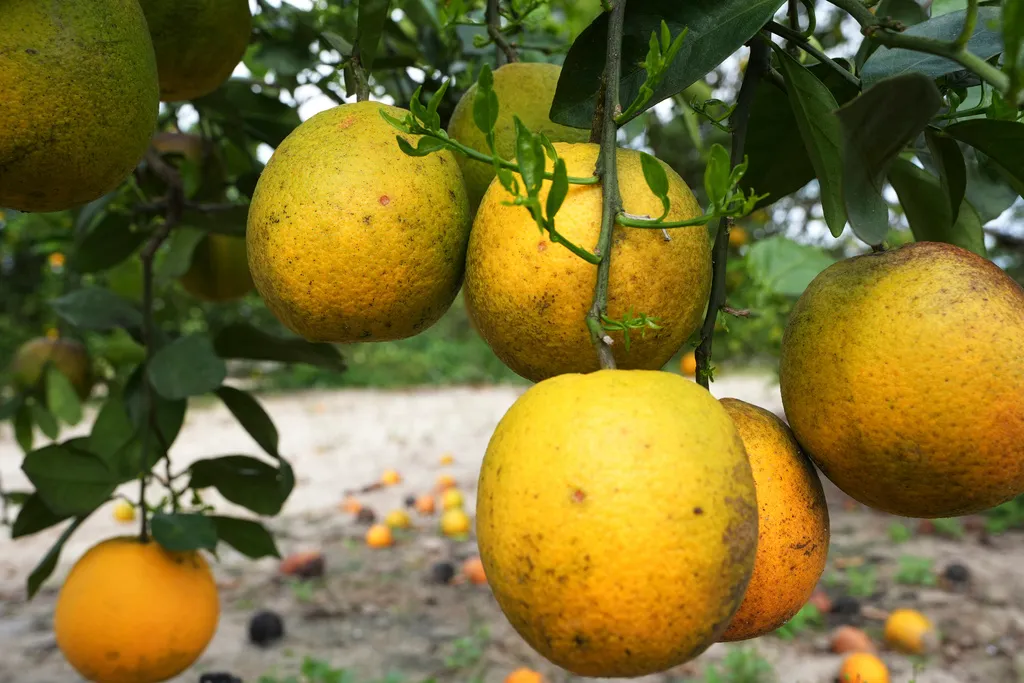
Florida produce growers are pressing the Trump administration for “seasonality” protections, including seasonal, product-specific tariff-rate quotas on Mexican fruits and vegetables during peak U.S. harvest periods.
The proposal may sound reasonable. American farmers should be protected from genuinely unfair trade. But seasonality is bad economics, bad trade policy and — as Florida itself recently demonstrated — bad for America’s food security.
The Trump administration should reject it.
Start with the economics. Seasonality is primarily intended to protect growers in Florida and parts of the Southeast. But trade policy is national policy. Protecting one region from competition can impose costs on farmers, businesses and consumers throughout the rest of the country.
In July, a coalition of 24 U.S. agricultural groups, producers, distributors, restaurants and retailers wrote directly to U.S. Trade Representative Jamieson Greer, Agriculture Secretary Brooke Rollins, Treasury Secretary Scott Bessent and Commerce Secretary Howard Lutnick opposing seasonal restrictions.
Their argument was straightforward: seasonal tariffs or tariff-rate quotas will disrupt an integrated North American food supply chain, increase costs for American consumers and invite Mexican retaliation against U.S. agricultural exports.
America’s own agricultural advisers have reached similar conclusions before.
During the original NAFTA renegotiation, the U.S. Trade Representative’s Agricultural Technical Advisory Committee for Trade in Fruits and Vegetables opposed the seasonal proposal then under consideration. In January 2018, the committee formally recommended withdrawing it from the U.S. negotiating objectives. Its concerns included likely retaliation against American exports, the precedent such restrictions will establish in other trade agreements, and the danger of jeopardizing the larger North American trade agreement. The provision was ultimately left out of the final trade deal.
There is another reason to be cautious: weather. Florida has just experienced a brutal reminder that no single American growing region can guarantee America’s food supply by itself. During the winter of 2025–26, severe freezes caused more than $3.1 billion in estimated agricultural losses in Florida , according to the Florida Department of Agriculture and Consumer Services. Strawberries alone suffered nearly $307 million in estimated losses, tomatoes more than $164 million, bell peppers more than $108 million and citrus nearly $675 million.
Americans did not stop eating tomatoes, peppers or strawberries because Florida froze. Imports helped keep American markets supplied.
That is one of the great strengths of free North American agricultural trade. Different climates and growing seasons allow farmers in the United States, Mexico and Canada to complement one another when local production declines.
Agriculture Department data show just how important that complementary production has become. In 2025, Mexico supplied about 75 percent of U.S. fresh tomato import volume, 49 percent of fresh cucumber import volume and 59 percent of fresh bell pepper import volume. For several products, Mexican supply is especially important during winter and early spring.
The U.S. cannot produce every fresh fruit and vegetable, in every region, 52 weeks a year. Climate, water, labor, land and growing seasons make that impossible. Imports from Mexico frequently complement American production rather than simply replace it.
Then there is the larger trade relationship.
Mexico has strongly opposed seasonal restrictions, leaving the issue among the agricultural disputes surrounding the review of the U.S.-Mexico-Canada trade agreement. Escalating that dispute would put much more at stake than strawberries and tomatoes.
Mexico is one of the largest foreign markets for American agricultural products. U.S. agricultural exports to Mexico reached $30.6 billion in 2025, including major sales of corn, pork, poultry, dairy, beef and other products. At the same time, Mexico supplied $43.8 billion in agricultural products to the U.S.
Florida growers deserve a fair hearing. They have raised legitimate concerns about declining market share and the long-term viability of domestic production. If Mexican producers are dumping products or violating U.S. trade law, Washington has remedies available. If farmers suffer catastrophic freezes, federal disaster programs can help, as they did after this year’s devastating freeze.
But writing new regional protection into a massive trade deal is something different.
The U.S. considered a seasonality mechanism during the original negotiations and ultimately rejected it. American farmers, retailers, restaurants, importers and produce companies are again warning Washington about the broader consequences today.
They have good reason. Food security does not mean producing everything ourselves. It means ensuring that Americans have a reliable, resilient and affordable food supply, even when drought, hurricanes, labor shortages or a historic freeze disrupt production in one part of the continent.
When Florida freezes, Americans still have to eat. Fortunately, Mexico, an ally, is next door.
Christopher Shays served as the U.S. representative for Connecticut’s 4th District from 1987 to 2009 and formerly chaired the National Security Committee. Richard Swett served as the U.S. representative for New Hampshire’s 2nd District from 1991 to 1995 and later served as the U.S. Ambassador to Denmark under the Clinton administration.
Topics in this story
Gathered from external sources. Rights to this text belong to whoever originally published it.