An Australian entrepreneur was told nobody would buy reusable cups; he built a bottle business reportedly generating more than $100 million in annual sales
Australian entrepreneur Ben Young was told he was an “idiot” for believing people would buy reusable coffee cups when disposable ones could simply be
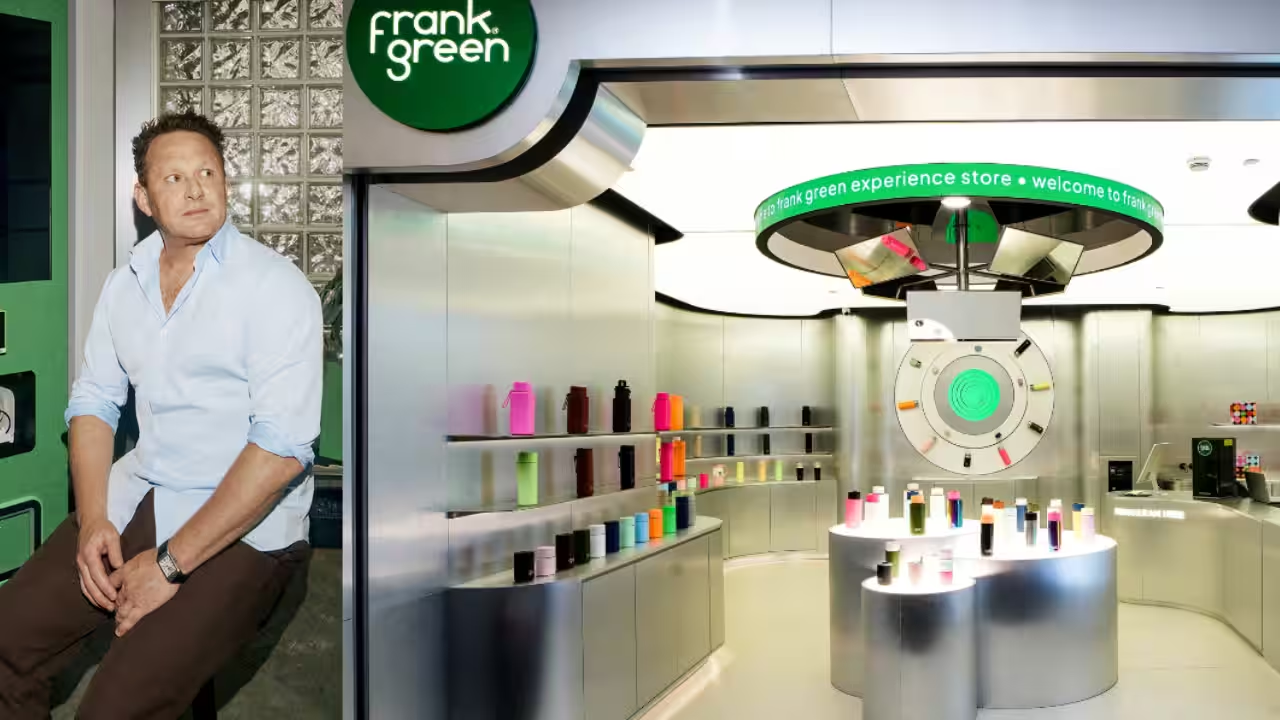
Australian entrepreneur Ben Young was told he was an “idiot” for believing people would buy reusable coffee cups when disposable ones could simply be thrown away. Rather than abandon the idea, he spent years developing products designed to overcome problems with appearance and leakage. His efforts led to the launch of Frank Green in December 2013, a reusable drinkware business that later expanded into personalised water bottles. According to Forbes Australia, the company reportedly generates more than $100 million in annual sales. Its growth is driven by product design, customisation and continued innovation in an increasingly competitive reusable drinkware market.How did an Australian entrepreneur build a $100 million bottle businessYoung continued working in corporate roles while investigating the reusable drinkware market. His research was funded by Alinta and led him to identify two problems that discouraged consumers from using reusable cups and bottles: their appearance and their tendency to leak. He subsequently moved to Cleanaway, an Australian waste management company, while continuing to develop his business idea. Young recognised that he lacked experience in industrial design, manufacturing and consumer products, so he began researching potential design partners. He approached Victorian industrial designer Jon Seddon, but Seddon initially declined to work with him because of a non-compete agreement.Young nevertheless invested hundreds of thousands of dollars in three sets of manufacturing tools and began producing prototypes. He tested the products by filling them with boiling water and dropping or throwing them to identify weaknesses.The early designs used sliding seals that worked initially but did not provide the long-term reliability he wanted. Rather than launch a product that might disappoint customers, he continued refining the designs while retaining his employment.Three years after his first approach, Young returned to Seddon, whose non-compete restriction had expired, and the designer joined the project. Frank Green launched in December 2013, five years after the development journey began. At launch, the business owed Young approximately $3 million, although he retained full ownership.How did Green turn reusable bottles into a $100 million businessFrank Green initially differentiated its products through design, lid technology and efforts to prevent leaks. Young told Forbes Australia that the company had developed innovative lids and had even incorporated a chip into a cup that allowed customers to pay for coffee using the cup itself. The business subsequently received wider exposure in 2017 when Craig Reucassel’s ABC television programme War on Waste featured Frank Green while examining the environmental problems associated with disposable coffee cups.According to Whittaker’s report, the company’s sales doubled that year. The business later faced difficulties during the COVID-19 pandemic, when cafés stopped accepting reusable cups for serving coffee. Young told the publication that sales of coffee cups had been slow to recover since that period.The company’s growth increasingly came from its water bottles. In 2021, Paul Troon joined Frank Green from Mecca Brands, where he had been head of design, and helped develop the brand’s approach to water bottles as personalised consumer products. Customers could choose different base and lid colours and have their names engraved on their bottles. Troon explained that the objective was to make the product an extension of the customer’s personality and encourage people to form a personal connection with it. Young credited Troon’s contribution to the campaign behind what he called “these emotional support water bottles”.The report stated that Frank Green’s bottles, priced between $60 and $100, had become common in school lunch boxes and start-up offices. It also reported that the business was generating annual sales of more than $100 million, although the figure was presented as a reported estimate rather than a company-verified financial disclosure.How is Frank Green staying ahead of competitorsFrank Green’s expansion has taken place alongside increasing competition in the reusable drinkware market. Forbes Australia described a global market estimated at US 1.87 billion, while Stanley’s Quencher range had also gained ground in the market. KeepCup had entered the reusable cup sector before Frank Green, having been established in 2007. The article also cited a market growth forecast of US$15 billion by 2032. These competitors, together with lower-priced imitators, have increased the pressure on brands to distinguish their products through design and consumer experience.Frank Green employed 300 people and invested 40,000 hours annually in research and development. Its development work has included a double-walled, vacuum-insulated lunch box designed to keep separate foods at different temperatures. The initial version weighed three kilograms, leading the company to return to the drawing board before developing a stainless-steel, uninsulated version. Frank Green also held more than 50 patents and trademarks.The company began opening physical retail stores in February 2025, with further openings in Sydney and Melbourne reported for December and a store in Jakarta opening in February 2026. Young has also pursued environmental initiatives beyond drinkware, including No Wrap, a system using hard corners and straps made from recycled plastic water bottles to eliminate the need for plastic pallet wrapping. The venture reflects his continued interest in reducing plastic waste while developing products through design and manufacturing.You use AI every day. Now get your AI Quotient. Take the AIQ test.
Topics in this story
Gathered from external sources. Rights to this text belong to whoever originally published it.