Queen Elizabeth helped save rare horse breeds from extinction; she bought a Cleveland Bay colt destined for export when only six purebred stallions remained
Six purebred Cleveland Bay stallions.
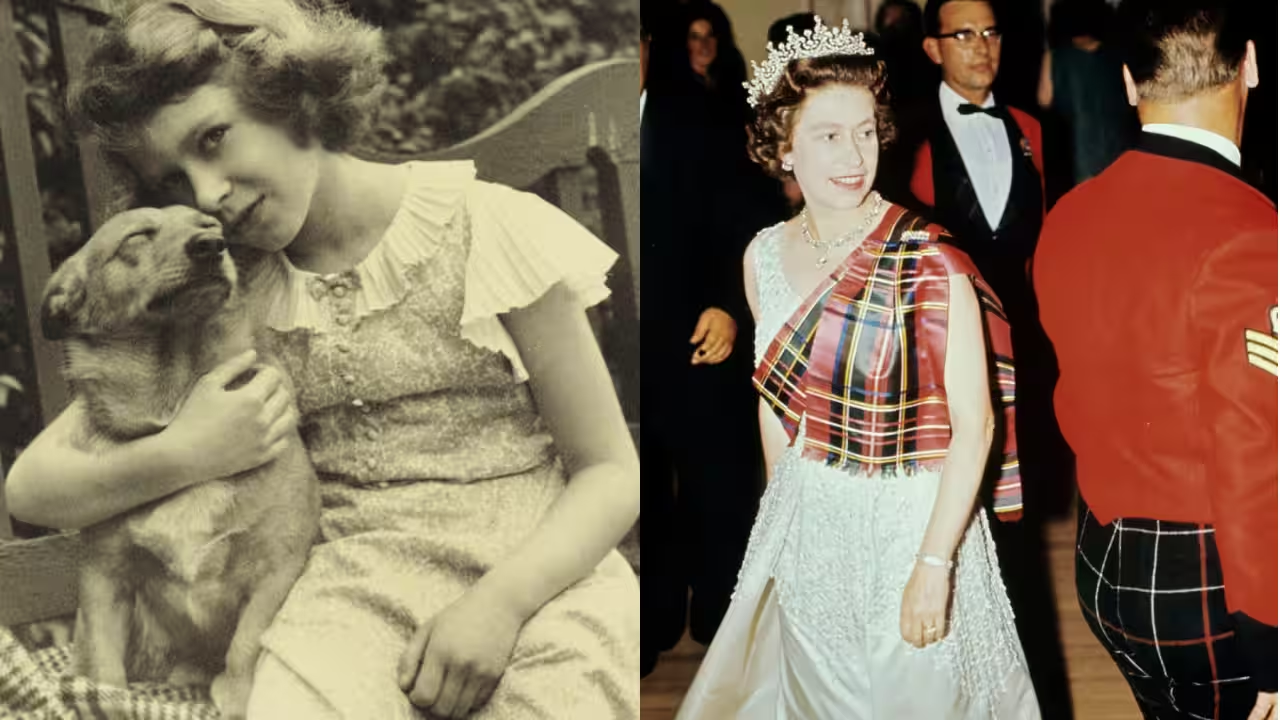
Six purebred Cleveland Bay stallions. That was all that remained of the breed in 1960, and the reigning monarch soon stepped in to buy a young colt destined for export. Queen Elizabeth II bred horses in her private stables and in the working yards that supplied royal and state occasions, and the breeds she championed included Highland ponies, Fell ponies and Cleveland Bays. Her grandfather also bred Cleveland Bays, and her Balmoral prefix for Fell ponies, begun in 1952, kept registering foals into 2021. Conservation groups still credit her yards with keeping bloodlines alive through mechanisation, crossbreeding and shrinking demand.Peggy the Shetland pony and the childhood gift that began her life of horse breeding in royal yardsThe Royal Family's official website traces the Queen's horsemanship to a Shetland pony named Peggy, a gift from her grandfather, King George V. From that first pony, she grew into a rider, owner and breeder the website calls hugely knowledgeable. Her passion was visible at the Derby at Epsom and Royal Ascot, and her runners won, Landau took the Rous Memorial Stakes in 1954, Estimate won the Gold Cup at Royal Ascot in 2013, and Highclere took the Prix de Diane at Chantilly in 1975. Racing was only one side of her stables. According to the same page, she also helped ensure the survival of several rare horse and pony breeds through breeding programmes in her private yards and in the working yards that produced horses for royal and state occasions.How a colt saved from export rescued a near-lost horse breedIn 1960, only six purebred Cleveland Bay stallions were alive, according to The Livestock Conservancy, a nonprofit organisation working to protect more than 150 heritage farm animal breeds. It explains that the breed was developed in Yorkshire for strength, speed, soundness and stamina, but mechanisation ended demand for farm, coach and road horses, and breeders crossbred their mares because the lighter, faster crossbreds were worth more. The Queen, whose grandfather had also bred Cleveland Bays, bought a pure colt named Mulgrave Supreme, born in 1961 and earmarked for export, and used him as a stud. The Conservancy still lists the breed as critically endangered, though perhaps as many as one thousand horses are alive today, about 180 of them purebreds in North America.Highland, Fell and Cleveland Bay breeds: how the private and working royal yards helped them surviveThe royal website states that the Queen was involved in ensuring the survival of a number of rare breeds of horses and ponies through breeding programmes, and it names where those programmes ran, her private yards, and the working yards that produced horses for Royal and State occasions. Horses from the working yards had a public job, serving those occasions. The website names the breeds she championed as Highland ponies, Fell ponies and Cleveland Bays. It does not give foal numbers, dates or the names of individual animals, so the account stays at the level of a stated commitment rather than a record of results, but the three breeds named are clear and specific.Highland ponies and Old Spots pigs: Royal herds beyond the horse stablesHighland ponies were bred to haul timber and game and plough small Scottish farms, and the Queen kept a large working stud of them; the royal family's website lists them among the breeds she championed. Her farm animals followed the same pattern. On her Gloucestershire estate, the Queen also raised Gloucester Old Spots pigs, a docile, intelligent breed that nearly vanished in the 1960s and has slowly increased since.Riding well into her outdoor life shared with horses and dogsShe rode well into her nineties and took great pleasure in walking in the countryside and spending time with her dogs. The page lists riding first, ahead of walking and her dogs. The timeline is what stands out, a Shetland pony received from her grandfather in childhood, and riding still part of her life in her nineties. The page does not say which horses she rode in later years, so it would be wrong to link her riding to any one of the breeds she championed. What it does show is that her involvement with horses was practical and physical, not limited to owning racehorses or attending meetings.King Charles the Third, the Rare Breeds Survival Trust and the Sandringham Estate continue her workKing Charles the Third now carries the family's involvement forward. The Livestock Conservancy notes that he is patron of the Rare Breeds Survival Trust, its sister organisation in the United Kingdom, and is converting the Queen's Sandringham Estate to organic farming, a system he says works with nature rather than against it. The Conservancy still classifies the Cleveland Bay, Fell and Highland as critically endangered, so their survival depends on breeders, registries and owners.You use AI every day. Now get your AI Quotient. Take the AIQ test.
Topics in this story
Gathered from external sources. Rights to this text belong to whoever originally published it.