1930s: Eva Howie made her daughter Barbara a dollhouse with bread dough furnishings; her family preserved it for decades before donating it to a museum
Discover the captivating story of Eva Howie's handcrafted dollhouse from the 1930s, complete with unique bread-dough furnishings, and learn how it became a cherished family heirloom before being donated to the National Museum of Australia.
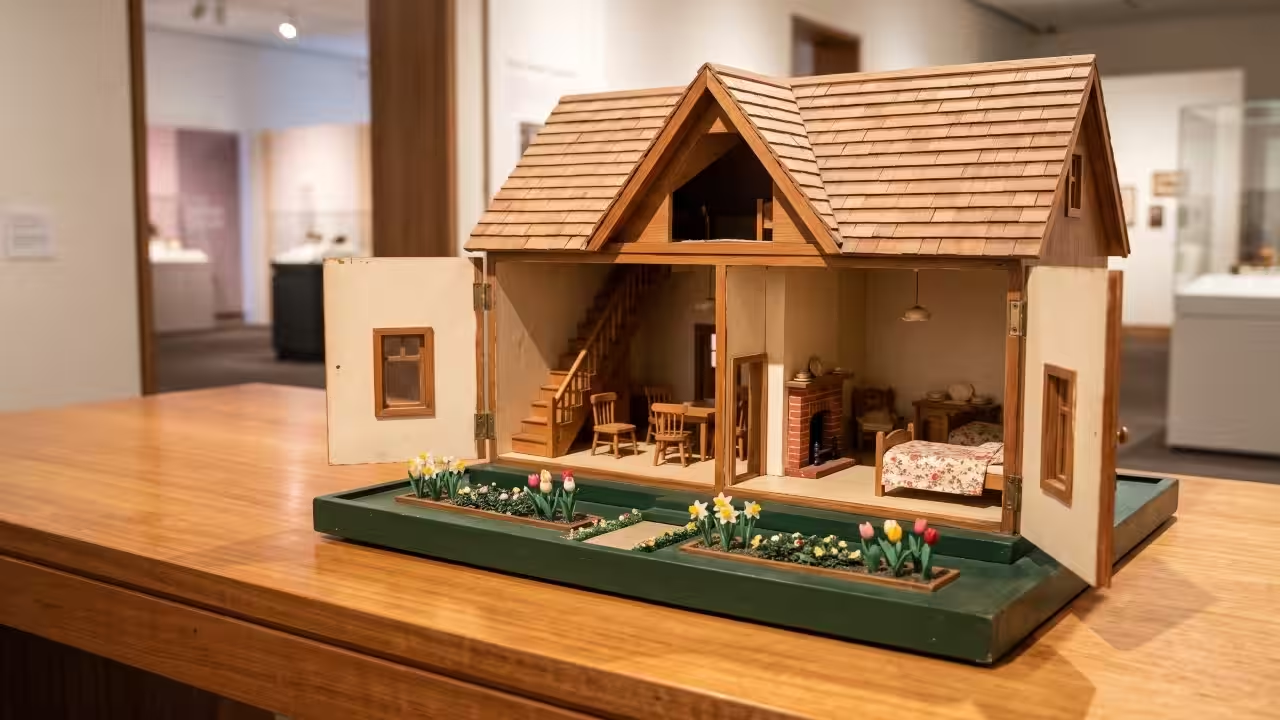
In the 1930s, Eva Howie of Eden Hills, South Australia, made a dollhouse for her daughter, Barbara Hetherington. Alongside purchased furniture, Howie crafted tiny furnishings from bread dough, creating a detailed miniature home that the family carefully preserved for decades. Eva Howie made the dollhouse for her eldest daughter, Barbara Hetherington, in the 1930s, furnishing it with tiny objects, some handcrafted from bread dough. The family treasured the house and kept it in excellent condition for more than 50 years before donating it to the National Museum of Australia in 1991. The details of its construction and preservation reflect the family’s care and Howie’s craftsmanship. The museum’s collection history of the Hetherington dollhouse documents its maker, furnishings and preservation.A mother’s gift from a favourite bookEva Howie (1880-1972) lived in Eden Hills, SA. The house was based on an illustration from Millicent Mouse and Her Funny Wee House, a children’s book that had been a favourite of her daughter Barbara’s youth. Booksellers catalogue the book as ‘A Story in Easy Rhyme’ by Arthur Mansbridge, illustrated by Jessie May Ellerby and published by Frederick Warne in 1927.Barbara Hetherington, who was born in 1911, was an adult when she received the dollhouse. The gift was inspired by a book she had loved as a child, making it a personal keepsake as well as a carefully crafted miniature home. The Hetherington dollhouse was made to be admired rather than used as a plaything. Later generations were not allowed to play with it, helping preserve its furnishings and delicate details. The family’s care kept the miniature house in excellent condition for more than five decades.Inside the houseThe house is a clever piece of design. The roof pops off to reveal an attic, and the walls fall away to disclose two rooms on the ground floor. There is a stairway in the front room and a fireplace in the rear one. The house sits on a dark green garden base, manicured with miniature flowerbeds complete with glass daffodils and fabric tulips.The furnishings combine purchased and handmade pieces, including beds, quilts, crocheted floor mats and handwritten newspapers. Many of the smallest objects were crafted from bread dough, showcasing Howie’s attention to detail. Archival photographs from the National Museum of Australia document conservator Cathy Collins carrying out treatment on the dollhouse’s exterior, highlighting the specialist work required to preserve a fragile object of this kind.Why it survivedThe removable roof reveals an attic, while sliding walls expose the two ground-floor rooms. Because the dollhouse was treated as a display piece, later generations were not allowed to play with it. That care helped preserve its delicate structure and furnishings until the family donated it to the museum in 1991.The dollhouse is now part of the National Museum of Australia’s National Historical Collection, which includes hundreds of toys and objects associated with childhood. It was included in the museum’s Play display, held from 26 June 2021 to 14 February 2022. The Hetherington dollhouse brings together a family story, a childhood book and Howie’s detailed craftsmanship. Made in the 1930s and preserved by the family for decades, it remains part of the National Museum of Australia’s collection. Access to collection objects not on public display requires an appointment, and the museum warns that visits may be affected by its long-term storage project from 2026. Anyone hoping to view the dollhouse should contact the museum in advance through its collection access information page.You use AI every day. Now get your AI Quotient. Take the AIQ test.
Topics in this story
Gathered from external sources. Rights to this text belong to whoever originally published it.