Not just a phase: the enduring appeal of emo
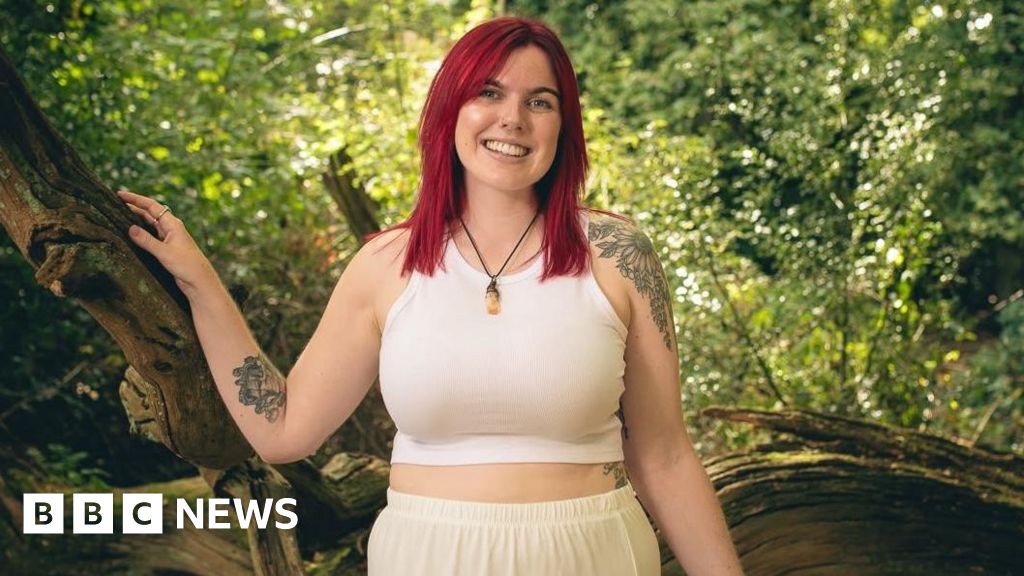
Sophie Baxter has set up a social group for "emos, goths and moshers" who never left the noughties.
When My Chemical Romance headlined Wembley for three sold-out shows in July, for many it was a trip down memory lane to a time when they classed themselves as "emo" - wearing black, having piercings and listening to alternative music.
But for others, this was never just a phase of their youth. This was a way of life.
Sophie Baxter, 31, from Hull, describes herself as alternative and runs a social group for "emos, goths and moshers" to meet like-minded people who "understand where you're coming from".
"I think people who are not alternative often see it as a form of rebellion or a movement but it isn't, in my opinion anyway, it's just a lifestyle and a way of expressing who you are," she says.
The group, called Never a Phase, meets regularly in Hull and now has more than 2,000 followers on Instagram.
Sophie says she set it up after finding it "really hard to meet people on the same wavelength" in corporate spaces, and how she felt it was important to meet friends "you can be your 100% authentic self with".
She believes people are "very expressive with their style and music choices" in their teenage years, but society and the demands of fitting in at work means those people eventually feel they have to "squash themselves".
But deep down, the desire to be alternative never leaves them.
She adds: "You get to a certain level, maybe as you get to late twenties, early thirties, where you think, actually, I can be an emo, I can be alternative, I can be a little bit weird. I'm still a good person."
Defined by its music, fashion and stereotype of moody, depressive teens, alternative and emo culture peaked in the 2000s with bands such as My Chemical Romance, Fall Out Boy and Panic at the Disco taking it mainstream.
However, this stereotype is being challenged by those who welcome an alternative crowd to events.
Daniel Mawer, who runs the Polar Bear Music Club in Hull, says the Panic at the Emo! night the club hosts is "one of my favourite shows to work at".
He says: "I'd say people who attend this night are the most likely to make new friends, be the most welcoming to outsiders and would probably have the most fun out of all the events we host."
While there is a lot of nostalgia at the events, he says they are also popular with a younger crowd.
"We're noticing that there's a wave of teenagers who are embracing the fashion and aesthetics that were synonymous with the early noughties," Daniel adds.
"It's genuinely refreshing to see young people belonging to a tribe where they feel a sense of belonging. I had that as a kid and it was really important to me.
"It unfortunately seemed to have missed a whole generation due to Covid, but is obviously returning within this genre."
US group Paramore was one of the biggest emo bands of the noughties and performed to sell-out crowds on Taylor Swift's Eras Tour in 2024, including at Wembley, highlighting the genre's longevity and how it is reaching a younger crowd today.
Miguel Raimundo runs Emofest events across Europe, with gigs featuring a live band playing classic songs from the time.
He says the crowd at these shows, with one taking place at the University of Hull's Union in September, are the "friendliest", with an age range from 14 to "corporate elder emos" in their forties and fifties.
He says: "The emo crowd gets a bad rep, but Emofest has some of the best shows we run across the UK."
The life of Sophie Lancaster, who was kicked to death by teenage boys in 2007 because she was a goth, continues to be celebrated through a foundation set up in her honour .
Sophie Baxter says she gave thought about what had happened to the 20-year-old when setting up Never a Phase, but the overwhelming response so far had been positive.
She says it suggests public perception could be changing from 20 years ago.
"The bigger we get, I do have that [Sophie Lancaster's death] in the back of my mind. And it's sad, but sort of necessary when you take things online and in a public arena," she says.
"There's been a couple of maybe not so nice comments on Instagram Reels, but they're very much the minority and it is something that feels like it is very needed.
"We've had lots of positive messages and people saying, 'oh my God, where have you been?' And people finally feeling like they belong somewhere.
"It doesn't matter what you look like, it doesn't matter what sexuality you are or what music you listen to, it's a mindset. So if you're comfortable being around alternative people, around emos and weirdos and moshers and freaks, then you probably belong with us."
App Store Google Play for Android devices
Emos relive their teenage years in the noughties
Why Paramore's Hayley thinks emo music is changing
Topics in this story
Gathered from external sources. Rights to this text belong to whoever originally published it.