James Monroe's 1,200-acre Virginia estate is finally becoming a state park after years of efforts to protect the former president's home
US News: For years, Oak Hill Farm sat in southern Loudoun County as a privately held piece of Virginia history, its fields and woodland surrounding the former .
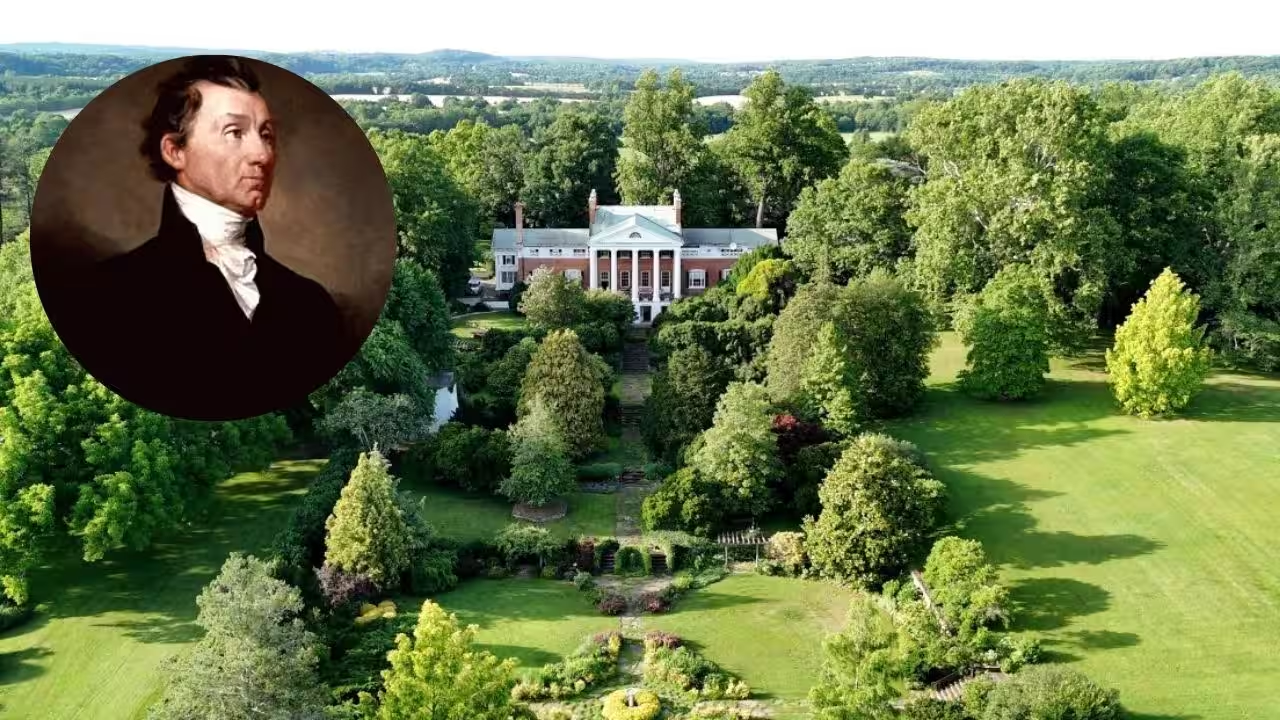
For years, Oak Hill Farm sat in southern Loudoun County as a privately held piece of Virginia history, its fields and woodland surrounding the former home of President James Monroe. The estate is now set for a different future. According to The Conservation Fund, in July 2026, Virginia lawmakers approved the acquisition of more than 1,200 acres at Oak Hill, clearing the way for the property to become the state's newest state park. The decision follows years of efforts by lawmakers, conservation groups and local residents to protect the land. It also places Monroe's former home within a larger public landscape that carries stories reaching beyond the fifth US president, including those of enslaved people and Indigenous communities connected to the area.Oak Hill preserves more than James Monroe's presidential historyOak Hill lies near Aldie, south of Leesburg, between James Monroe Highway, Little River Turnpike and Tail Race Road. The property contains farmland, forest and the house associated with Monroe, making it one of the remaining privately owned properties tied directly to a US founding-era president.Monroe lived at Oak Hill during the later part of his life. The estate is therefore connected to a period that followed his presidency, rather than simply serving as a site linked to his years in Washington.Its significance, however, is not limited to the person who owned it. The land also preserves evidence of the people who worked and lived there, including enslaved people, as well as the longer Indigenous history of the surrounding landscape.Virginia lawmakers push Oak Hill towards state park statusThe move towards state park status did not happen in a single legislative session. As reported by America’s State Parks, Del. John McAuliff, who represents parts of Fauquier and Loudoun counties, introduced House Bill 500 during Virginia's 2026 legislative session with the goal of securing the property for public ownership.Reportedly, the bill passed the House unanimously, 98-0. It was later carried forward into the 2027 legislative session, but the process changed when Gov. Abigail Spanberger included the Oak Hill acquisition in a budget amendment.The Virginia legislature voted to accept that amendment in July, completing the state's approval of the purchase.McAuliff had made preservation of Oak Hill one of his priorities during his first term. State Sen. Russet Perry, who represents parts of Loudoun and Fauquier counties, had also worked towards state park designation since taking office in 2024.Their efforts were part of a broader campaign involving local supporters and conservation organisations.A 1,200-acre estate was protected ahead of public ownershipThe Conservation Fund became a central part of the preservation effort before the state formally approved the park.Reportedly, the organisation purchased Oak Hill in November 2025, protecting the estate while arrangements for its eventual transfer to public ownership continued. That step kept the 1,200-plus acres together rather than allowing the historic property and surrounding land to face an uncertain future under private ownership.The fund's involvement also reflected the scale of the site. Oak Hill is not simply a historic house and a small surrounding garden. Its landscape stretches across farmland and forest, creating a substantial tract of open land in addition to the presidential connection.The eventual state park will therefore combine historic preservation with public access to a much larger landscape.More than 10,000 people joined the campaign for Oak HillThe campaign to preserve Oak Hill attracted support from well beyond the politicians directly involved. According to The Conservation Fund, more than 10,000 people supported the acquisition through petitions, letters and personal donations. That response helped demonstrate local and wider interest in keeping the property intact and securing public access.Heather Richards, the fund's Mid-Atlantic vice president, said the level of public involvement was unusually strong for one of the organisation's preservation projects.The campaign also brought together state officials, conservation advocates and members of the local community. The approval was presented by those involved as a bipartisan effort, with both Democratic legislators and the governor playing roles in moving the project forward.Oak Hill's history extends beyond James MonroeTurning Oak Hill into a state park will make the property accessible as public land, but its historical story extends well beyond Monroe's ownership.The estate's past includes the people who maintained the farm and household during an era when slavery was part of Virginia's social and economic system. The surrounding area also has Indigenous histories that predate Monroe and the establishment of the United States.Those layers are likely to shape how visitors understand the site. The house can tell the story of a former president, while the wider estate provides a setting for examining the people and communities whose lives were tied to the property.Oak Hill becomes Virginia's newest state parkThe acquisition adds more than 1,200 acres of farm and forest to Virginia's public estate and establishes Oak Hill as the state's newest state park. It also places Monroe's former home within a system designed to preserve historic and natural resources while allowing people to visit and use the land.The timing is closely tied to the 250th anniversary of American independence in 2026. State officials and supporters have pointed to the anniversary as an appropriate moment to secure the property for long-term public ownership.The transition does not erase the years of uncertainty that preceded it. Oak Hill reached state park status only after repeated legislative efforts, conservation work and a public campaign to keep the estate together.Now the property has a different status. What was once a privately held presidential estate is being preserved as public land, with its house, fields and forests set to remain part of Virginia's landscape for generations to come.Catch the latest World News and Live updates. Download the TOI app.
Topics in this story
Gathered from external sources. Rights to this text belong to whoever originally published it.