'World is getting worse': Antonio Guterres warns wars, divisions are paralysing UN
Rest of World News: UN Secretary-General Antonio Guterres has warned that the global situation is deteriorating as wars spread and become increasingly complicated, with d.
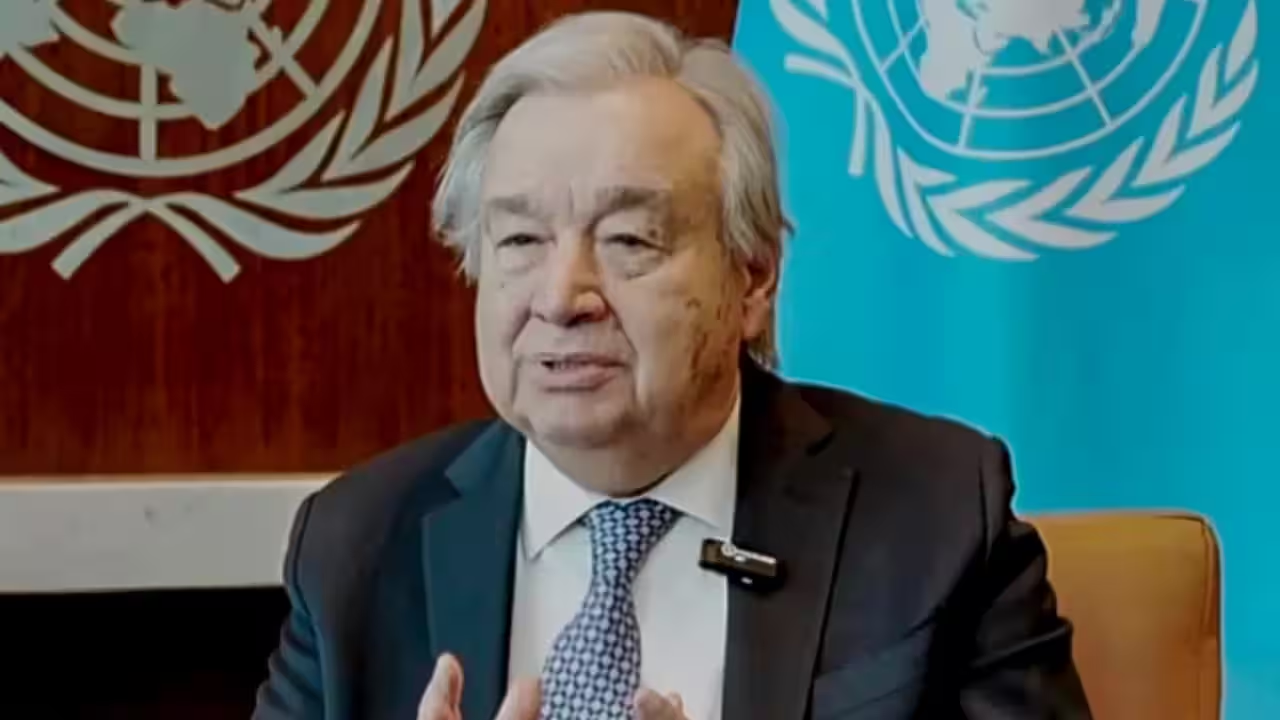
UN Secretary-General Antonio Guterres has warned that the global situation is deteriorating as wars spread and become increasingly complicated, with deep divisions among major powers leaving the Security Council unable to respond effectively to growing crises.Speaking to Al Jazeera on Monday, a day before delivering his final address to the UN General Assembly as secretary-general, Guterres said the world body was facing serious challenges over its ability to deal with conflicts and uphold international law.'Environment of impunity'Guterres said the involvement of major powers and permanent members of the UN Security Council in conflicts had made it harder for the council to act.He said repeated violations of international law were contributing to a broader sense that countries could act without facing consequences."That creates an environment of impunity, in which midsize powers believe that they can do whatever they want because nothing will happen to them," Guterres said.According to the UN chief, geopolitical divisions have effectively paralysed the Security Council at a time when the number of conflicts is growing.He warned that the consequences were being felt most severely by vulnerable populations caught up in wars and economic disruption.Wars driving food and fuel costsGuterres pointed to the Russia-Ukraine war and the US-Israel war on Iran as conflicts with consequences far beyond the countries directly involved.He said disruptions to food, fertiliser and energy supplies were adding to pressure on economies around the world. Problems affecting key maritime routes, including the Strait of Hormuz and Bab al-Mandeb, have further complicated the movement of energy and goods."The combination of the war in Ukraine with the problems of exports of foods, fertilisers, and energy through the Black Sea, if you combine it with the difficulties in the Strait of Hormuz [in the Gulf], in the Bab al-Mandeb [in the Red Sea], and in the attacks [on] oil installations in several countries of the [Middle East] region, we are creating a situation that has a devastating impact on many economies around the world," Guterres said.He said wealthier countries could eventually absorb higher interest rates and energy costs, but developing nations faced much greater difficulties.People in poorer countries, he said, were being pushed into "a desperate situation" as food and energy became more expensive and access to fertilisers became harder.UN faces pressure to reformGuterres, a former prime minister of Portugal and former UN high commissioner for refugees, has led the organisation since January 1, 2017.His second term ends on December 31, 2026, after which a new secretary-general will take charge.Guterres said his successor would inherit a UN facing multiple conflicts and a growing gap between the scale of global challenges and the organisation's ability to respond.He argued that reforms would be necessary if the UN is to remain an effective and relevant institution in a world increasingly divided by geopolitical rivalries.Catch the latest World News and Live updates. Download the TOI app.
Topics in this story
Gathered from external sources. Rights to this text belong to whoever originally published it.