In the 1880s, Colorado's Lulu City attracted stagecoaches and silver prospectors; by the 1890s, the settlement had been abandoned
In the late 19th century, Colorado’s Lulu City attracted hundreds of prospectors hoping to make money from the discovery of silver and other precious
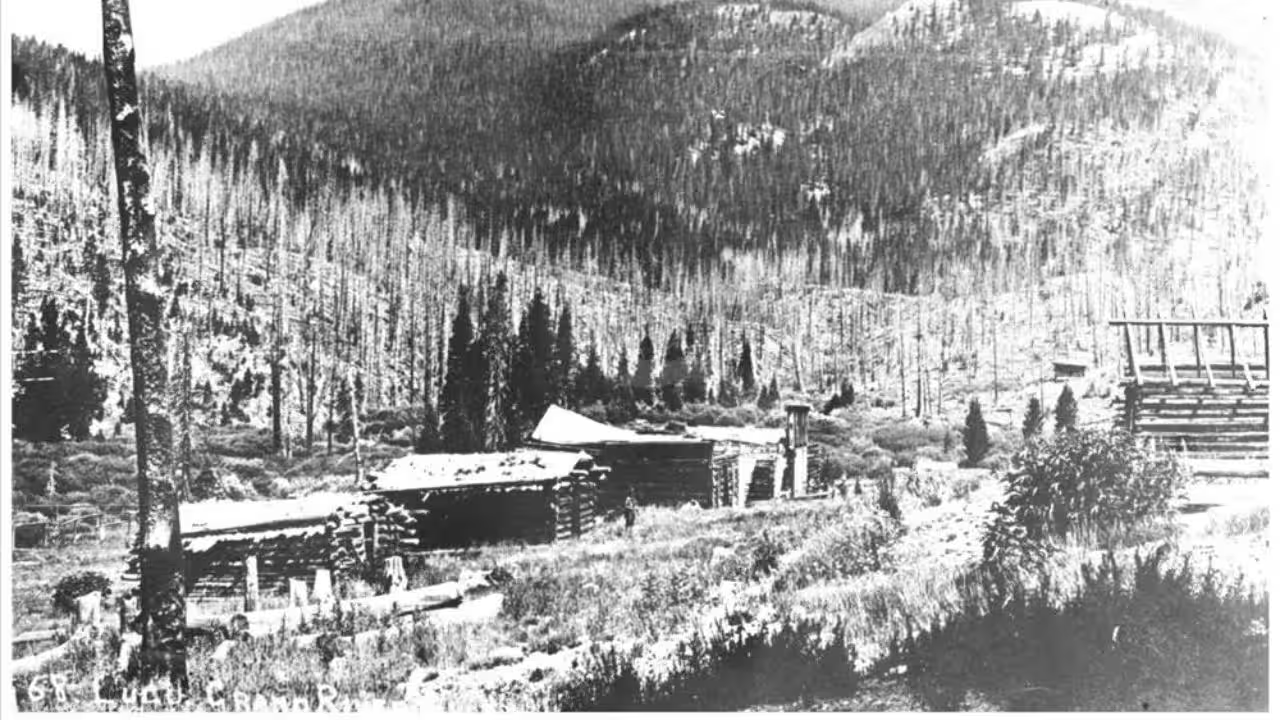
In the late 19th century, Colorado’s Lulu City attracted hundreds of prospectors hoping to make money from the discovery of silver and other precious metals. Established in 1879 in the remote Kawuneeche Valley, the settlement quickly developed into a small mining town with shops, saloons, homes and regular stagecoach services. However, the promise of wealth did not last. The mines produced low-quality ore, and the cost of transporting it made mining difficult to sustain. Within a few years, residents began leaving, and Lulu City eventually became a ghost town.Lulu City attracted silver prospectors in the 1880sLulu City emerged during a period when mineral discoveries were drawing people into the mountains of Colorado. According to Grand County History Stories, prospectors discovered precious metals in the area in 1879, prompting as many as 500 people to arrive in search of mining opportunities. The discovery created hopes of building a prosperous settlement in the upper Colorado River region.The National Park Service explains that prospectors from Fort Collins discovered silver along the North Fork of the Grand River, now known as the Colorado River. Several mines were subsequently established in the Kawuneeche Valley, including the North Star and Iron mines.The growing interest in the area encouraged the development of a permanent settlement. Benjamin Franklin Burnett, a Fort Collins merchant and one of the town’s founders, named Lulu City after his daughter. The settlement soon became one of the better-known mining communities in the region.The town’s rapid growth reflected the optimism surrounding Colorado’s mineral discoveries. Prospectors arrived believing the surrounding mountains could provide enough valuable ore to support a thriving community. However, the quality of the deposits and the challenges of working in such a remote location would soon undermine those expectations.What made the settlement look like a growing townLulu City was planned on a scale that reflected the ambitions of its founders. In the book Unique Ghost Towns and Mountain Spots, available through Project Gutenberg, author Caroline Bancroft describes the settlement as having 100 numbered blocks and 19 streets. The extensive layout suggested that its founders expected the community to grow well beyond a temporary mining camp.By 1880, the town had developed into a busy settlement. NPS records that as many as 500 miners lived there, alongside businesses and mining companies. The community included a butcher shop, a post office, a real estate agency and approximately 20 houses.Other accounts describe a hotel, a general store and several saloons. Grand County History Stories estimates that the settlement may have had around 10 saloons serving miners from Lulu City and neighbouring mining operations.The town also had a justice of the peace, reflecting the development of basic local institutions. Its commercial activity depended on the people working in nearby mines, while businesses supplied food, accommodation and other necessities.Transport links helped maintain contact with settlements beyond the valley. According to NPS, Lulu City received as many as 3 stagecoaches a week from Walden and 2 per week from Grand Lake between 1881 and 1882.These services connected the isolated mining community with surrounding settlements, although travelling through the mountainous region remained difficult. Despite its busy streets and growing population, Lulu City depended heavily on the success of its mines.Why did the mining boom begin to collapseThe main problem was the quality of the ore. Although the surrounding mines contained silver, gold and lead, much of the material was low-grade, meaning it contained relatively small amounts of valuable metal.The mines around Lulu City included operations known as Rustic, Friday Nite, Tiger, Carbonate and Southern Cross. However, the value of the extracted metals was often insufficient to justify the expense of processing them.The town’s remote location made the situation worse. The same historical account notes that the nearest smelters were probably more than 100 wagon miles away. Smelters were facilities where extracted ore was processed to recover metal, and transporting material over such distances added considerably to the cost of mining.NPS records that the mines were closing rapidly by 1884 because they lacked good-quality gold and silver ore. Without sufficient returns from mining, businesses could no longer rely on a steady flow of workers and customers.The wider mining boom in Grand County also began to fade. By 1885, the region’s mining expansion had largely ended, with ranching becoming a more sustainable local industry.How did Lulu City become an abandoned settlementThe decline was swift. According to NPS, one of the major mines closed in April 1883, leaving its workers without employment. Smaller operations continued for a time, but by the following winter, mining activity in Lulu City had largely stopped.The town’s post office also faced closure. Denver7 reported that the federal government announced its closure in 1884. With fewer miners remaining and local businesses losing customers, the settlement had little reason to continue operating at its earlier scale.Most of the population and businesses had departed by 1885, although a small number of people remained in the area. The National Park Service’s mining history report places Lulu City’s transition into a recognised ghost town in the mid-1890s.Denver7 reports that a story published in the Rocky Mountain News in 1952 described a local legend in which residents left so quickly that clothes remained hanging in cupboards and dishes were still on tables. Although it should be understood as a reported legend rather than a confirmed account of every resident’s departure.Not everyone left the wider mining district immediately. The National Park Service records that Joseph Shipler, associated with the area's early silver discoveries, continued working a small prospect until 1914. His persistence, however, could not restore Lulu City to its former role as a busy mining settlement.What remains of Lulu City todayThe former townsite now lies within Rocky Mountain National Park, where its remains provide evidence of the region’s mining past.The historic settlement covered more than 10 acres in a meadow surrounded by lodgepole pine forest. The present-day trail follows part of the route that once served as the main street and connected Lulu City with Grand Lake and Walden.Very little of the original town survives above ground. The report identifies remnants of a log cabin, outlines of building platforms, scattered artefacts and a bear trap among the remaining features. The site received formal recognition when Lulu City was added to the National Register of Historic Places on 14 September 1977.You use AI every day. Now get your AI Quotient. Take the AIQ test.
Topics in this story
Gathered from external sources. Rights to this text belong to whoever originally published it.