Fear and a far-right lurch: How October 7 reshaped Israel
Three years on, the trauma of October 7, 2023, continues to reshape Israel’s politics, wars and place in the world.
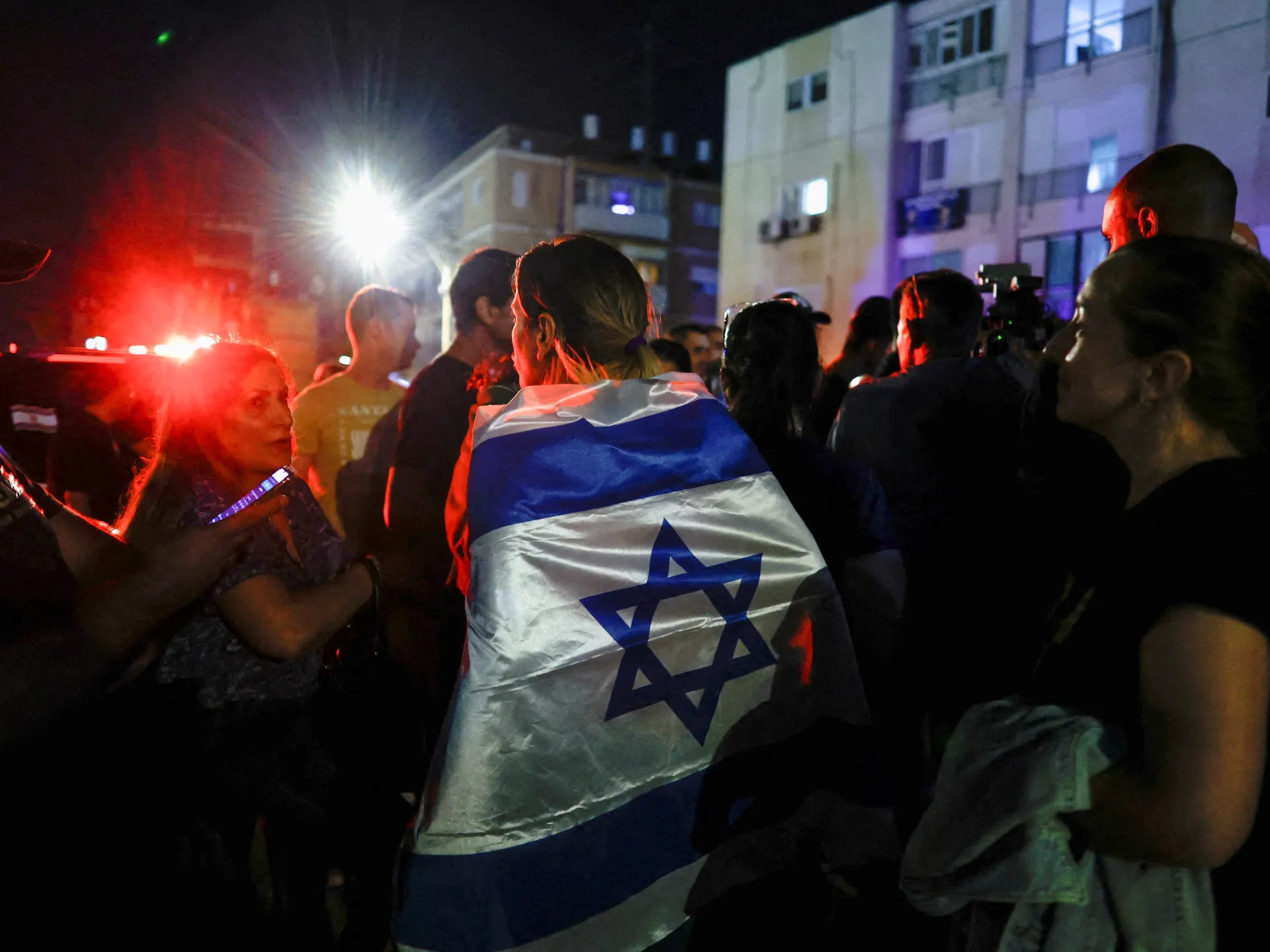
For the vast majority of Israelis, modern history is divided between the period before the Hamas-led attacks of October 7, 2023, and after. In the three years since Israel launched its genocidal war on Gaza following the attacks, Israeli society has undergone fundamental changes.
A sense of collective trauma has been amplified through political rhetoric and media hysteria to hitherto unseen levels in modern Israel, observers say.
Israel’s genocidal war on Gaza has killed more than 74,000 Palestinians, and Israel has expanded its attacks to several regional states.
The war on Gaza and a series of settler pogroms in the occupied West Bank, fuelled by the Israeli far-right, have contributed to Israel’s growing isolation from much of the world.
Daniel Bar-Tal, an Israeli political psychologist at Tel Aviv University, said October 7 shattered the myth of Israeli military invincibility.
Before October 7, 2023, a powerful sense of confidence regarding Israel’s supposed technological and military superiority was common.
That ended when Hamas and other groups stormed into Israel: Nearly 1,200 people were killed, and Palestinian groups took about 250 others captive.
The Israeli public had been generally isolated from the consequences of the military’s violent actions in Gaza and the occupied West Bank, and Bar-Tal said many were shocked that Israel’s Prime Minister Benjamin Netanyahu might have had prior intelligence about Hamas’s plans.
Inside Israel, the psychological impact of the attacks was palpable. “It disrupted [everything] immensely. It is a crisis that doesn’t leave the population,” he told Al Jazeera.
Palestinians, in particular, have lived with Israel’s genocidal response ever since.
Politicians have exploited the fear and trauma of the October 7 attacks to further their own ends, and are using them to target Palestinians as a whole.
“There is no doubt that many Israelis were gripped by genuine fear after October 7, but there is also no doubt, in my view, that political forces have exploited that fear to erase virtually every achievement made over the years in Jewish-Palestinian relations,” Israeli sociologist Yehouda Shenhav-Shahrabani said.
Countless polls suggest that Israeli society has lurched even further to the right over the past three years. Mainstream newspaper headlines have asked the question whether the left, which was the main bulwark for a two-state solution in Israel, still exists.
A huge number of Israelis continue to support the execution of Palestinian prisoners charged with “terrorism” and the continued expansion of illegal settlements in the occupied West Bank.
In a May 2025 survey of Israelis by Penn State sociologist Tamir Sorek, an overwhelming majority of respondents said they supported expelling Gaza’s residents. A significant minority also backed the “mass killing” of all residents of cities invaded by Israeli troops, as the biblical Israelites did at Jericho.
“October 7 was undoubtedly a watershed moment in contemporary Israeli politics,” noted Shenhav-Shahrabani. “I would say that it has taken us back a hundred years – in our collective consciousness, in our willingness to engage with one another, and, above all, in the level of mutual trust. This is an enormous setback, one that will be extremely difficult to overcome.”
Israel’s former Defence Minister Yoav Gallant has described Palestinians in Gaza as “human animals” and National Security Minister Itamar Ben-Gvir boasted of handing out thousands of government arms to settler groups already known for their often-deadly pogroms against Palestinian towns and villages in the occupied West Bank.
“The messianic and racist right has seized upon the catastrophe, not merely to justify its existing positions, but to push the boundaries of what can be said and done in Israeli politics,” said Shenhav-Shahrabani.
He acknowledges that October 7 did not create the Israeli right, but it had normalised positions previously considered extreme.
“Fear is undoubtedly a major factor in this transformation. But fear alone does not explain it. Fear is also being politically mobilised,” he said.
Anti-Palestinian views did not begin with October 7, 2023, either. Such abuses go back to the foundation of the state of Israel in 1948, the subsequent forcible displacement of some 750,000 Palestinians, and the erasure of Palestinian villages from the land.
In the years since, a growing number of international bodies and rights groups have described Israeli rule over Palestinians as apartheid. Systematic violence, including military assaults on blockaded Gaza, deadly West Bank pogroms and ongoing settler attacks and land seizures, which largely go unpunished, has also been widely documented by rights groups, particularly after October 7.
B’Tselem has noted an explosion in violence across the occupied West Bank, recording 1,107 Palestinians killed in “a single political project” between the Israeli military and settlers that appears aimed at forcing out the local population.
“October 7 allowed processes that were already under way to gain momentum and escalate,” Yair Dvir, from B’tselem, told Al Jazeera.
“The infrastructure of apartheid, repression and control over Palestinians became more violent, while the broader trajectory of eliminating Palestinian collective existence became clearer and more normalised – through the genocide in Gaza, the ethnic cleansing and dismantling of Palestinian society in the West Bank, and the intensification of discrimination and dehumanisation against Palestinian citizens of Israel.”
Topics in this story
Gathered from external sources. Rights to this text belong to whoever originally published it.