What is the US reproductive tourism industry really selling?
So, is the U.S. a nation that helps its people bear children, or one that designs children and sells them to any willing buyer?
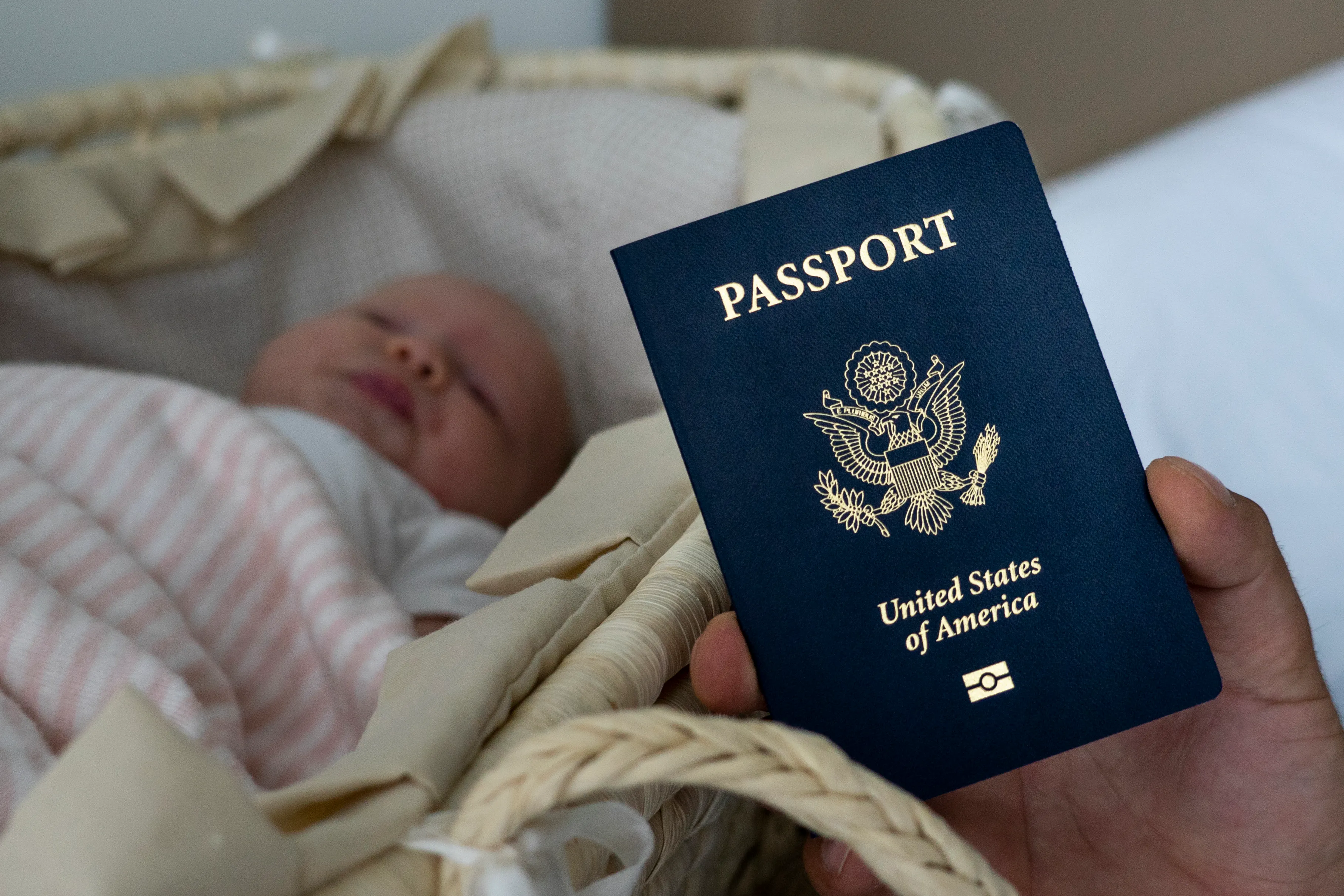
Following the Supreme Court’s landmark decision on birthright citizenship, moves to ban foreign nationals from using American surrogates dominated headlines. But lawmakers should not stop there. The U.S. should restrict all forms of reproductive tourism, not just birth-tourism.
Surrogacy is just one branch of a larger reproductive industry. In fact, most reproductive tourists seek in vitro fertilization . Before Congress prunes the branch, it should look at the tree and ask a blunt question: What exactly are we selling?
Strip away the language of “family-building” and “fertility journeys,” and the answer is that reproductive tourism sells the creation and selection of human embryos, the buying and selling of human eggs and sperm, and — thanks to birthright citizenship — potentially an American passport.
The industry’s own data tell the story plainly. A comprehensive study of the national IVF registry found that non-U.S. residents accounted for 59,246 assisted reproductive technology cycles between 2014 and 2022 , arriving from 182 countries. China alone generated 19,718 cycles, nearly three times as many as the next-closest country.
These patients do not use U.S. clinics the way Americans do. Compared with U.S. residents, foreign patients are much more likely to use pre-implantation genetic testing (68 percent versus 43 percent) and donor eggs (52 percent versus 9 percent). An earlier CDC analysis found the same pattern, as the tourist share of cycles more than doubled between 2006 and 2013 .
The international clientele is buying the specific services the rest of the world restricts or bans: advanced IVF technology, genetic screening and selection of embryos and gametes purchased from American donors. The lure of reproductive tourism in the U.S. relies on these ethically fraught aspects of the fertility industry to draw in foreign customers, many of whom cannot access these services abroad.
Britain, for example, abolished donor anonymity because it concluded children have a right to know where they come from. The United Kingdom, Canada, France, and Australia all ban non-medical sex selection in most cases. Italy and Turkey limit their own citizens’ ability to travel for third-party services. Most developed nations prohibit cross-border commercial surrogacy, making the U.S. a major outlier on all accounts.
With essentially no federal or state laws governing these practices beyond the FDA’s infectious-disease screening, services come down to clinic preference. For foreign nationals, the process is relatively straightforward: Apply for a B-2 medical visa or travel authorization, provide proof of medical arrangements and bring sufficient funds. Foreign nationals can even ship their own embryos into the country, classified as “human cells and tissues,” for genetic testing or surrogacy purposes.
So consider each component of the sale honestly.
First, we are selling human embryo creation on an industrial scale. Standard IVF produces more embryos than will ever be transferred, because surplus is efficient for success rates. An estimated 1.5 million human embryos now sit frozen in American storage tanks, a population larger than most American cities, suspended while their progenitors decide whether to implant, donate, discard, or simply stop paying the storage fees. Every reproductive tourist adds to this inventory and then, in many cases, flies home, leaving behind embryos whose fate no American law meaningfully governs.
Second, we are selling selection. Clinics market “family balancing.” to international patients. Couples travel from countries that outlawed the practice of culling embryos by sex and, increasingly, as polygenic screening companies enter the market, by predicted traits. It shifts the focus from infertility or the creation of a child to an emphasis on designing a certain kind of child.
Third, we are selling other people’s bodies and origins. Agencies openly advertise menus of egg donors by height, race (“Asian, Caucasian, African”), SAT score, and Ivy League degree to international clients, a form of catalog shopping for human characteristics that would be instantly recognized as grotesque in any other context. A recent example of this is Alysa Liu, the 2026 Olympic gold medal winner in women’s figure skating, whose Chinese father relied on donor eggs of an American and IVF for her conception, and a separate surrogate-mother for her gestation and birth.
Finally, we are selling citizenship. The Supreme Court ruled in June that the Fourteenth Amendment guarantees citizenship to virtually every child born on American soil. That answers the constitutional question for now and sharpens the policy question: Any foreign national who commissions a birth here is purchasing, along with everything else, a U.S. passport, birth certificate, Social Security Number, and all the benefits of U.S. citizenship.
The clinics are not shy about any of this, either. The California Center for Reproductive Health advertises an international menu listing egg donation, IVF, and “ gender selection ” side by side, with interpreters in Chinese, Russian, German, and Hebrew. Western Fertility Institute in Los Angeles markets itself abroad as a “ one-stop shop .”
San Diego Fertility Center courts patients who struck out under their home countries’ rules, promising beaches alongside the lab work. Pacific Fertility Center runs a dedicated affiliate for Japanese patients and has compressed the required visit to as short as 10 days. New York’s Center for Human Reproduction boasts of an international clientele that barely needs to set foot in the office.
Others offer full concierge packages — airport transfers, hotels, legal coordination — and state the value proposition outright: Not every country offers the same options. Egg donation and gender selection “are often limited or unavailable” where clients live.
These examples underscore how easy it is for foreign nationals to access such services in the U.S., even without a physical presence here.
A nation can take seriously its own infertility crisis without operating an open-borders bazaar in embryos, eggs, and passports for the clientele of the entire world. Indeed, when we encourage the surplus creation of human embryos, sex-selection, genetic grading and international access as mere “human cells and tissues” for paying clients from 182 countries, we are ratifying, in law and in commerce, the proposition that a child can be a product — specified, purchased, and delivered — on the world market.
So, is the U.S. a nation that helps its people bear children, or one that designs children and sells them to any willing buyer? Until we close our reproductive-technology borders, the world is entitled to assume we have given our answer.
Emma Waters is a Policy Analyst in the Center for Technology and the Human Person at The Heritage Foundation.
Topics in this story
Gathered from external sources. Rights to this text belong to whoever originally published it.