“Wrong again”: Andrew Kolvet hits back at Candace Owens over claims about Erika Kirk’s Idaho event
US Streamers News: Candace Owens and Turning Point USA are clashing over a Club America event at Nampa Christian School in Idaho. Owens alleged that 500 students were re.
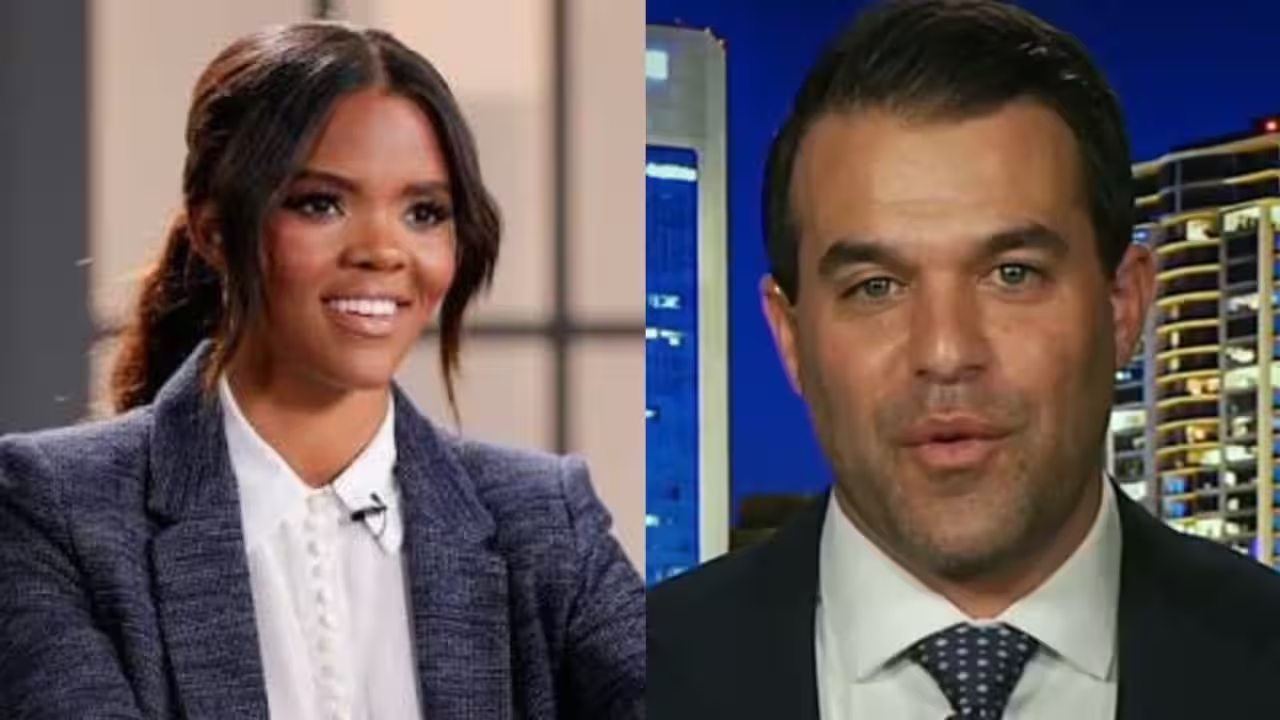
Candace Owens and Turning Point USA are clashing over a Club America event at Nampa Christian School in Idaho. Owens alleged that 500 students were required to attend the event featuring Erika Kirk and said parents were not allowed to join them. TPUSA spokesperson Andrew Kolvet rejected the claim and said students could opt out. He said three students did so while 500 chose to attend. The disagreement then shifted to whether students had voluntarily signed up for the event or whether the school organized it as part of the regular school day at all.Candace Owens questions whether Nampa Christian students chose to attend Erika Kirk eventThe dispute began after a post about the Club America tour stop celebrated the attendance of more than 500 students at Nampa Christian School. The post described Erika Kirk as delivering a message to a new generation of “America First leaders.” Owens responded by saying she had received emails from parents about the event.Owens described it as a “secret” gathering and claimed it was being held during the school day for middle and high school students. She questioned why a political organization was addressing minors at a private Christian school.Her main concern then became whether students had willingly signed up to attend.In one X post, Owens wrote:“The students were forced to attend this event as a school assembly. They could not opt out. The parents were informed they were not allowed to attend alongside with them.”She also questioned whether the event was being presented as evidence of voluntary interest in Club America when it may have been organized as part of the school's regular schedule.Owens later tagged Andrew Kolvet and argued that Charlie Kirk's original vision for Club America was based on students choosing to join and participate. She said the current event did not fit that model if students were brought to it through a school assembly.Kolvet disputed that description. He said students had the ability to opt out and that three students did so. According to Kolvet, more than 500 students remained at the event by choice.Andrew Kolvet says students could opt out as Owens continues questioningKolvet also explained why the event had not been publicly promoted ahead of time. He said TPUSA does not publicly market some events for security reasons and to maintain a safe environment for students.He also rejected the idea that the event was hidden from parents. Kolvet said parents had been informed and had the option to have their children opt out, and said she is “wrong again.”Owens continued to press him on a different question. She asked whether students had actually signed up for the event themselves or whether the school administration had scheduled it as part of the school day.“You didn’t answer my question. Did the students sign up to attend this event, yes or no? I am aware that technically, you can ‘opt out’ of pretty much anything in High School. But did these students opt-in, Andrew? Or did the administration organize this as a part of their regular day?”Kolvet responded by pointing to the distinction between a school assembly and a regular Club America chapter meeting. He also questioned whether Owens had never attended a school assembly herself.Owens maintained that this did not answer her question. She later said the event was a school assembly and argued that students therefore did not actively opt into it. She also claimed parents received information about the gathering through a weekly newsletter and were told they could not attend.The available public statements establish that the two sides disagree about how attendance should be characterized. Kolvet says students could opt out and that three did. Owens argues that being allowed to opt out is different from voluntarily signing up for an event during the school day.The dispute has also added another public disagreement between Owens and TPUSA leadership. Owens has continued to criticize the direction of the organization and Erika Kirk's role, while TPUSA has rejected her description of the Idaho event.As of September 18, the central disagreement remained unresolved publicly, with neither side providing evidence in the material reviewed that independently establishes whether students were required to attend or voluntarily registered for the event.Catch the latest World News and Live updates. Download the TOI app.
Topics in this story
Gathered from external sources. Rights to this text belong to whoever originally published it.