US sanctions global court as judge awarded Nobel Peace Prize
Secretary of State Marco Rubio announced Friday that the U.S. is imposing full blocking sanctions against the International Criminal Court (ICC), sharply escalating its fight against the global judicial body over criticism that it’s unjustly pursuing war crimes cases against Israel, American service members and the Trump administration. The sanctions announcement coincided with a former…
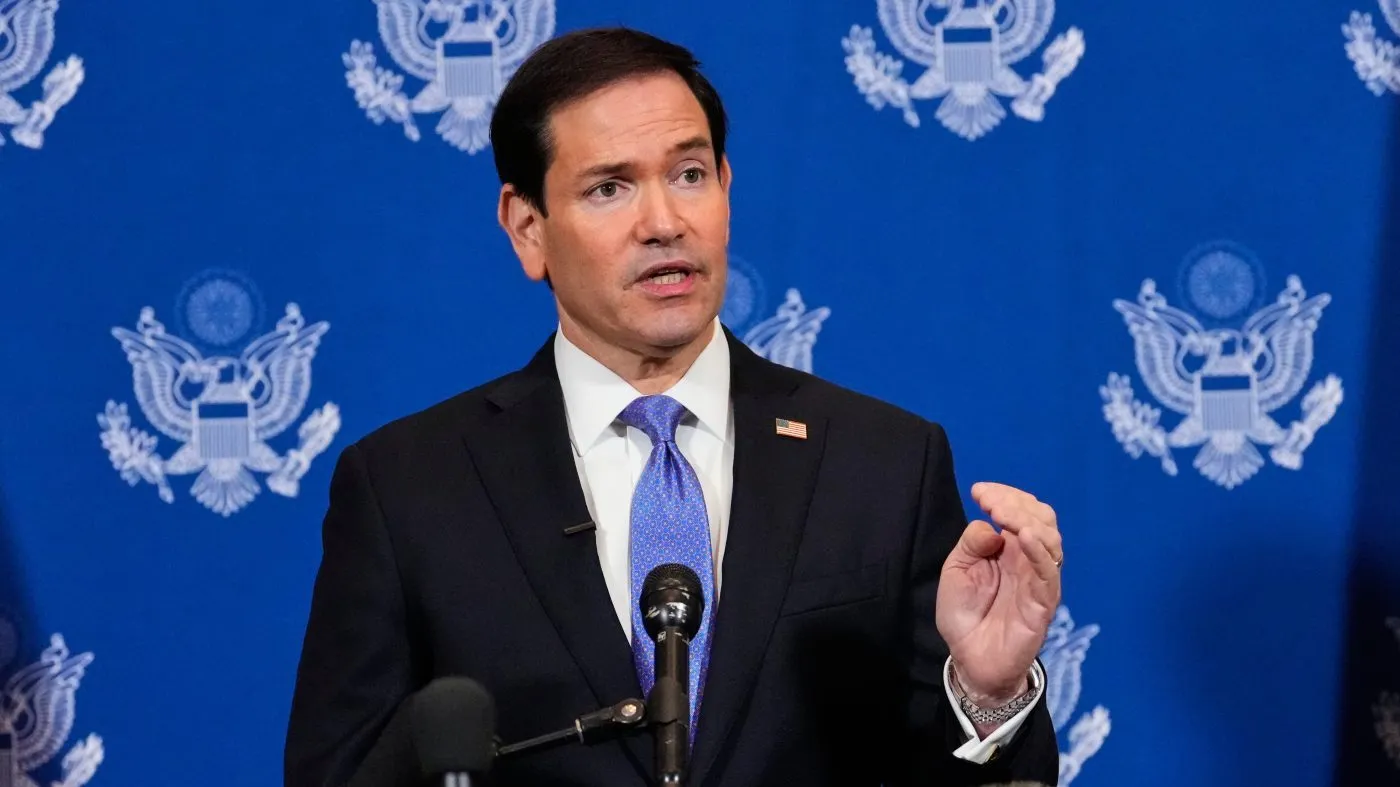
Secretary of State Marco Rubio announced Friday that the U.S. is imposing full blocking sanctions against the International Criminal Court (ICC), sharply escalating its fight against the global judicial body over criticism that it’s unjustly pursuing war crimes cases against Israel, American service members and the Trump administration.
The sanctions announcement coincided with a former ICC judge, Navi Pillay, being awarded the Nobel Peace Prize for her contributions to enlarging the scope and impact of international law. Pillay recently oversaw a United Nations report that concluded that Israel committed genocide in Gaza.
Rubio, in a video message, accused “globalist experts an ocean away” of wanting “more power, and they want it at the expense of our sovereignty as a nation.”
“We will ban transactions with this rogue court, cutting off their resources and crippling their ability to operate against us,” Rubio said, describing the sanctions.
“Because our message is clear: the United States and the American people are not subject to the jurisdiction of this fake ICC.”
The U.S. sanctions likely have the consequence of blocking any American or U.S. business from working with the court, making transactions involving banking, technology transfers, commercial services and professional engagement punishable.
As a result of the sanctions, the U.S. can seize any property or interests of the ICC that are in the U.S., or any ICC assets that are in possession or control by a U.S. person.
The ICC rejected the U.S. sanctions in a statement, calling them an unprecedented attack on an international judicial institution.
ICC President Tomoko Akane, who was sanctioned by the Trump administration in August, said the court will not halt its work investigating and prosecuting genocide, crimes against humanity, war crimes and the crime of aggression.
“The Court will continue to fully discharge its mandate, with independence and impartiality, acting only on the basis of the law and the evidence, for the sake of the countless victims of grave crimes,” she said.
The ICC called on its member states to take on considerable efforts “to ensure the continuity and resilience of its activities.”
“No one should be punished for serving the cause of justice. History will judge this moment,” the ICC statement read.
“Future generations, and above all the victims of mass atrocities, will ask how we responded when an institution created to protect them came under attack. They will ask whether the Court held firm and whether the international community defended the principles it proclaimed or allowed them to be abandoned under pressure.”
The Treasury Department is issuing a six-month general license so people and entities can wind down transactions with the ICC. This includes a 180-day general license allowing activity involving maintenance of operations; certain IT-related activities, including cloud and software services; activity related to the ICC pension plan; and authorizing certain activity related to ICC detainees.
Rubio called on the ICC member states, countries that have signed the Rome Statute that created the court and established its jurisdiction, to follow America’s lead.
“Either the ICC will end its threats, or we will end the ICC,” he said. “We expect our allies, many of whom are part of the ICC and that rely on American service members for their defense, to rein in this rogue court.”
The latest sanctions stem from Rubio’s proclamation in July that he would dismantle the Hague-based court “brick by brick,” by using the tools of the U.S. government and American diplomacy — including sanctions, visa bans and pressure on countries to withdraw from the Rome Statute.
At least five countries have left the ICC since the U.S. issued its demands, although all have bleak human rights records, have come under the court’s scrutiny or are led by a putschist regime. This includes Burkina Faso, Chad, Mali and Niger, all of which have undergone military coups. Venezuela announced in July its decision to leave the ICC, after coming under effective U.S. control after Trump seized the country’s authoritarian leader, Nicolás Maduro.
The U.S. is not a member of the court, and lawmakers from both parties argue it holds no jurisdiction to investigate allegations of U.S. crimes.
Democratic administrations, however, have encouraged the court’s legitimacy to pursue accountability in countries with weak justice systems, but they have pushed back on investigations of nonmembers like the U.S. and Israel.
Former President Biden removed Trump-era sanctions against the court. The ICC later deprioritized scrutiny of American service members in Afghanistan . Still, Biden called the ICC issuing an arrest warrant for Israeli Prime Minister Benjamin Netanyahu “outrageous.”
In February 2025, Trump issued an executive order permitting sanctions on the court, accusing the global judicial body of engaging “in illegitimate and baseless actions targeting America and our close ally Israel.”
Since then, the administration has blacklisted more than a dozen people and non-governmental organizations related to the court. Those sanctions are being challenged in U.S. courts.
Topics in this story
Gathered from external sources. Rights to this text belong to whoever originally published it.