New robot lab in Liverpool to speed up disease research
Lab-grown human organs will be used to test treatments, reducing the need for animal testing.
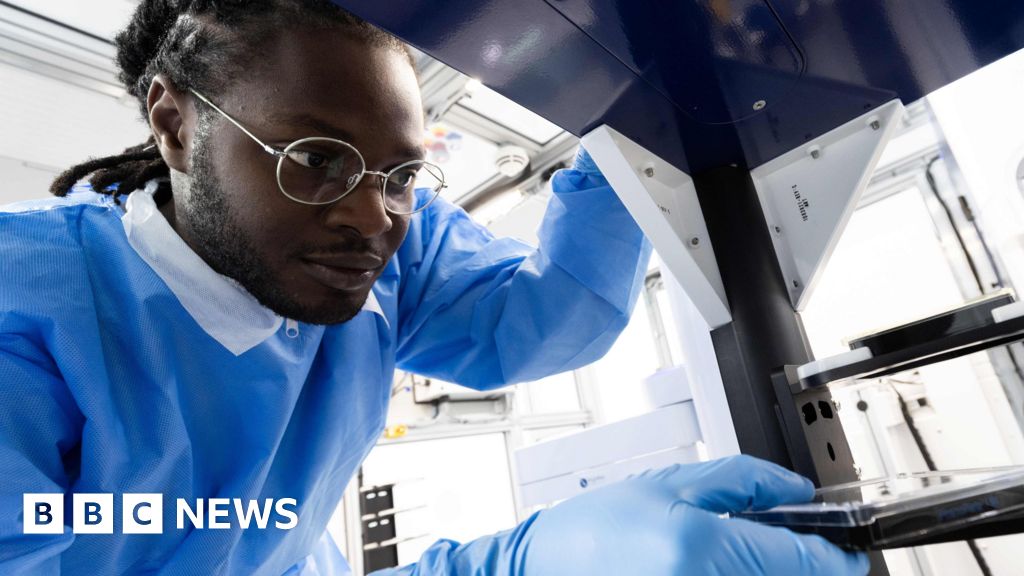
Researchers in Liverpool say a new robotic laboratory could help speed up vaccine development and reduce the need for animal testing.
The £20m facility at the Liverpool School of Tropical Medicine will use lab-grown miniature human organs to test treatments for infectious diseases.
The facility, which has been supported by the Infection Innovation Consortium (iiCON), is due to be fully open by 2027.
Pro-vice chancellor for research and innovation, Prof Giancarlo Biagini, said: "It is really exciting to be involved and it's going to accelerate the way we develop drugs, vaccines and diagnostics."
Biagini said that the use of mini organs, such as the heart and brain, is "amazing technology", adding: "You can actually see the heart beating".
He said using tissue created from human donors, rather than animals, could improve research and provide more reliable data.
The school's former boss and founding member of iiCON, Prof Janet Hemingway, said the project will "create several hundred cutting-edge technology jobs".
She added: "Although the robots will do a lot of the work, we are training humans to develop that technology.
"Clinicians and researchers will be able to spend more of their time thinking how they do the science better rather than routine work."
Listen to the best of BBC Radio Merseyside on Sounds and follow BBC Merseyside on Facebook , X , and Instagram . You can also send story ideas via Whatsapp to 0808 100 2230.
The Liverpool team preparing for future pandemics
Topics in this story
Gathered from external sources. Rights to this text belong to whoever originally published it.