In 1923, a Colorado businessman opened a hotel around an abandoned railway station beside giant petrified tree stumps; four decades later his 160-acre resort became part of a national monument
US News: In the spring of 1923, John D. Coplen opened a hotel on his ranch in Florissant, Colorado, built around the town's old railway station, which he had m.
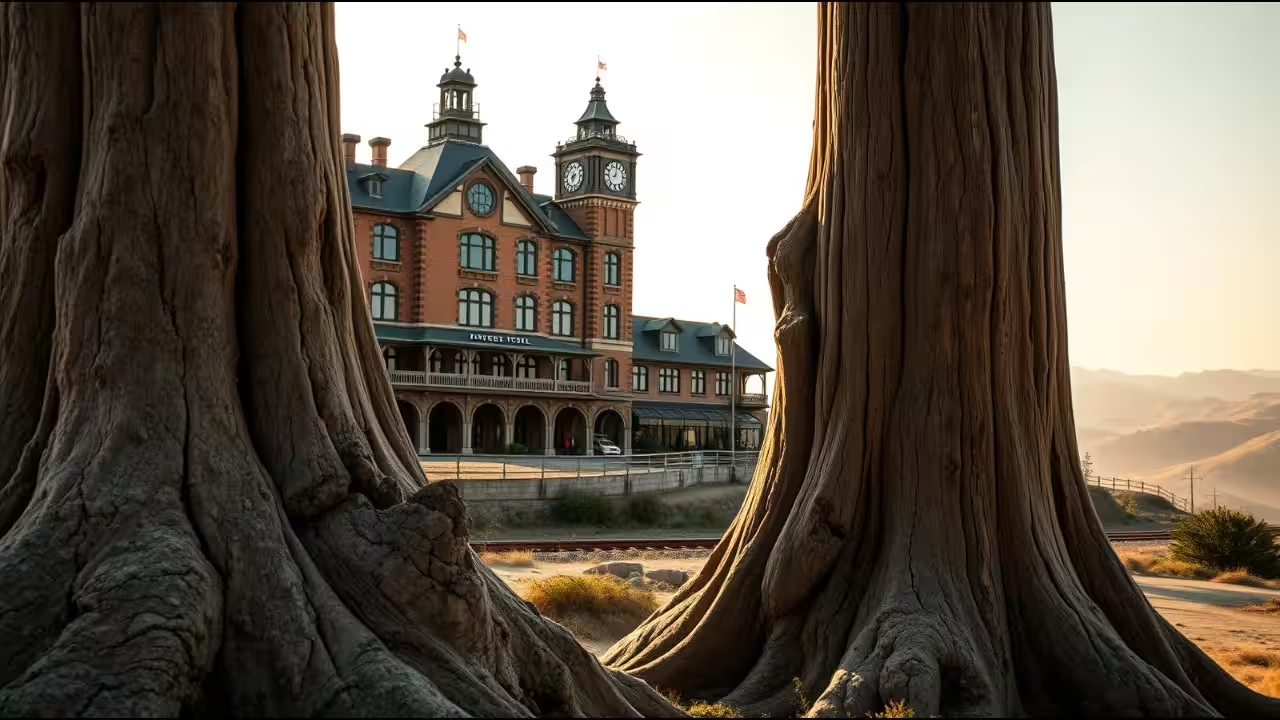
In the spring of 1923, John D. Coplen opened a hotel on his ranch in Florissant, Colorado, built around the town's old railway station, which he had moved onto the property and renovated into a lodge. The hotel stood near giant petrified redwood stumps and an outcropping of fossil shale, turning a site Coplen had spent decades protecting into a commercial attraction for visitors. Coplen was 75 by then and had built a successful career in mining and business across the American West. He had overseen the largely unoccupied Colorado ranch for almost 35 years, but his vision for the fossil beds had never changed. He believed that improving the site and adding a hotel would allow the public to experience its fossils in a way that resembled an early geological theme park. More than 2,900 people visited during the resort's first summer, with Coplen and his wife personally giving tours.How John Coplen's family connection led him to Florissant's fossil bedsCoplen's connection to the Florissant fossil beds began through his sister, naturalist Charlotte Hill. Charlotte and her husband, Adam, had purchased land in the Florissant Valley in 1874 and established what they called the Petrified Stump Ranch. The property sat in the middle of one of the richest fossil sites then known, containing enormous petrified redwood stumps and fossil-rich shale. Charlotte and Adam operated the ranch as a tourist and scientific site, giving visitors access to the fossils while also working with scientists interested in the discoveries. Coplen was already familiar with the site through his sister's work. In 1883, a group of Denver businessmen formed the Colorado Museum Association to buy the ranch and protect its fossils from being collected and shipped to museums and universities in the East. Coplen led the association. At the time, Colorado had few public resources available for preserving its scientific collections, so the group hoped to create a state museum and keep the fossil beds accessible within Colorado.Why the Colorado Museum Association's conservation plan fell apartFor the next 20 years, the association owned and operated the ranch almost like a private conservatory. Visitors and scientists could enter only with special permission, limiting the uncontrolled collecting that had already threatened the fossil beds. But the association's plan for a state museum never materialised, and the organisation dissolved in 1903. By then, Coplen had become a very wealthy businessman with mining interests in Arizona, New Mexico and Colorado. He bought out the remaining investors and took full ownership of the ranch, including its petrified wood and fossil specimens. The property was eventually renamed the Coplen Petrified Forest Hotel and Resort of Florissant. Coplen's decision was influenced by more than conservation. He believed the fossil beds could also become a public attraction. After years of leaving the ranch largely unoccupied, he returned to Florissant with his wife and sister each summer from 1922 to 1924 to oversee construction of the hotel. The old Florissant railway station was moved to the ranch and renovated into the lodge, which was positioned near the petrified stumps and fossil shale. A road was also laid out to the hotel before it opened in spring 1923.How a career in copper mining helped fund Coplen's fossil bed resortCoplen had built his fortune through mining and business. Born in Indiana in 1844, he moved with his family to the pioneer settlement of Colorado City when he was 16 and later established himself in Colorado's mining industry. In 1904, he moved to Globe, Arizona, to oversee the Inspiration Copper Mine Company. A self-trained mining engineer, Coplen developed a less expensive method for extracting copper from low-grade ore, helping the Inspiration Mine become one of the largest copper producers in the United States. By the time he retired to a large ranch near Riverside, California, Coplen still had mining interests, a large dairy farm in New Mexico and the fossil property in Colorado. At 75, he returned to Florissant with his wife and sister to supervise the hotel project. Once it opened, he and his wife gave tours themselves. More than 2,900 visitors came during the first summer, showing that Coplen's idea of turning the fossil beds into a destination could work.How Coplen's 160-acre resort eventually became part of a national monumentCoplen sold the 160-acre resort in 1927, a year before his death. The property continued to operate as a private tourist attraction under later owners, eventually becoming part of the history of what is now Florissant Fossil Beds National Monument. Congress established the national monument in 1969, and the National Park Service later acquired the former Coplen property in 1973. Today, more than 80,000 people visit Florissant Fossil Beds National Monument each year. The site protects the giant petrified redwood stumps and fossil-rich layers that first attracted scientists and tourists in the 19th century, including the same fossil landscape Coplen had spent decades trying to preserve and turn into a public attraction. The old railway station that became his lodge is also part of the site's history, a reminder that long before Florissant became a national monument, it was already being developed as a place where visitors could come to see the fossil record for themselves.Catch the latest World News and Live updates. Download the TOI app.
Topics in this story
Gathered from external sources. Rights to this text belong to whoever originally published it.