Judge plans to declare mistrial in Lindsay Clancy murder trial after jury fails to reach a verdict
The jury was unable to come to an agreement on whether Clancy was criminally responsible for killing her three children after more than 38 hours of deliberat...
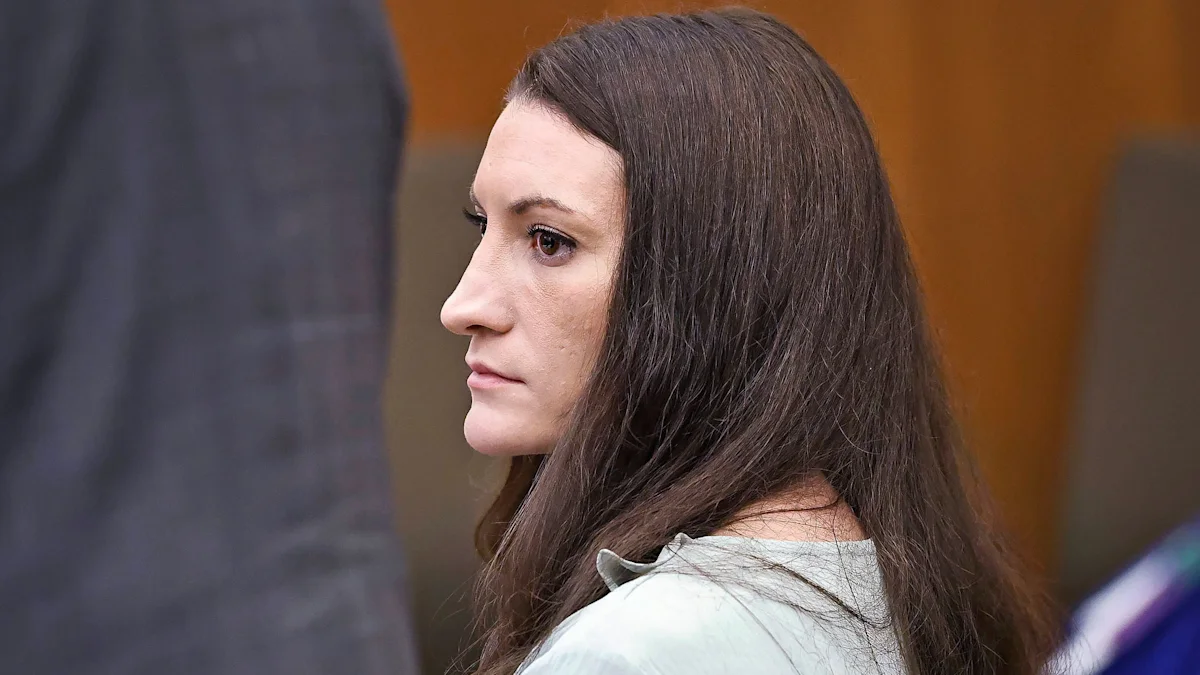
The judge in the Lindsay Clancy murder trial announced his intention to declare a mistrial on Friday after the jury was unable to reach a verdict on whether the former nurse, whose defense argued that postpartum psychosis caused her to kill her young children, bears criminal responsibility for her actions. Clancy's attorney was given one hour to petition a higher court to stay that decision before it becomes final.
Clancy, 36, admitted to strangling her children — Cora, 5; Dawson, 3; and 8-month-old Callan — at their Duxbury, Mass., home in January 2023. However, her lawyers argued that she could not be held criminally responsible because she was suffering from a rare mental illness that they said made her unable to understand the wrongfulness of her actions.
Prosecutors contended that Clancy, who was never formally diagnosed with postpartum psychosis, carefully planned the killings and bears full responsibility for her children's deaths.
The trial hinged largely on discussions of Clancy's mental state. Over nearly five weeks of testimony, a series of family members and medical professionals took the stand to describe the mental and emotional struggles she endured in the months leading up to the killings.
In the end, the jury was unable to come to a consensus on whether Clancy was criminally responsible, resulting in a mistrial. She had been charged with three counts of murder in the first degree. The case finally ended following more than 38 hours of deliberation after the jury came to the judge for a third time to inform him that they were deadlocked, which triggered an automatic mistrial under Massachusetts law.
It wasn't immediately clear after the ruling whether the prosecution would seek a retrial or whether Clancy would remain in custody while the next steps in her case are determined.
Clancy, a former labor and delivery nurse, had been receiving treatment for severe mental health issues in the months after the birth of her third child, including intrusive thoughts, depression and insomnia. Her ex-husband, Patrick Clancy, testified that she was "having one of her best days" in the hours before she killed her children on Jan. 24, 2023. She had taken their daughter to a doctor's appointment, built a snowman with their kids and helped with art projects, he said.
"I was hopeful," Patrick told the jury. "She seemed much better."
Later that evening, however, Patrick came home from running errands to find that Lindsay had strangled their three children with exercise bands and attempted to end her own life by cutting herself and jumping out of a second-story window. Lindsay suffered a spinal cord injury from the fall that left her paralyzed from the waist down.
According to legal filings , Lindsay had described hearing "a loud, demanding, repetitious" male voice telling her, "This is your last chance. Kill the children so you can kill yourself," and said she "felt a force come over her."
"I lost all control. My body started acting without any control on my part. I was just following commands," she said afterward, according to a lawsuit she filed this year that accuses the medical providers who treated her in the months before the killings of negligence and malpractice.
The course of Lindsay's mental health decline was a central topic throughout the trial. She had reported experiencing postpartum anxiety after the births of her first two children. Those symptoms, along with signs of depression, returned in a more pronounced way after her youngest child, Callan, was born in May 2022.
Her anxiety escalated after roughly 12 weeks postpartum , around the time when she was scheduled to end her maternity leave and return to work.
In September 2022, Lindsay began seeking treatment for her symptoms. Over the next four months, she received care from several psychiatric professionals and was prescribed a total of 13 medications , including Zoloft, Ativan, Prozac and Ambien. Despite this treatment, her mental health continued to decline.
"She could not emote. She couldn't feel love. She couldn't feel happiness. She felt heavy. She couldn't walk. She couldn't bathe. She had difficulty relating to people," Lindsay's attorney, Kevin Reddington, said while describing her condition during the trial.
In mid-November, she went to the emergency room for help with her increasingly severe insomnia, but the treatment she received did not work. By the end of that month, she reported experiencing symptoms of dissociation that left her unable to determine what was real.
"She had horrible thoughts," Dr. Paul Zeizel, a clinical and forensic psychologist who spoke with Lindsay after the killings, testified. "She felt that people could actually hear her thoughts. The thoughts were so loud that strangers could hear them."
In her personal diary, which was read as evidence during the trial, Lindsay described living with "crazy brain fog" and feeling "incredibly sad and guilty" about not breastfeeding Callum.
Lindsay's mental health continued to deteriorate throughout December as she experienced suicidal ideations and, according to her lawsuit, "auditory" hallucinations. Her mother, Paula Musgrove, testified that toward the end of the month, Lindsay told her and her husband that she had "thoughts of harming the children."
Patrick's mother, Susan Clancy, testified at the trial that Lindsay was "begging for help" in the weeks before the killings.
Lindsay checked herself into a psychiatric hospital on New Year's Day and stayed there for five days before being discharged on Jan. 5, 2023. According to her phone's search data , which was presented at trial, she searched online for information on suicide methods and treating hallucinations, and sought answers to the question, "Can you treat a sociopath?"
She had a final virtual appointment with a psychiatrist on Jan. 23, the day before the killings.
Prosecutors refute Lindsay Clancy's claims
Throughout the trial, prosecutors argued that, although Lindsay was clearly struggling with her mental health, she acted "intentionally, rationally and swiftly" when she made the choice to kill her children.
"This was not a woman in the throes of psychosis," Shanan Buckingham, an assistant district attorney for Plymouth County, told the jury during her opening statement in late July.
The prosecution relied heavily on the testimony of medical professionals who treated Lindsay, each of whom said she did not exhibit signs of the kind of psychotic break that she says led her to commit the killings.
"I did not have any concerns about her safety or her risk for anybody else," said Dr. Alia Goodheart, a psychiatrist who led Lindsay's care during her inpatient hospital stay in early January.
Dr. Jennifer Tufts, a psychiatrist who treated Lindsay from September 2022 until the day before the killings, told the jury that Lindsay never expressed specific intentions to take her own life and never mentioned thoughts of harming her children. Prosecutors say she hid those thoughts.
"I would have been very concerned if I had heard that," Tufts said.
Psychiatric nurse practitioner Rebecca Jollotta testified that Lindsay told her about "persistent, intrusive thoughts of suicide" but had not discussed a specific plan to hurt herself or her children. Jollotta also said Lindsay showed no signs of psychosis or mania.
Goodheart, Tufts and Jollotta are among the medical professionals and clinics that are named in Lindsay's lawsuit alleging they "failed her completely" when she was in severe need of help.
"This is a woman that did not get … the medical treatment that she so deserved," Reddington said during his opening statement to the jury.
Lindsay's defense team focused heavily on what it says were major errors made by the various medical professionals who treated her. Her lawyers argued that they missed clear signs that she was in the midst of a psychotic breakdown and subjected her to an abruptly shifting regimen of drugs that only made her condition worse.
Zeizel, who was called to testify by the defense, said Lindsay was unable to appreciate the "wrongfulness" of her actions.
"She was unable to conform her behavior to the rule of law. She had no appreciation for the wrongfulness of her act," he said.
In closing arguments, Plymouth County Assistant District Attorney Jennifer Sprague shared the prosecution's theory of why Clancy killed her children.
"She was depressed. She was exhausted. She was done. She didn't want to try anymore. She felt damaged. But those kids — those kids were her protective factor. Those kids were keeping her from ending her misery. And so, she had to remove the protective factor. And I'm not saying she was happy about it. I'm saying it was what she had to do to end her misery," Sprague said.
The trial has brought renewed national attention to postpartum psychosis , a rare and poorly understood condition that affects between 1 and 2 out of every 1,000 women after childbirth.
"We know that we don't train our doctors in it, that it's massively missed," Dr. Veerle Bergink, a psychiatrist at the Icahn School of Medicine at Mount Sinai in New York City, told NPR .
Dr. Susan Hatters Friedman, a reproductive and forensic psychiatrist at Case Western Reserve University in Cleveland, described the condition as "the scariest mental illness that I know of."
"You have these symptoms happening rapidly, you may or may not have any mental health history or any mental health literacy, and you've got this dependent little person with you," she said.
The case has also sparked a broader conversation about the shortcomings in postpartum mental health care in the United States, with women on social media sharing their own stories about not receiving the care they needed for more common conditions, like postpartum depression.
If you or someone you know is experiencing suicidal thoughts, call 911, or call the 988 Suicide & Crisis Lifeline at 988 or 1-800-273-8255 or text HOME to the Crisis Text Line at 741741. (edited)
Topics in this story
Gathered from external sources. Rights to this text belong to whoever originally published it.