In 2006, George W Bush used a presidential proclamation to establish a 139,797-square-mile marine monument in the Northwestern Hawaiian Islands; it later became the foundation for much larger protected seascape
In 2006, President George W. Bush used a presidential proclamation to establish the Northwestern Hawaiian Islands Marine National Monument, protecting 139,797 square miles of ocean and reinforcing the conservation of this vital marine ecosystem. Discover the impact and expansion of this monumental decision.
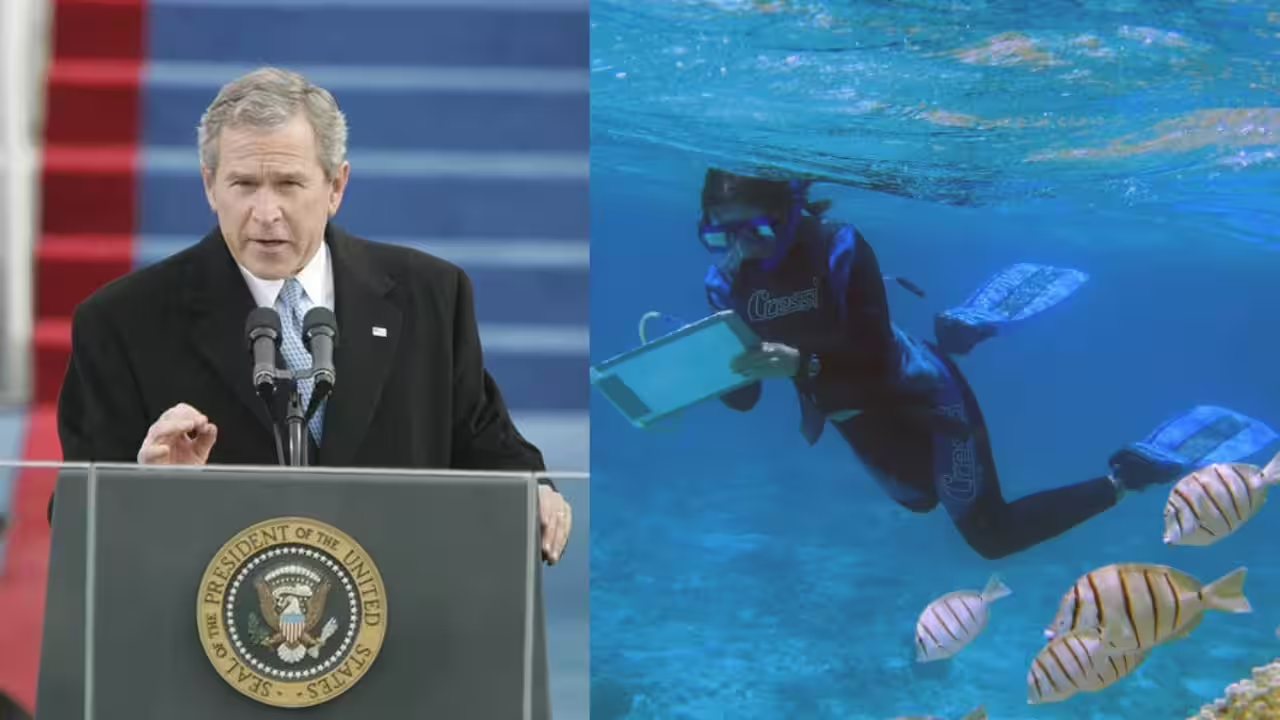
Far from Hawaii’s main islands lies a chain of atolls, coral reefs, submerged banks and islands spread across a vast stretch of the Pacific. Much of the region is remote enough that its reefs and wildlife developed with relatively little human interference. In 2006, the US government took unprecedented large action to preserve that marine environment, using a presidential proclamation rather than waiting for Congress to pass new legislation.According to the National Oceanic and Atmospheric Administration (NOAA), on 15 June 2006, President George W. Bush established the Northwestern Hawaiian Islands Marine National Monument under the Antiquities Act. The monument covered 139,797 square miles (362,073 sq km) of ocean, islands, reefs, shoals and surrounding waters. At the time, it was among the world's largest marine protected areas. The region supported more than 7,000 marine species, with roughly a quarter found only in the Hawaiian Archipelago.A vast ocean protection zoneThe designation also marked a major departure from how protected areas were typically created. Instead of designating a traditional land-based national monument, the administration used the Antiquities Act of 1906 to designate a vast area of oceans and their lands. This act gives U.S. presidents the power to declare national monuments on federal lands that contain historical or scientific objects.According to the George W. Bush White House Archives, the proclamation placed the waters and federal lands within the monument under a broader conservation framework. Federal lands and interests were withdrawn from activities such as mining and mineral leasing, while restrictions were placed on activities that could damage the marine ecosystem. The area was important not simply because of its size, but because it contained coral reefs, fish, seabirds, marine mammals and other wildlife, including the endangered Hawaiian monk seal and threatened green sea turtle. The proclamation also recognised the region's cultural importance to Native Hawaiians and its connections to early Polynesian history.Fishing and other activities faced restrictionsProtecting an area this large inevitably meant changes to activities within the monument. The proclamation prohibited unauthorised entry, recreational and commercial activities, resource extraction and waste dumping. Commercial fishing was also phased out over five years. However, the regulations were not intended to sever all ties between people and the region. The proclamation made provisions for Native Hawaiians to access the region for cultural purposes through a permit process.It also provided for a management system that involved NOAA, the US Fish and Wildlife Service and the State of Hawaii. While NOAA had the lead role in managing the marine areas, the Fish and Wildlife Service managed areas that were part of wildlife refuges and the Battle of Midway National Memorial. This management system was critical because the monument encompassed both marine and terrestrial regions.From Northwestern Hawaiian Islands to PapahānaumokuākeaIn March 2007, Bush amended the original proclamation and gave it the name Papahānaumokuākea Marine National Monument, recognising its Native Hawaiian cultural significance. As reported by Papahānaumokuākea, the monument's story did not end with its designation. A decade later, in August 2016, President Barack Obama expanded the monument by another 442,781 square miles, bringing its total area to 582,578 square miles.Today, Papahānaumokuākea is managed jointly by federal agencies, the State of Hawaii and the Office of Hawaiian Affairs, safeguarding reefs, islands and surrounding waters that support thousands of marine species while also protecting an area of major cultural importance to Native Hawaiians. President Bush's 2006 designation was not just about protecting remote Hawaiian islands. This move created a conservation model covering almost 140,000 square miles of ocean and laid the groundwork for future expansions.You use AI every day. Now get your AI Quotient. Take the AIQ test.
Topics in this story
Gathered from external sources. Rights to this text belong to whoever originally published it.