Should Taiwan be worried after Trump drops support for South Korea?
Last week, Trump walked back a key element of America’s security commitment to the Indo-Pacific.
President Trump has discovered, painfully, that Iran is no Venezuela.
His brilliantly executed military operation partially decapitating a criminal South American regime could not easily be replicated against a far more powerful adversary in the Mideast — especially when it is actively supported by nuclear-armed China, Russia and North Korea. More ominous than the current Iran stalemate itself, Trump and his advisers have over-learned that geopolitical lesson and misapplied it to other confrontations with America’s enemies.
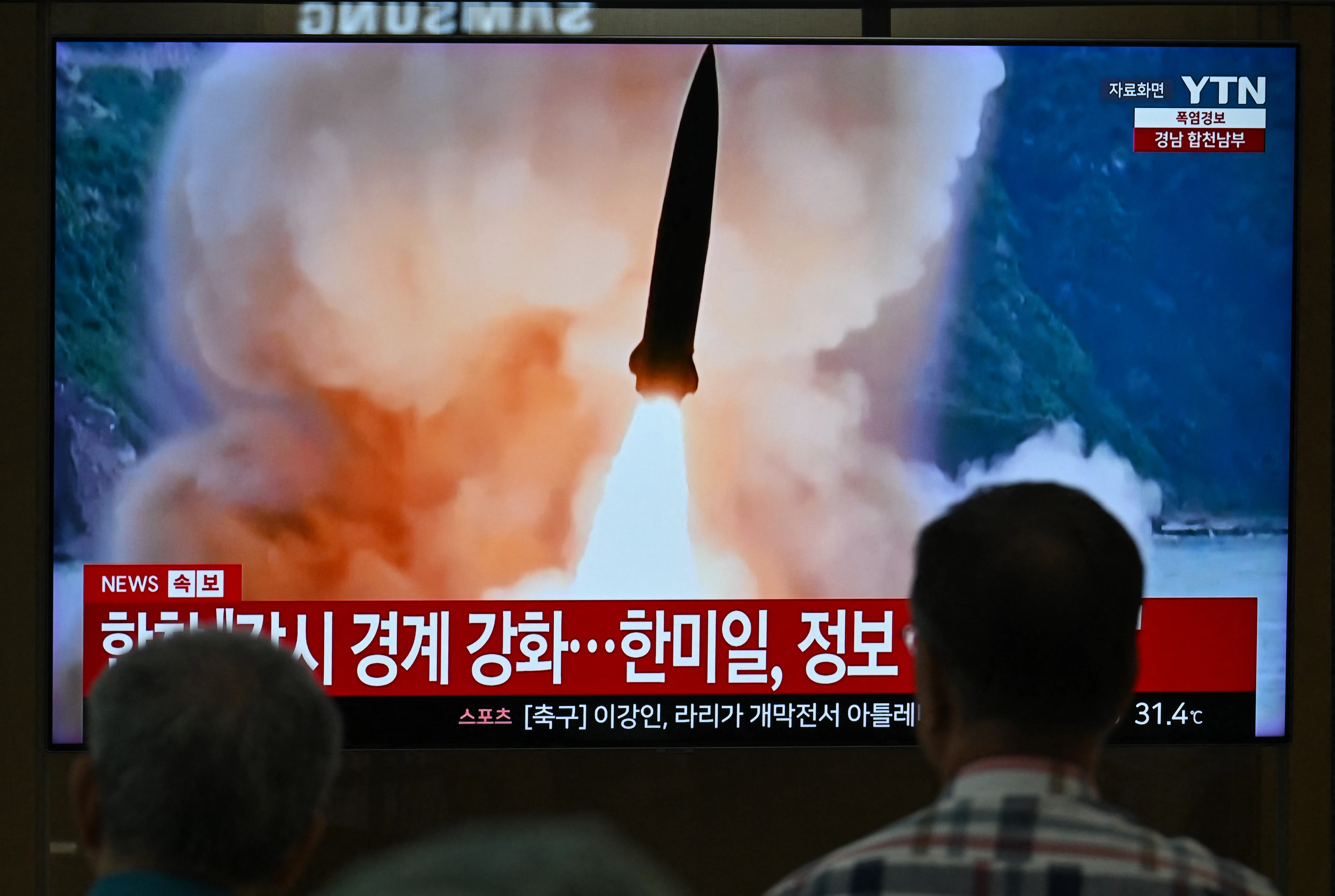
Last week, Trump walked back a key element of America’s security commitment to the Indo-Pacific. “Based on my very good relationship with Kim Jong Un, of North Korea,” said Trump, I am not happy with the fact that the United States has, long ago, agreed to participate in Joint Military Exercises with South Korea.”
He directed Defense Secretary Pete Hegseth to curtail U.S. participation in the exercises the two nations have carried out for decades. The drills are conducted in accordance with the 1954 Mutual Defense Treaty that is identical to the U.S. treaty executed with Taiwan the same year, after the end of the Korean War . Trump indicated it was a form of payback for Seoul’s decision not to participate in the current U.S. operations against Iran .
Trump also said the joint drills are an unnecessary and provocative expense since Kim Jong Un has been “unthreatening and respectful” during his presidency. In one fell swoop, he gave North Korea the major concession Kim, his father, Kim Jong Il, and his grandfather, Kim Il Sung, have sought and been denied by 14 presidential administrations of both parties. Trump did not suggest that the exercise freeze is related to allegations of U.S. munitions shortfalls related to the conflicts in Iran and Ukraine, but both allies and adversaries can conclude that the United States is overstretched in this multifront confrontation.
Two of the most fraught issues in the Indo-Pacific are China’s expansionist and legally unfounded claims to Taiwan and to Scarborough Shoal in the Philippines. Yet neither has been mentioned. It appears that Team Trump is anxious about doing or saying anything that could ruffle leader Xi Jinping’s feathers before his upcoming meeting with Trump in Washington next month.
Badly burned by the Iran misadventure, the administration is now shying away from any moral or even declared policy commitment to support Taiwan against Chinese aggression. In danger of becoming a dead letter is the congressional mandate in the 1979 Taiwan Relations Act, as well as the many other congressional actions meant to protect Taiwan — all of which might fall into what Elbridge Colby, Trump’s policy adviser at the Defense Department, now calls legacy commitments not suitable for today’s “ flexible realism [and] the foreign policy of common sense. “
That new approach hardly describes Trump’s handling of the confrontation with Iran, and ominously suggests that its tragic mistakes have further paralyzed the president’s will to confront Xi, who has somehow ingratiated himself with Trump despite having deceived him on several major issues: the COVID pandemic, honoring trade agreements, support for Russia’s invasion of Ukraine, and providing assistance to Iran.
Colby is presently managing the China-Taiwan portfolio. He as outspoken in questioning U.S. support for Ukraine during the Biden administration, writing in 2024 that the resources being used for Ukraine’s defense that he said would be better used to shore up Taiwan’s security against the growing threat from China. In his confirmation hearing to be part of the new Trump administration, however, he significantly softened his tone on the Chinese danger, when he said Taiwan is an important U.S. interest but “ not an existential one. “
Last week, given the widely recognized failure of Trump’s tragic Iran misadventure, Colby has again moved toward the more accommodationist approach to China favored by Trump. Speaking in the Philippines, America’s oldest security ally in Asia, Colby described the new approach to Chinese aggression as “ both realistic and perhaps bracing but also reassuring. ” He said the administration will now seek to accomplish its strategic objectives with China by downplaying areas of friction — Taiwan being the most dangerous among them.
“This means a strong and growing U.S. investment in the region,” he said. “But it is also coupled with a newfound but common sense expectation of much greater effort and contribution by our allies and partners. Not in a hectoring or unbalanced way. To the contrary, in a spirit of partnership, not dependency; of realism, not idle cloud-castle abstraction; of respect, not patronization.”
Colby listed America’s “counterparts in Manila, Bangkok, Jakarta, Singapore, Hanoi, Kuala Lumpur, and elsewhere — who have regular and frequent conversations with us. … They know that we are actively expanding our forward posture, accelerating the delivery of hard combat capabilities to the theater, and building out the physical architecture of a true denial defense.”
Colby’s list includes the capitals of two U.S. treaty allies and one former enemy, but no mention of Taipei. In fact, the name of Taiwan is absent from the entire presentation except for a passing reference to the first island chain as part of the National Security Strategy .
In these circumstances, Taiwan and its strong contingent of supporters in Congress and widely in the country are right to worry about what direction U.S. policy will take on this critical issue — and what unilateral concessions Trump might make on Taiwan’s fate.
Trump’s softer line on both South Korea and Taiwan suggest that his failed war in Iran, coming after his relatively easy and precise Venezuela operation, has disoriented his administration and distorted its perception of geostrategic realities. That does not bode well for international peace and stability.
Joseph Bosco served as China country director for the secretary of Defense from 2005 to 2006 and as Asia-Pacific director of humanitarian assistance and disaster relief from 2009 to 2010. He is a nonresident fellow at the Institute for Corean-American Studies, a member of the advisory board of the Global Taiwan Institute and member of the advisory board of the Vandenberg Coalition.
Topics in this story
Gathered from external sources. Rights to this text belong to whoever originally published it.