Kurdish-led SDF announces dissolution, integration into Syrian state
The commander of the Kurdish-led Syrian Democratic Forces (SDF) Mazloum Abdi announced the dissolution of the group on Tuesday, saying it would be fully inte...
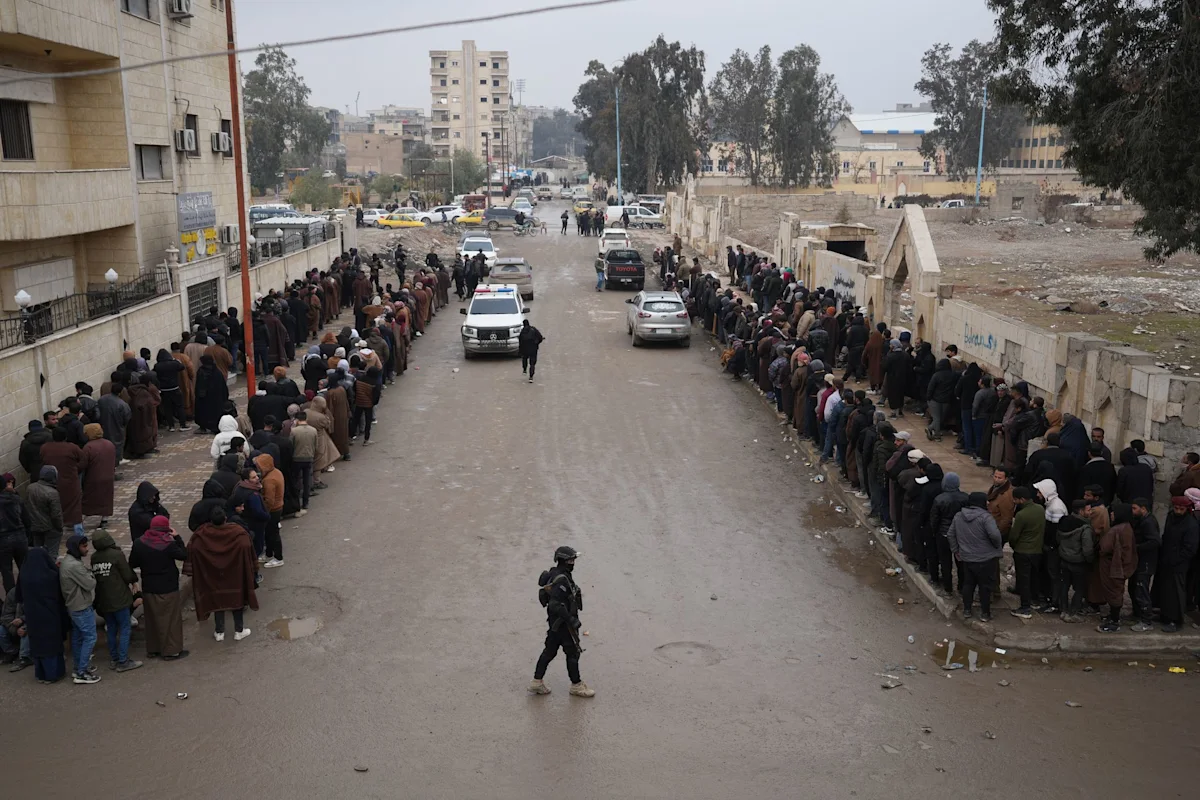
The commander of the Kurdish-led Syrian Democratic Forces (SDF) Mazloum Abdi announced the dissolution of the group on Tuesday, saying it would be fully integrated into Syrian state institutions.
In a press statement delivered at the presidential palace in Damascus after a meeting with transitional President Ahmad al-Sharaa, Abdi said the Kurdish Autonomous Administration in north-eastern Syria - established during the country's civil war - would also be dissolved.
Abdi said the SDF's mission had ended and that the group was moving "from the phase of defence to the phase of building Syria."
"All military and civilian formations" affiliated with the SDF and the Kurdish Autonomous Administration would also be integrated into state institutions, Abdi said.
The SDF was formally established in October 2015 and became the main US-backed force fighting Islamic State in north-eastern Syria.
The announcement represents a major step toward ending the separate military and administrative structures that Kurdish-led authorities have maintained in parts of north-eastern Syria since the fall of long-time dictator Bashar al-Assad in late 2024.
After government forces withdrew from large parts of north-eastern Syria during the 2011 uprising, Kurdish forces established control over much of the area.
Following the ouster of al-Assad in December 2024, Damascus and the Kurdish-led authorities began negotiations over the future of the SDF and the administration of north-eastern Syria.
The SDF and the Syrian transitional government signed an agreement on January 29 to integrate the force, along with the Kurdish region's security and administrative bodies, into state structures.
The step came following weeks of clashes between government forces and SDF fighters in north-eastern Syria.
"We want this day to mark a real transition: from the battlefield to the field of development, from the era of arms to the era of peace, and from defending Syria to building Syria," Abdi said on Tuesday.
Under Assad, Kurds were marginalized and faced restrictions on cultural and linguistic expression, while a 1962 census in the north-eastern Hasakah province left tens of thousands without Syrian citizenship.
Kurdish-language education was not formally recognized in state schools, a longstanding Kurdish demand.
Abdi said he had asked al-Sharaa for an open mind regarding the issue, noting that "the right to education in Kurdish is among the most fundamental rights of our Kurdish people."
Topics in this story
Gathered from external sources. Rights to this text belong to whoever originally published it.