Japan has thousands of abandoned homes; one hillside town named Onomichi is turning century-old empty houses into places where people live, eat and create
Rest of World News: Japan has thousands of abandoned homes, but in the hillside city of Onomichi, one ambitious restoration project is showing what can happen when an emp.
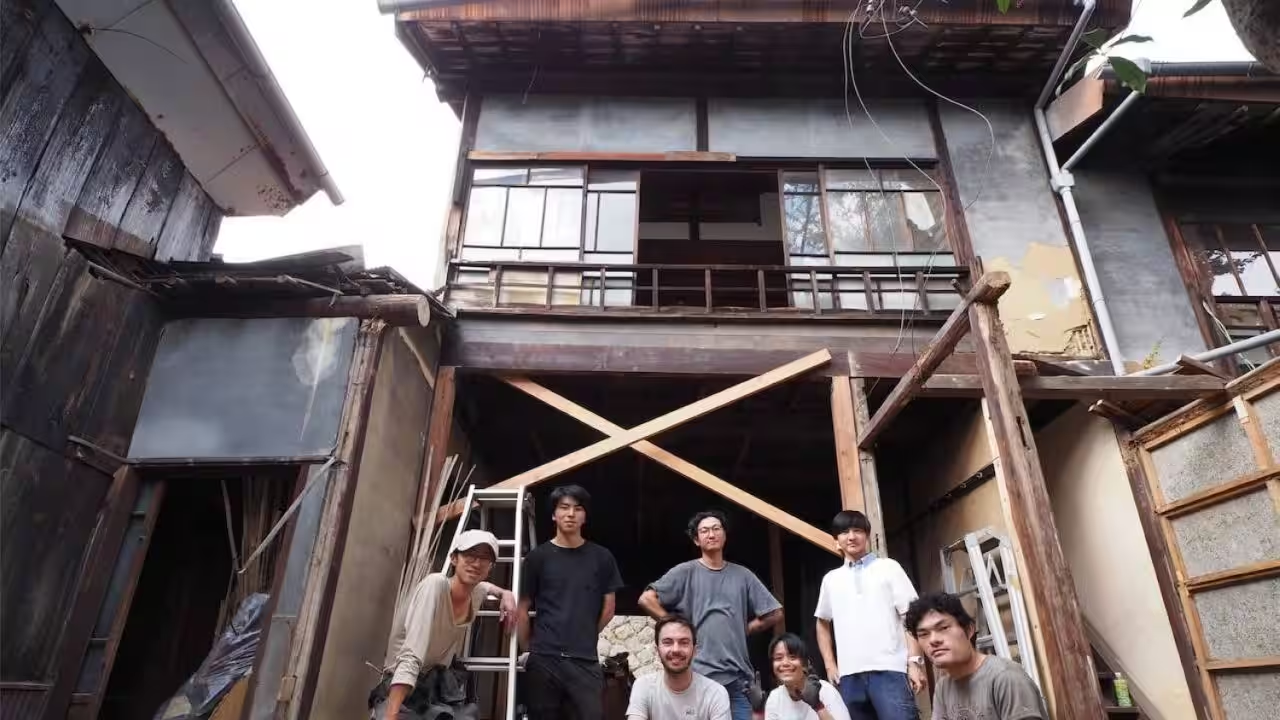
Japan has thousands of abandoned homes, but in the hillside city of Onomichi, one ambitious restoration project is showing what can happen when an empty building is given another chance. ‘Labyrinth House,’ a cluster of old properties that has undergone years of renovation, is being transformed into a place where people can live, share food and pursue creative work. Its story sits within a wider movement to rescue vacant homes that have long shaped the city’s steep, maze-like neighbourhoods. But Labyrinth House represents an attempt to turn the spaces between private homes, work and community into part of everyday life. Instead of simply repairing a century-old property and returning it to its former purpose, those involved are creating something new from what was left behind.How Onomichi is turning century-old homes into places to live, eat and createLabyrinth House is the latest and perhaps one of the most ambitious examples of Onomichi’s long-running effort to give vacant buildings a second life. According to The Japan Times, the project involved six years of extensive renovation, bringing together old houses in one of the city's maze-like hillside neighbourhoods. The project is particularly significant because it is not centred on just one use. Labyrinth House has been reimagined as a place where different parts of life like food, comfort and art can exist alongside one another. This approach gives the restoration a wider purpose than simply preserving an old building. The aim is not to turn the property into a museum piece or restore it exactly as it once was. Instead, the project asks how an aging house can become useful to the people around it now. That makes the project an example of what can happen when an abandoned property is seen not as a dead end, but as the starting point for something new.Labyrinth House reflects the character of Onomichi’s hillside neighbourhoodsThe name Labyrinth House reflects the character of its surroundings. Onomichi is famous for its steep slopes, narrow paths and densely packed old homes. Walking through its hillside neighbourhoods can feel like moving through a maze, with buildings appearing around corners and pathways leading in unexpected directions. Those same conditions have contributed to the city's vacant-house problem. According to Tokyo Weekender, by 1997 many of Onomichi's old homes had been left to deteriorate as the city experienced post-growth decline. As people moved away, particularly from the more difficult-to-reach hillside areas, properties were increasingly left behind.Labyrinth House has emerged from this landscape rather than being separated from it. Its restoration is tied to the character of the neighbourhood around it and to the wider question of how these ageing areas can remain active. That relationship between building and neighbourhood is important. A restored house may look impressive on its own, but its real value can be greater when it encourages people to return to an area and create new connections.Onomichi’s abandoned houses laid the foundation for LabyrinthLabyrinth House did not appear in isolation. Its story is rooted in a wider movement that has been transforming abandoned homes in Onomichi for decades. According to the Japanese government, the problem of vacant homes, known as ‘akiya,’ encouraged local people to think creatively about how old buildings could be reused. The government highlighted the work of ‘Masako Toyota,’ who returned to Onomichi and became concerned by the growing number of empty houses. Her efforts helped lead to the ‘Onomichi Akiya Saisei Project,’ an organisation focused on finding new uses for vacant properties. Over the years, the movement helped demonstrate that old homes could become part of the city's future rather than reminders of its past.Tokyo Weekender reported that the organisation had renovated more than 150 vacant houses by 2023, with some becoming guesthouses, cafés, shops and creative spaces. These earlier projects showed that restoring an abandoned building was not simply an architectural exercise. It could also create jobs, attract visitors and give residents reasons to spend time in areas that might otherwise have continued to decline.What can happen when an old house becomes a shared spaceLabyrinth House is built around the idea that a place to live does not have to be entirely private, a place to eat can also become a meeting point, and a space for creative work can bring new people into an old neighbourhood. This mixing of purposes is what gives the project much of its character. As The Japan Times reports, the restoration is part of an attempt to redesign everyday and public life through the reuse of vacant buildings. That is a significant shift from the usual way abandoned homes are viewed. Empty properties are often discussed as problems that need to be managed, demolished or sold. In Onomichi, the focus has increasingly been on what these buildings could become instead. Labyrinth House buildings are not simply being saved for the sake of saving it.Labyrinth House shows how empty homes can rebuild communitiesThe wider significance of Labyrinth House lies in what it represents for Onomichi. After six years of renovation, the project is becoming part of a continuing experiment in bringing people back into old spaces. The city has already seen former homes become cafés, guesthouses and independent businesses. Labyrinth House adds another layer to that story by bringing people together within the Onomichi's historic hillside landscape. Japan's vacant-home problem is far larger than any one town can solve. Yet the story of Labyrinth House shows that the future of an abandoned building does not always have to be demolition or decay. Sometimes, the answer can begin with opening an old door and asking who might come inside. At Labyrinth House, it is now transforming a century-old collection of buildings into a place designed not simply to be preserved, but to be lived in.Catch the latest World News and Live updates. Download the TOI app.
Topics in this story
Gathered from external sources. Rights to this text belong to whoever originally published it.