Isle of May puffin numbers plummet after extreme weather
Researchers said numbers in one of the UK's most significant colonies of the seabirds may have fallen by 30%.
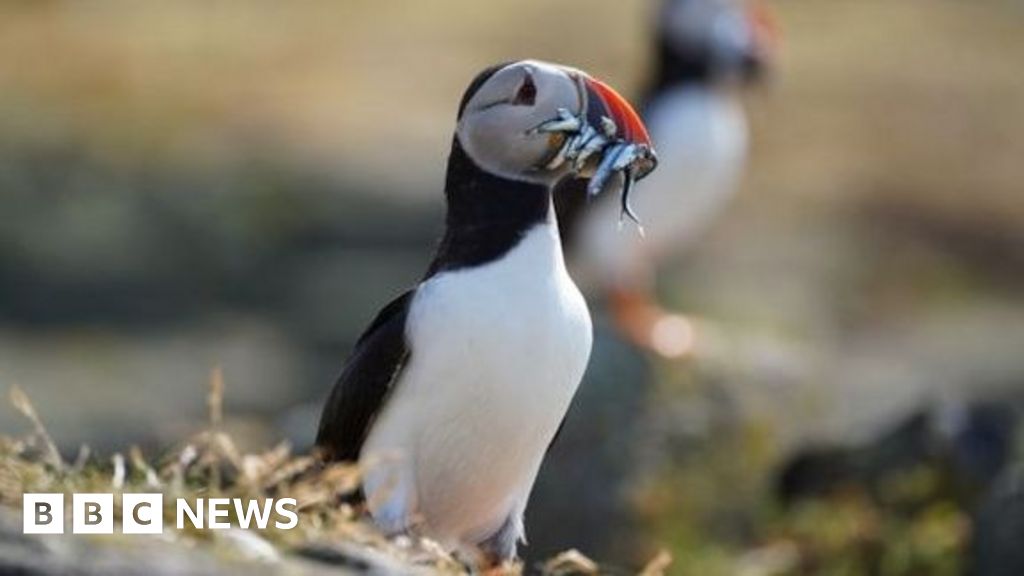
Puffin numbers in one of the UK's largest colonies have suffered after a drop in food supplies and extreme weather conditions, conservationists have warned.
NatureScot said the number of burrows occupied by the seabirds on the Isle of May in the Firth of Forth had fallen by 30% in the last two years.
A joint survey also involving the UK Centre for Ecology & Hydrology (UKCEH) suggested violent storms had killed a number of the birds, while rising ocean temperatures had seriously harmed populations of sand eels - their main source of food.
Researchers described the population decline as "disappointing and concerning".
About 36,500 burrows on the island – about 4.9 miles (8km) off the coast of Fife - were found to be in active use during the study carried out over the summer.
That marked a drop of nearly a third from the 52,000 burrows thought to be in use during the last survey of its kind in 2024.
Two puffins rescued after Storm Chandra return to wild
Puffins struggle to survive as Storm Chandra sweeps country
The Isle of May has been a national nature reserve (NNR) since 1956 and has been home to almost 300 species of birds.
The reserve's manager, David Steel, said the drop was reminiscent of the early 2000s, when puffin numbers fell before recovering in the 2010s.
"The decrease appears to be linked to a combination of ongoing pressures on seabird food supplies, poor winter survival and increasingly extreme weather conditions," he said.
"All of this underlines the importance of continued monitoring and conservation work at sites like the Isle of May NNR, where data and research are playing a vital role in helping us to understand these trends and respond."
The survey involved researchers sweeping back and forth across the island over a six-day period, counting burrows and assessing whether they were used by puffins or rabbits.
The island is also home to guillemots, fulmars, terns and gulls, thanks to its lack of predators.
In the autumn and winter months, it also plays host to thousands of breeding seals, while about 250 species of migrating birds use it as a stopover point.
Mark Newell, UKCEH's field manager on the Isle of May, said he was concerned future "extreme weather events" could affect the breeding ability of puffins and other species.
He said: "We believe that the puffin population has recently suffered from a series of extreme climate events, including marine heat waves and intense storms affecting survival in three of the last five winters.
"The concern for puffins and other seabirds is that climate scientists are predicting an increase in the frequency and severity of extreme events."
Topics in this story
Gathered from external sources. Rights to this text belong to whoever originally published it.