Navi Pillay's Nobel Peace Prize puts focus back on 2 landmark Rwanda genocide cases
Navanethem “Navi” Pillay, South African jurist of Indian origin, has been awarded the 2026 Nobel Peace Prize for her contributions to international
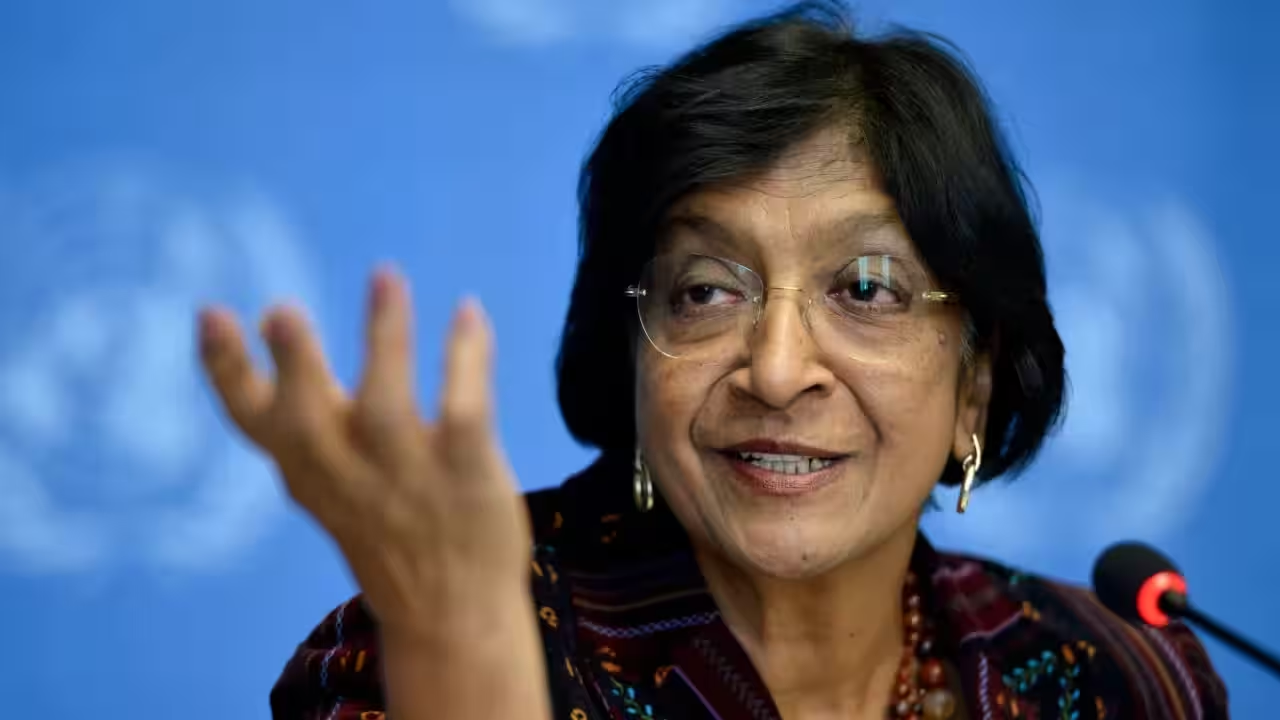
Navanethem “Navi” Pillay, South African jurist of Indian origin, has been awarded the 2026 Nobel Peace Prize for her contributions to international justice and human rights, bringing renewed attention to two landmark judgments she helped deliver at the United Nations International Criminal Tribunal for Rwanda (ICTR).Pillay served as a judge at the tribunal from 1995 to 2003 and was its president from 1999 to 2003. Among the most consequential cases during her tenure were the 1998 trial of Rwandan mayor Jean-Paul Akayesu and the 2003 Media Case, which examined how radio broadcasts and newspaper articles helped incite the 1994 genocide.Recognised rape as an act of genocideIn 1998, the ICTR convicted Jean-Paul Akayesu, the mayor of Taba in Rwanda, of genocide for his role in violence against the Tutsi population. The case examined his involvement in inciting killings, rape and torture during the genocide, in which at least 800,000 people were killed.Akayesu became the first person to be convicted of genocide by an international court. The judgment also established that rape and sexual violence could constitute acts of genocide when committed with the intention of destroying a protected group, in whole or in part.The ruling was significant because sexual violence had often been overlooked in the prosecution of wartime atrocities. It recognised that rape could be used deliberately to destroy a targeted community rather than being treated merely as a consequence of conflict.Pillay was one of the three judges who signed the judgment and was credited with helping shape its reasoning on sexual violence.“From time immemorial, rape has been regarded as spoils of war. Now it will be considered a war crime. We want to send out a strong signal that rape is no longer a trophy of war,” Pillay said after the verdict.Media Case held propagandists accountableIn 2003, the tribunal delivered another landmark judgment examining how media organisations and political messaging contributed to the genocide.The case involved Ferdinand Nahimana, a founder of Radio Télévision des Mille Collines (RTLM), Hassan Ngeze, editor-in-chief of the newspaper Kangura, and Jean-Bosco Barayagwiza, a board member of RTLM’s initiating committee and a founding member of the Coalition for the Defence of the Republic.The tribunal found the three guilty of crimes including genocide, incitement to genocide and crimes against humanity. Nahimana and Ngeze were sentenced to life imprisonment, while Barayagwiza received a 35-year prison sentence.The judgment examined how RTLM broadcasts and Kangura articles spread hatred against Tutsis and encouraged violence. It also considered propaganda that portrayed Tutsi women as “seductive agents of the enemy”.Pillay presided over the case alongside judges Erik Møse and Asoka de Zoysa Gunawardana. The ruling established that people who used media platforms to incite genocide could be held criminally responsible for their actions.“You were fully aware of the power of words, and you used the radio, the medium of communication with the widest public reach to disseminate hatred and violence,” Pillay told Nahimana while delivering the ruling.She added, “Without a firearm, machete or any physical weapon, you caused the death of thousands of innocent civilians.”Pillay also said, “The power of the media to create and destroy fundamental human values comes with great responsibility. Those who control such media are accountable for its consequences”.The two judgments addressed different dimensions of the Rwandan genocide. The Akayesu ruling recognised sexual violence as a possible means of committing genocide, while the Media Case established legal accountability for using communications platforms to incite mass violence.ALSO READ | Who is Navanethem Pillay? South African jurist of Indian-origin awarded Nobel Peace PrizeYou use AI every day. Now get your AI Quotient. Take the AIQ test.
Topics in this story
Gathered from external sources. Rights to this text belong to whoever originally published it.