From Gen Z protests to polls: What is driving Morocco's voters
Rest of World News: Moroccans aged 18 to 24 make up just 4% of registered voters in Wednesday's parliamentary election, compared with more than 29% for people aged 60 and.
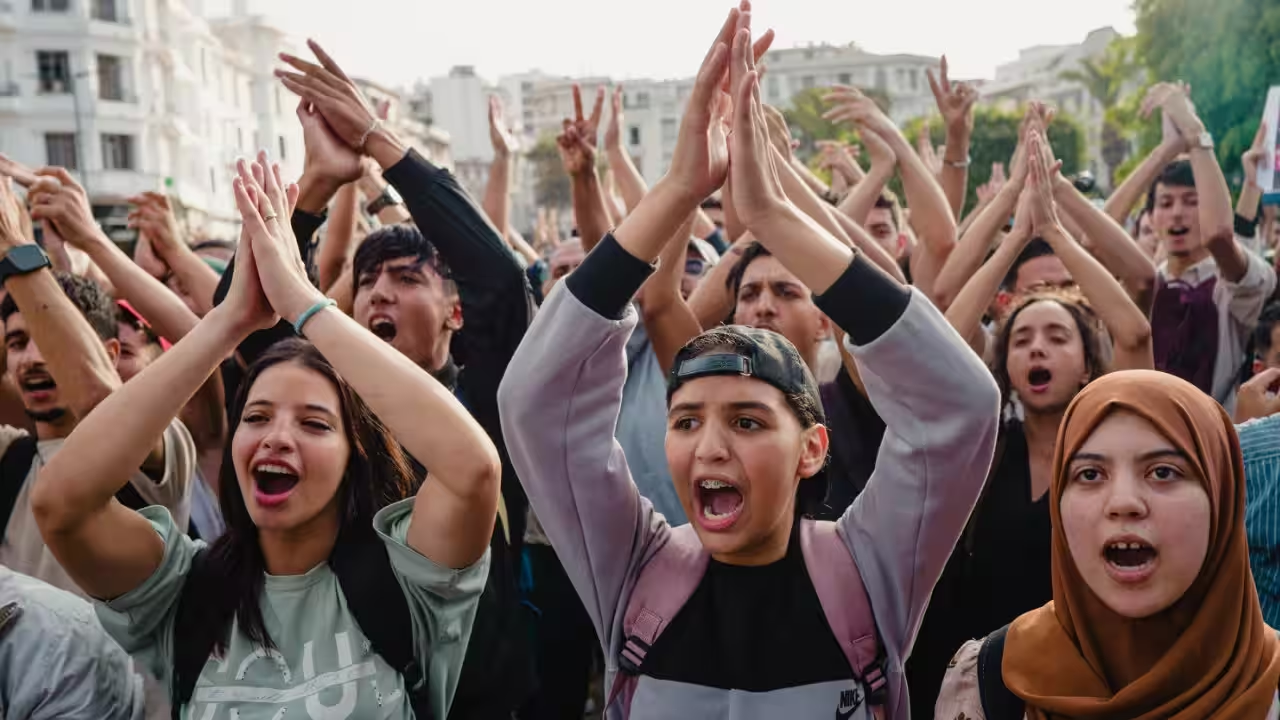
Moroccans aged 18 to 24 make up just 4% of registered voters in Wednesday's parliamentary election, compared with more than 29% for people aged 60 and above, nearly a year after youth-led protests focused attention on jobs, healthcare and education. The figures contrast with the prominent role young people played in the demonstrations that spread across the country in 2025.Overall, 15,801,162 people are registered to choose all 395 members of the House of Representatives. Voters aged 35 to 44 account for 21% of the rolls, while turnout in the previous parliamentary election in 2021 was just over 50%.Protester enters parliamentary raceOne of the young Moroccans seeking a place in parliament is Hamza El Kharroubi, 28, who took part in last year's demonstrations. El Kharroubi founded the Environment and Sustainability Party and is campaigning in Tetouan, Al Jazeera reported.“The previous protests by Gen Z have sparked more youth engagement in political parties,” El Kharroubi said. His candidacy is one example of protesters and activists seeking a role inside Morocco's party system after last year's mobilisation.Yet the demonstrations have not been matched by a comparable movement of young Moroccans into parties and the electoral process. The age profile of registered voters shows how small the youngest voting group remains relative to older Moroccans.Youth jobless rate at 37.2%Economic pressures remain part of the backdrop to the election. Morocco's unemployment rate fell from 13.3% in 2024 to 13% in 2025, but unemployment among people aged 15 to 24 rose from 36.7% to 37.2%, according to the country's High Commission for Planning.Jobs were among the demands raised during the 2025 demonstrations, alongside healthcare, education and action against corruption. Protesters also questioned how public money was being allocated as Morocco pursued major infrastructure projects.Hospital deaths preceded nationwide protestsThe deaths of eight women after caesarean deliveries at a public hospital in Agadir intensified scrutiny of the state-run health system and fed wider anger over public services. Protests subsequently spread nationwide, with demonstrations beginning across Morocco on September 27, 2025.GenZ 212, the youth movement behind much of the mobilisation, had no formal affiliation with political parties. Much of its organising took place through online platforms including Discord, TikTok and Instagram, while participants pressed demands involving healthcare, education, employment and corruption.Violence later broke out during the unrest in some parts of the country. Three people were killed and more than 400 people were arrested, while GenZ 212 said it supported peaceful protest and rejected violence.Party activists seek results beyond campaignsAz-el Arab Hilmi, 32, who works with the secretariat of the Federation of the Democratic Left in Tifelt, said parties needed to engage younger Moroccans throughout the political cycle instead of concentrating on them only when elections approached. He said younger voters were increasingly assessing politics through outcomes such as the quality of schools and public hospitals, access to employment and equality of opportunity.Hilmi said younger citizens should also have a part in shaping party positions and assuming political responsibility outside campaign periods. He said parties should be explicit about what they could accomplish when in office and remain answerable for the commitments they made.Hilmi joined the Federation of the Democratic Left in 2016 after following Omar Balafrej's parliamentary campaign. Balafrej subsequently won a seat in Rabat, and GenZ 212 later invited him to a Discord discussion covering democratic participation, accountability and youth involvement in politics.Moubarak Toumi, 18, joined the Socialist Union of Popular Forces' regional secretariat in Casablanca-Settat three years ago. Toumi said frustration over unfulfilled expectations on employment, education and healthcare had discouraged young people from entering party politics, while he regarded joining a party as a route to pursue those issues from inside the political system.Powers divided between monarchy and elected governmentMorocco's 2011 Constitution divides important powers between the monarchy and elected institutions. The king appoints the head of government from the party that finishes first in elections to the House of Representatives and chairs the Council of Ministers, which deals with matters including the strategic direction of state policy.The government, meanwhile, implements its programme and the laws, while the Council of Government deliberates on public and sectoral policies, among other matters. That division of authority forms part of the context in which parties make commitments and voters assess what elected representatives can achieve.Hilmi said citizens should continue questioning representatives and following their decisions after ballots are counted rather than treating voting as the end of political participation. His argument places accountability after the election alongside the question of how many younger Moroccans take part in the vote itself.The numerical imbalance remains pronounced as Morocco goes to the polls: those aged 18 to 24 account for only 4% of registered voters, against more than 29% for people aged 60 and above. The 395 seats in the House of Representatives will therefore be decided by an electorate in which the youngest adult age group forms a relatively small share of the rolls.Catch the latest World News and Live updates. Download the TOI app.
Topics in this story
Gathered from external sources. Rights to this text belong to whoever originally published it.