After invasive rainbow trout threaten to erase Yellowstone’s native cutthroat fish, officials shut Buffalo Creek to wipe them out
US News: Yellowstone National Park is preparing to temporarily close part of Buffalo Creek as wildlife officials launch a targeted effort to remove invasive ra.
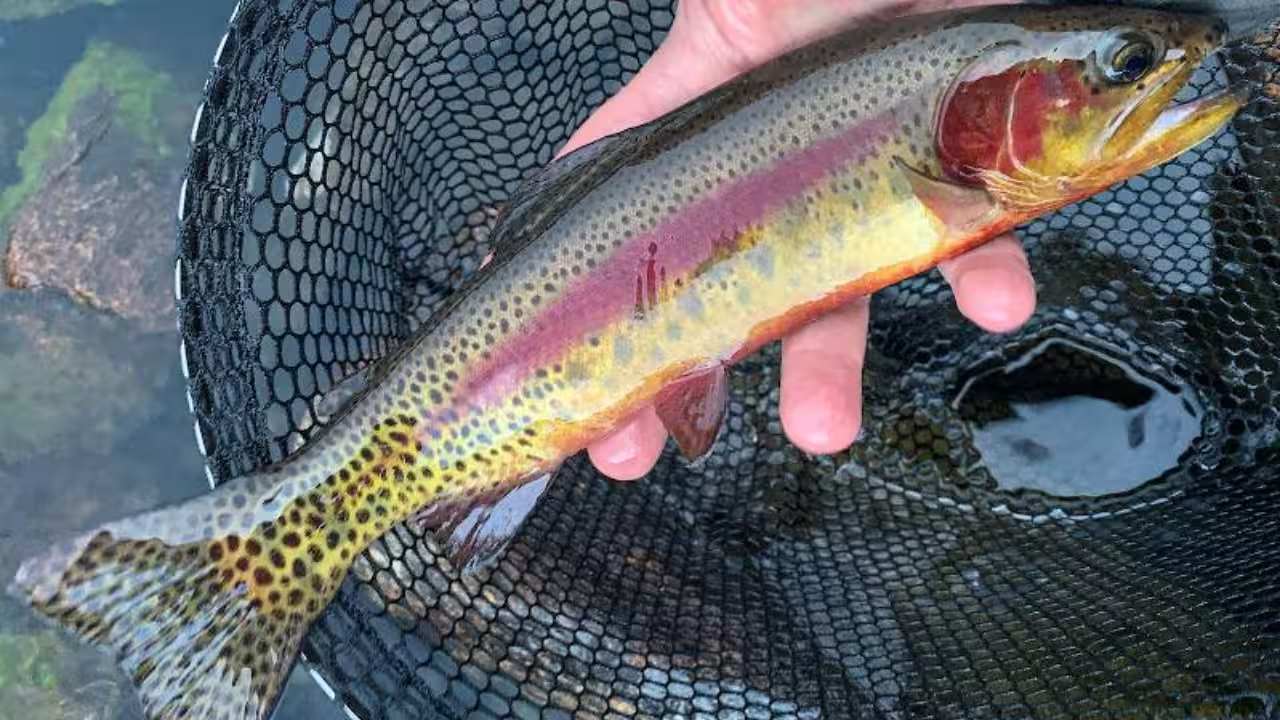
Yellowstone National Park is preparing to temporarily close part of Buffalo Creek as wildlife officials launch a targeted effort to remove invasive rainbow trout threatening native fish populations. The conservation operation will begin on August 31, with the northern section of Buffalo Creek remaining closed to visitors until September 7 while biologists treat the waterway. According to NBC Montana, the park will use rotenone, an EPA-approved piscicide, to eliminate the invasive fish from the creek. Yellowstone National Park said the work is intended to protect Yellowstone cutthroat trout, the only trout species native to the park, from competition and hybridisation. The project forms part of a broader native fish conservation programme aimed at protecting the ecological health of the Lamar River watershed.Yellowstone closes Buffalo Creek for invasive trout removalBeginning August 31, Buffalo Creek will be temporarily closed from the northern Yellowstone boundary downstream to its confluence with Slough Creek. The closure is scheduled to last until September 7, allowing fisheries biologists to carry out the treatment without public access to the affected stretch. Yellowstone National Park said the operation will target invasive rainbow trout using rotenone, a piscicide approved by the US Environmental Protection Agency. The park has also confirmed that the treatment will not affect the potability of water at Slough Creek Campground, where drinking water will remain safe. Signs will be posted to alert visitors to the temporary restrictions. The announcement comes as Yellowstone continues efforts to prevent nonnative fish from spreading through sensitive waterways and undermining long-term native fish restoration projects.Invasive rainbow trout threaten Yellowstone cutthroat troutThe Buffalo Creek operation is focused on a population of invasive rainbow trout that has become a source of fish entering nearby waterways. According to Yellowstone National Park, these rainbow trout compete and hybridise with native Yellowstone cutthroat trout in Slough Creek, Soda Butte Creek and the Lamar River. This creates both ecological and genetic concerns because hybridisation can weaken the genetic integrity of native cutthroat populations. Yellowstone cutthroat trout are the only trout species native to the park and play an important ecological role across the Greater Yellowstone Ecosystem. The National Park Service says genetically pure populations have declined across their natural range because of competition, predation, hybridisation and habitat degradation. Removing the source population in Buffalo Creek is therefore considered crucial to maintaining the native trout population in the Lamar River watershed.Why Yellowstone uses rotenone to control invasive fishRotenone is not a new tool in Yellowstone's fight against nonnative fish. The National Park Service says piscicides such as rotenone are used because they can selectively target fish while conservation teams take steps to minimise impacts on other aquatic organisms. Before treatment, biologists survey the area and use the lowest effective concentration, while chemical use is timed to reduce risks to amphibians and other wildlife. Any native Yellowstone cutthroat trout captured through electrofishing before the Buffalo Creek project will be moved outside the treatment zone. Yellowstone has previously used rotenone during native fish restoration efforts, including projects in the Soda Butte Creek drainage. Those efforts have helped remove invasive populations and create conditions in which native cutthroat trout can recover.Catch the latest World News and Live updates. Download the TOI app.
Topics in this story
Gathered from external sources. Rights to this text belong to whoever originally published it.