Why OpenAI shut down ChatGPT accounts linked to Russia and Iran
OpenAI has disrupted two covert influence operations originating in Russia and Iran that used ChatGPT to spread geopolitical messaging through seemingly
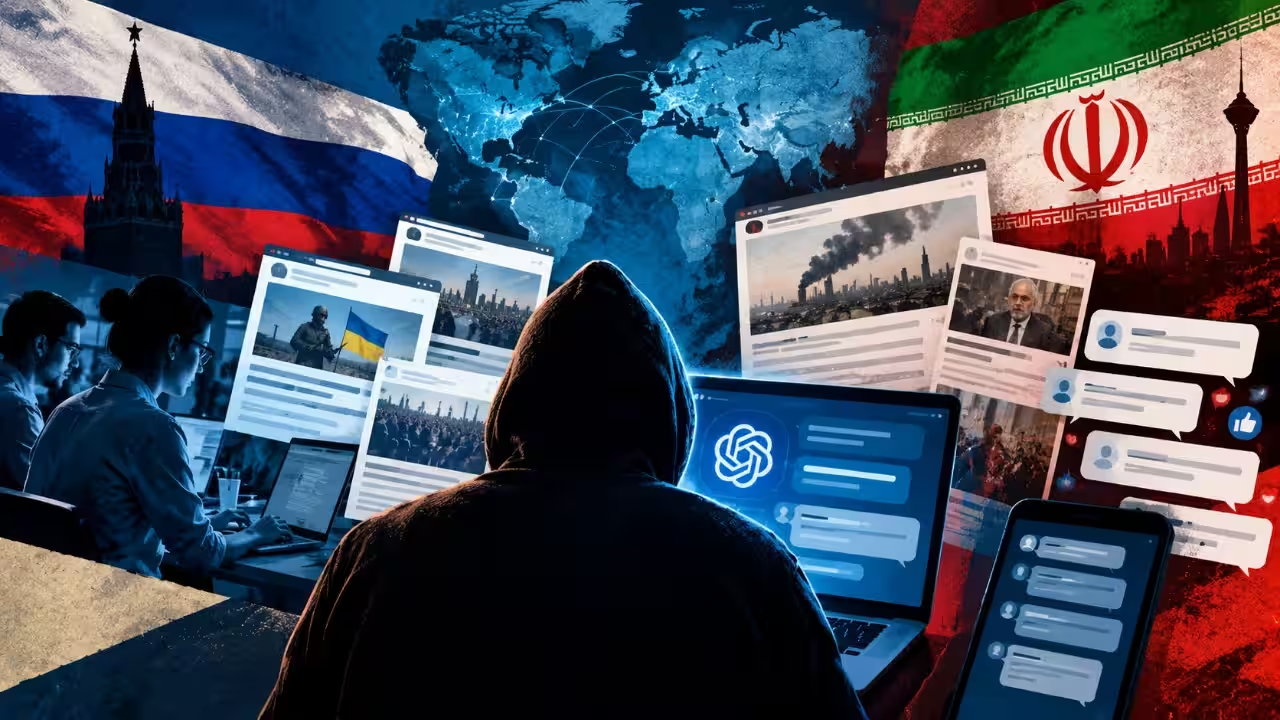
OpenAI has disrupted two covert influence operations originating in Russia and Iran that used ChatGPT to spread geopolitical messaging through seemingly legitimate organisations and media outlets.In a report published on October 8, the artificial intelligence company said it had banned clusters of accounts linked to the two operations, which combined AI-generated content with traditional deceptive tactics to influence audiences on geopolitical and conflict-related issues.OpenAI described the Russian campaign as the most complex attempt to run a front identity it had disrupted in the past two-and-a-half years. It assessed the operation as Category 5 on a six-point scale measuring the impact of influence operations, making it the first Category 5 campaign it had disrupted since it began publishing such reports.Russian operation used unsuspecting local employeesThe Russian-origin operation, which OpenAI dubbed “Dark Clark”, appeared to target countries across Latin America, with much of its activity aimed at undermining Ukraine’s reputation and some directed at domestic political developments in countries including Argentina and Bolivia.The campaign operated a purported research organisation called the Social Research Center (SRC), which presented itself as a platform studying the Indian diaspora in Latin America and relations between India and countries in the region.According to OpenAI, the operators used a fake persona named “Mia Clark” to manage the organisation’s social media activity and interact with employees on the ground. Internal reports generated using ChatGPT referred to hiring and firing decisions, pay scales, staffing plans and research projects, suggesting the operators controlled the organisation rather than merely collaborating with it.The local employees appeared to have been unaware of the Russian connection, OpenAI said.OpenAI identified more than 60 articles on the SRC website, most of which appeared to be original work.The operators used ChatGPT primarily to prepare internal reports about their activities, but also sought help creating material for influence campaigns, including fabricated documents, letters, audio scripts and other content designed to appear authentic.In one instance, an operator asked ChatGPT to draft a letter implicating Ukraine’s honorary consul in Panama in corruption. The text was translated into Spanish and turned into an audio script, which was subsequently used in a social media post presented as a news report.In another case, operators prepared a purported contract that was circulated online to support claims that Ecuador’s government had worked with a front company to recruit people to fight in Ukraine. The claim triggered fact-checking.However, the company cautioned that not all the operators’ claims could be independently verified. Internal reports also suggested they sometimes sought to take credit for incidents they had not caused, making their own assessments of the campaign’s reach unreliable.Iranian campaign got nearly 100 articles publishedThe second operation, dubbed “Bogus Bylines”, involved accounts originating in Iran that used ChatGPT to refine long-form articles about the US-Iran conflict, prepare pitches to editors and generate social media comments in English and Persian.OpenAI identified nearly 100 articles published or syndicated between July 2025 and October 2026 under seven fictitious bylines across more than a dozen online publications. The outlets generally covered international affairs, geopolitics and developments in the Middle East.The personas presented themselves as Western journalists, mostly American, with purported expertise in foreign affairs, human rights and conflict. Some also had social media accounts intended to reinforce their credibility.The operators used ChatGPT to edit drafts against the submission requirements of specific publications and then prepare emails pitching the articles to editors. Some of the published pieces were subsequently promoted by the outlets themselves, potentially exposing them to audiences the operators might not otherwise have reached.OpenAI said the campaign’s articles had a substantially greater potential reach than its social media activity. It rated the article-publishing strand Category 4 on the six-point scale.Alongside the articles, the Iranian operation generated batches of comments on posts about the US-Iran conflict, US politics and regional developments. The comments often appeared within minutes of one another and were designed to reinforce the campaign’s messaging, including portrayals of the US as an aggressor and Iran as a resilient victim.OpenAI said the operations illustrated how AI can make covert influence campaigns more efficient, linguistically convincing and capable of reaching audiences through legitimate-looking channels.You use AI every day. Now get your AI Quotient. Take the AIQ test.
Topics in this story
Gathered from external sources. Rights to this text belong to whoever originally published it.