'Not only did I survive, I thrived' - Meera Syal after assaults
The Wolverhampton-born comedian and actress shares her experiences in her new memoir.
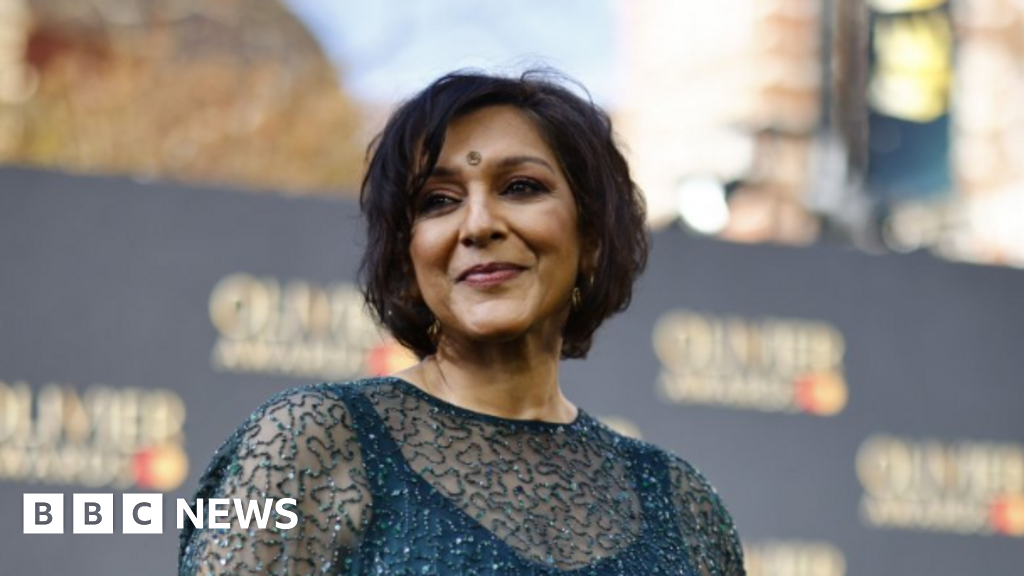
Dame Meera Syal has said she "almost gave up" her career after being sexually harassed and assaulted by two "predators" within the media industry.
"I was out of work, I was homeless, sleeping on people's floors, and then these two things happened in quite quick succession," the Wolverhampton-born star said in a candid interview with BBC Asian Network's Amber Haque .
In her new memoir, Vigilauntie, which was published on Thursday, the actress shared that both incidents happened in her 20s, as she was struggling to secure a role.
Now aged 65, she has opened up about the harrowing experiences and reflected on how she overcame them to become one of the most well-known faces on British TV.
"It could have been a point where I gave up," she explained.
"It put some fire in my belly because the reason I wanted to tell these stories is that I did survive, and not only did I survive, I thrived.
"The anger of the injustice of the situation made me seek out a bunch of women that changed the course of my life."
Syal described the first incident as "my first casting couch approach".
She wrote that the man, a theatre director, insinuated he would give her a role in a pantomime if she engaged in sexual acts with him. She refused and was able to leave.
However, a few weeks later an older male actor invited her to his home under the guise that he would help her progress with her career. Instead he assaulted her, she wrote in her book.
The comedy star, known for shows including Goodness Gracious Me and The Kumars at No 42, did not report the incidents to the police and did not tell family or friends as it "was the culture" of the industry at the time.
She recalled: "When I have talked about this incident to other women, particularly of my age, they've all said that happened to me and a lot of them have never talked about it because it was part of the culture.
"The 70s, 80s and 90s, it was absolutely part of the culture.
"You wouldn't even bother to report half of these things because A, you wouldn't be believed and B, everyone was doing it."
Rather than turning away from the industry, Syal said she found strength and support in women's groups and began helping others.
The star added: "I got involved with Newham Asian Women's Project and Southall Black Sisters. I began campaigning because these issues became personal and I wanted to create South Asian women that roared.
"All of that came from the fury I felt at what had happened to me. It did change the course of my life."
Syal was born in Wolverhampton in 1961 to Indian Punjabi parents, who had moved to the UK from New Delhi. She later attended Queen Mary's High School in Walsall.
Last year, Syal was given a damehood in the King's New Year Honours for her services to literature, drama and charity.
Joining the BBC in the 1990s, she rose to prominence as part of the team behind the broadcaster's sketch comedy, Goodness Gracious Me!
In 1993, she wrote the screenplay for the comedy-drama film Bhaji On The Beach, and two years later she starred in the Channel 4 romantic comedy film, Beautiful Thing.
The award-winner was a key writer and actress on the 1996 show, and later helped to bring Bollywood to the West End, by co-writing Andrew Lloyd Webber's Bombay Dreams in 2002.
You can listen to the full interview with Dame Meera Syal on Asian Network Trending on BBC Sounds.
If you've been affected by the issues in this story, help and support is available via the BBC Action Line .
Follow BBC Wolverhampton & Black Country on BBC Sounds , Facebook , X and Instagram .
Meera Syal made a dame in New Year Honours
Syal worries TV diversity is 'window dressing'
Bafta lifetime award represents change - Meera Syal
'It took seven years to bring my abusers to justice - I've lost faith in the system'
'I'm petrified my rapist could be released early'
Dame Meera Syal: Aunties, rebellion and becoming a British icon
Topics in this story
Gathered from external sources. Rights to this text belong to whoever originally published it.