After a decade-long restoration, 1,800 volunteers took turns pulling a 400-ton Japanese castle with ropes; 8,000 people had applied for the chance to help move it
Rest of World News: A group of 1,800 volunteers gathered in northern Japan to pull a 400-tonne historic castle keep across the ground using heavy ropes, marking a major s.
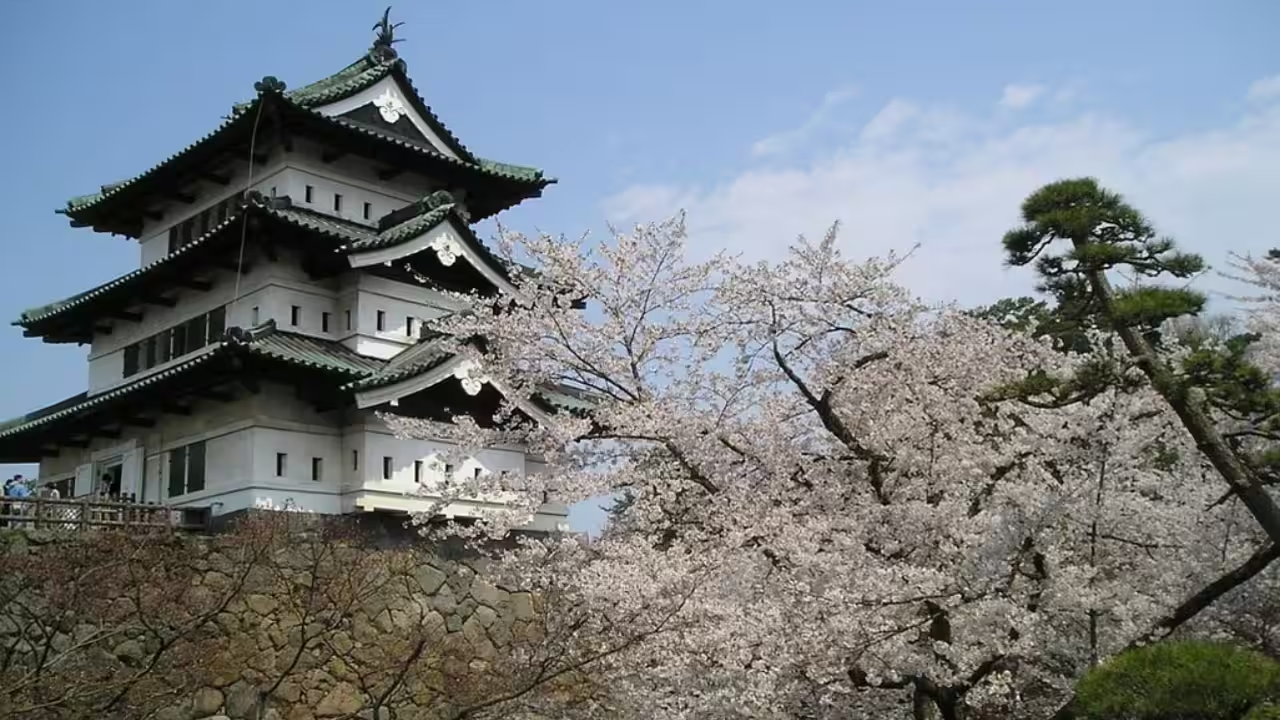
A group of 1,800 volunteers gathered in northern Japan to pull a 400-tonne historic castle keep across the ground using heavy ropes, marking a major step in a decade-long restoration project. The mass effort in Hirosaki, Aomori Prefecture, saw participants take turns pulling the three-storey timber tower back towards the stone foundation wall from which it had been moved in 2015. According to Smithsonian Magazine, organisers received about 8,000 applications for the 1,800 volunteer places, making the event four times oversubscribed. The move used a traditional Japanese engineering method known as hikiya. The technique allows entire historic buildings to be moved without taking them apart, using rollers or rails placed underneath. Teams of about 80 people pulled on 30-metre ropes attached to the keep, moving the 400-tonne structure more than two metres over two days.Historic keep moves back towards its original wallThe relocation of the Hirosaki Castle keep follows years of work to repair the castle's large stone embankment. In 2015, city officials moved the keep about 70 metres away so engineers and stonemasons could reach the damaged foundation walls. The walls had been weakened by decades of earthquakes, including a major earthquake in 1983. Archaeological work carried out during the restoration uncovered old drainage systems, ancient wells and remains of earlier walls beneath the site. Stonemasons completed the reconstruction of the embankment in December 2024. All 2,185 original stones were placed back in their historic positions, clearing the way for the castle keep to return to its original location. The current public hauling effort is the first stage of the keep's return. During late August, about 4,100 volunteers are expected to help move the building a total of five metres. Heavy machinery will then complete most of the remaining journey, moving the 400-tonne timber structure back onto its stone foundation by the end of the year.Volunteers chosen through public lotteryInterest in taking part in the move came from well beyond Hirosaki. The city held an international lottery to choose volunteers, attracting local residents, history enthusiasts and tourists. Smithsonian Magazine and Gavin Blair of The Guardian reported strong demand for the limited volunteer places. Kensuke Hayasaka, head of the parks and green spaces division at Hirosaki City, described the response to The Guardian. "We had about 8,000 applications for the 1,800 slots over the last two days, roughly four times oversubscribed, so not everyone could participate," Kensuke Hayasaka, head of the parks and green spaces division at Hirosaki City, tells the Guardian's Gavin Blair. "Not only from the city, but from across Japan and overseas; a fair number from Southeast Asia and from Europe and North America."Participants worked in short, demanding shifts, pulling the ropes to the rhythm of traditional chants. The roller system helped reduce the force needed to move the building, but each group still had to put in considerable physical effort. Takahiro Kogawa, a local resident who joined the effort, described the challenge in an interview with Agence France-Presse. "It's like trying to move a mountain," Takahiro Kogawa, a Hirosaki resident who helped pull the structure, tells Agence France-Presse.Volunteers connect with an old traditionThe public role in the project also has historical importance in Japan. The 2015 move was the first time in nearly 100 years that ordinary citizens had been invited to take part in moving a castle using the traditional hikiya method. For some volunteers, helping with the return journey has provided a chance to reconnect with an important local landmark. Kyodo News reported that some participants had also helped pull the keep away from its foundation during the first stage of the restoration 11 years ago. "I feel emotional being able to take part again," Mei Umetsu, a high school student, tells Kyodo News. Hirosaki Castle was originally built in 1611 as the home of the Tsugaru clan. It has survived centuries of political change and natural disasters. The original five-storey keep was destroyed by lightning and burned down in 1627. The current three-storey keep was built in 1810. It is now one of only 12 surviving original feudal-era castle keeps in Japan and the only remaining castle tower in the northeastern Tohoku region. The surrounding park is also a major cultural attraction. Its annual cherry blossom festival attracts about two million visitors each spring.Restoration will continue for yearsReturning the keep to its repaired stone foundation is a major visible achievement, but the wider restoration project is still far from finished. After the 400-tonne structure is safely placed on its foundation, conservation specialists will begin major work on the inside and outside of the 1810 timber building. According to Smithsonian Magazine, the keep will be surrounded by protective scaffolding and weatherproof covers. This will keep it closed to visitors for an extended period. "Once it's back on the original base, the preservation work on the keep begins and the whole structure will be covered over," Hayasaka tells the Guardian. Municipal plans from Hirosaki City show that structural repairs, timber treatment and interior conservation will continue for several more years. Under current city estimates, the historic keep is expected to fully reopen to tourists and local visitors in 2033.Catch the latest World News and Live updates. Download the TOI app.
Topics in this story
Gathered from external sources. Rights to this text belong to whoever originally published it.