Mexico’s mezcal boom is under threat from organized crime
Mexico’s mezcal success story is at risk of being undermined by threats from violent criminal groups.
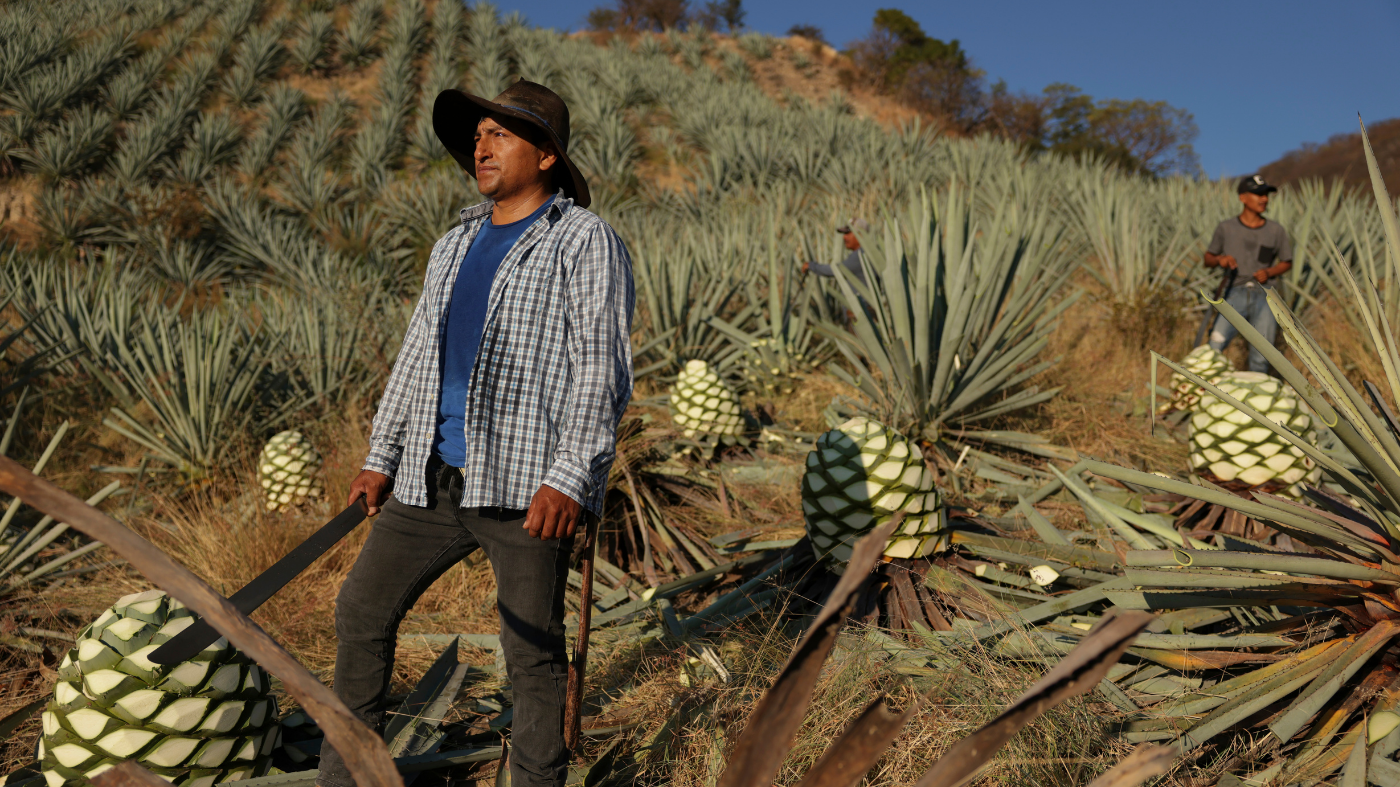
In the remote hills of Oaxaca, in southern Mexico, the pungent honey-sweet aroma of roasted agave emanating from traditional wood-fired, open-pit, stone ovens is now recognized as the smell of success. In 2025, Mexico produced 7.7 million bottles of mezcal, in comparison to the production total from 2015.
I recently visited a distillery in the town of Santiago Matatlan in Oaxaca. Now whenever I sip a glass of mezcal, I savor the complex spirit and reflect on the remarkable journey each bottle of Mexico’s most enigmatic elixir makes. From trickling out of a small still in an isolated mountain town in one of the country’s most remote regions, to being packed into the back of a cargo truck and carted up more than 750 miles to the U.S. border.
Unfortunately, Mexico’s mezcal success story is at risk of being undermined by threats from violent criminal groups. Mexico is the world’s highest risk country for violent, in-transit cargo truck hijacking. The roadways that lead from Oaxaca’s mountain towns through central Mexico are now the highest risk logistics pathways in the country.
In September 2024, a truck carrying a shipment of Monte Alban mezcal was hijacked in an armed robbery on the Mexico-Tuxpan highway near the town of Zempoala.
In July 2025, a truck carrying 9,000 bottles of premium agave spirits with an estimated value of $1.3 million was stolen in Guanajuato .
On July 6, a truck carrying 64 tons of bottles of alcohol was taken by hijackers in Hidalgo.
The targeting of shipments of mezcal and tequila is part of a broader trend in Mexico. The organized crime groups that specialize in cargo theft seek out food products and beverages that are easily resold at informal markets.
The state of Oaxaca is not yet a major focal point for hijacking, but shipments of mezcal face increasing risk as they move north through hijacking hotspots including Puebla, Mexico State, Michoacan, Jalisco and Guanajuato.
Private sector analysts now consider the state of Puebla, a crossing point for U.S.-bound bottles of mezcal from Oaxaca, to be the worst hotspot for cargo truck hijacking . Local authorities and residents in small towns in Puebla are colluding with criminal groups to hide stolen merchandise and trucks and impede investigations. A similar dynamic of collusion pervades in other states around Mexico City.
Incidents compiled in the Mexico Cargo Truck Hijacking Data Portal created by my company, Reliance Partners, show that during the first six months of 2026, over 79 percent of all hijackings were recorded in Mexico State and Puebla, two states in central Mexico to the north of Oaxaca.
Despite the danger, the trucks keep coming. Mezcal sales are booming in the U.S., contributing to the trend of an average of 20,000 trucks crossing from Mexico into the U.S. in 2025. The global mezcal market is expected to top $1 billion by the early 2030s. The state of Oaxaca produces around 90 percent of Mexico’s mezcal output.
Unlike tequila, which has mostly shifted towards mass-scale industrial production, the overwhelming majority of Mexico’s mezcal is still produced at tiny, family-owned distilleries using low-tech underground ovens and donkey-pulled milling stones. Mezcal is one of few bright spots for Oaxaca, Mexico’s third poorest state, which received a paltry $5 million in foreign direct investment in 2025 out of the record-breaking $41 billion Mexico netted that year.
Overall, goods worth nearly $1 million are lost to cargo robberies in Mexico every day. According to some estimates, nearly 50 cargo trucks are hijacked every day in Mexico. In June, the Mexican Association of Transport Organizations staged a massive protest to draw attention to the problem of highway robbery on Mexican roadways.
Mexico’s President Claudia Sheinbaum has overseen a drop in overall levels of violence in Mexico during her term in office which started in late 2024. But she has also been slow to investigate allegations that members of her Morena party are colluding with criminal groups. The governor of Oaxaca, Soloman Jara Cruz, as well as the governors of the nearby states of Puebla and Mexico State, are all members of Sheinbaum’s Morena party.
Efforts to break up the criminal groups preying on cargo trucks on highways in these states may also involve investigating politicians from Morena who may be collaborating with and protecting criminals.
Mexico’s mezcal boom is a tremendous success story that hinges on producers in remote mountain towns being able to safely ship their bottles along roadways up to the U.S. The loss of a single truckload of mezcal to cargo theft would be a devastating financial loss for most artisan producers.
Every bottle of craft mezcal needs safe passage to make to the tables and bars at high-end restaurants in the U.S. It would be a shame if Oaxaca’s burgeoning mezcal industry is undermined by a political failure to tackle the problem of breaking up hijacking rings and improving security on Mexico’s remote highways.
Mark Vickers is executive vice president and head of International Logistics at Reliance Partners .
Topics in this story
Gathered from external sources. Rights to this text belong to whoever originally published it.