Arizona tested highways made quieter with ground-up tyres; federal researchers measured before-and-after traffic noise at roads and nearly 95 nearby homes
Discover how Arizona's innovative use of rubberized asphalt from recycled tires significantly lowers traffic noise on highways, benefiting both residents and the environment.
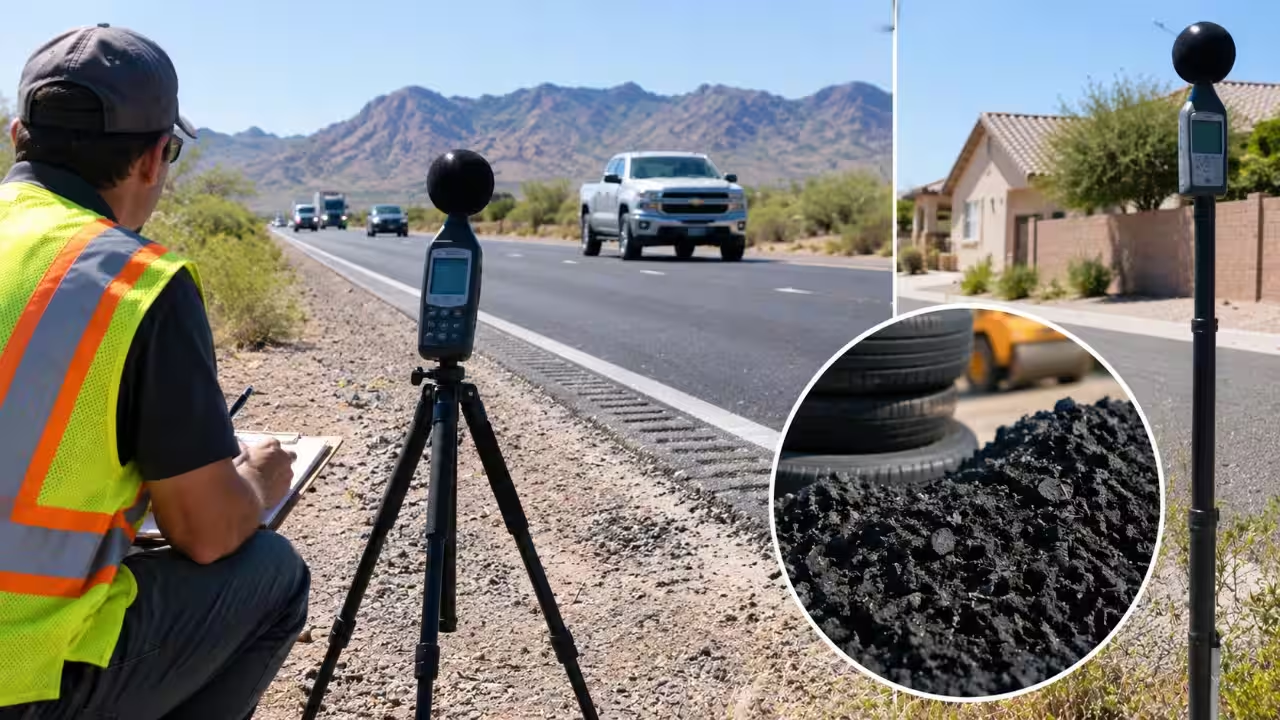
Arizona gave millions of discarded tyres a second use when it began covering sections of its Phoenix-area freeways with rubberised asphalt. The material, made with crumb rubber from used tyres, was initially valued mainly as a way to resurface roads and recycle a difficult waste product. But the pavement also had another benefit: it could reduce the noise created when vehicle tyres travelled over the road. According to the Federal Highway Administration, Arizona and the agency launched the Quiet Pavement Pilot Program in 2003 to examine whether asphalt rubber friction courses could reduce traffic noise on busy freeways and how long the effect would last. The programme covered about 115 miles of Phoenix-area freeways and involved testing the pavement's noise performance over time.Measuring the noise before and afterArizona had been using rubberised asphalt since 1988. The material combined conventional asphalt with crumb rubber made from discarded tyres. By 2005, more than 15 million tyres had been recycled through the state's rubberised asphalt programme. The quiet-pavement project was designed to measure the change rather than simply rely on residents' impressions.Three different types of measurements were taken. The first was measuring noise at the tyre-pavement interface with a test tyre. The second type of measurement was taken at around 95 residential locations near the freeways, both before and after the rubberised asphalt was installed. The third type of measurement measured roadside sound at five sites with no nearby construction.What happened after the rubber was added?These initial findings were positive. In 2005, the FHWA found an average sound reduction of around 5 decibels in residential areas. The FHWA said the project would be monitored to see whether the sound reduction lasted through the overlay’s 10- to 12-year useful life. The long-term findings helped to give a clearer insight. A 2018 Arizona Quiet Pavement Pilot Program study, conducted after about ten years of monitoring, found an average initial sound reduction of 5.2 dBA at residential locations. When tested on-road, the average initial sound reduction was 9.1 dBA, while at the tyre-pavement interface, it was 8.7 dBA.The quieter surface did not stay as quiet over time. The long-term measurements showed an average increase of about 0.5 dB per year after the initial reduction in both the tyre-pavement and roadside measurements. Even so, the study provided evidence that the rubberised asphalt could produce a measurable noise benefit beyond the immediate period after installation.From waste tyres to quieter neighbourhoodsThe project had a further environmental component. Rather than allowing old tyres to go toward disposal, they could be converted into crumb rubber and included in the roadway surface. Millions of tyres had already been recycled in Arizona in such a manner prior to the launch of the quiet pavement initiative. The method was especially useful in Phoenix, where many freeway segments had rough concrete surfaces that generated tyre noise.However, the Arizona experiment could not show that all rubberised roads reduce noise pollution equally. Factors like types of pavements used, conditions of the pavements and traffic, among others, could play a part in determining the outcome. The FHWA also reiterated the fact that the choice of the pavement should be based on issues like safety, durability and cost rather than noise reduction alone.You use AI every day. Now get your AI Quotient. Take the AIQ test.
Topics in this story
Gathered from external sources. Rights to this text belong to whoever originally published it.