Trump’s DC makeover: What to know
The Supreme Court last week cleared the way for President Trump to continue construction of a massive ballroom replacing the White House’s East Wing, removing a major legal hurdle for one of his several beautification projects around Washington, D.C. Since returning to office for a second term, Trump has launched a sweeping campaign to transform…
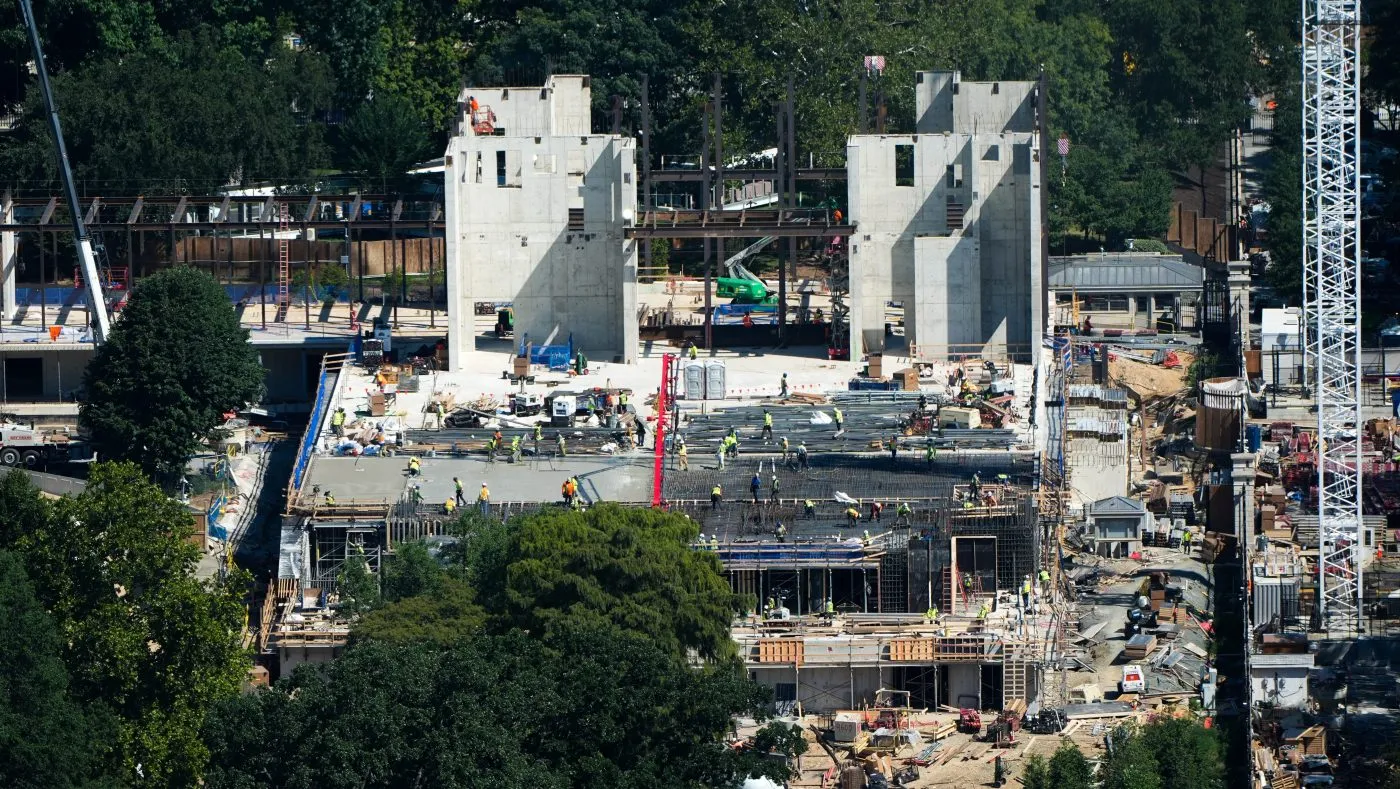
The Supreme Court last week cleared the way for President Trump to continue construction of a massive ballroom replacing the White House’s East Wing, removing a major legal hurdle for one of his several beautification projects around Washington, D.C.
Since returning to office for a second term, Trump has launched a sweeping campaign to transform the nation’s capital as part of his efforts to “Make D.C. Safe and Beautiful Again.”
The projects — which range from the estimated $400 million ballroom and a 250-foot triumphal arch to smaller-scale renovations of parks and monuments across the city — have sparked concern from preservationists, and in some cases, prompted litigation to block their progress.
Here’s what you need to know about the current status of the president’s D.C. makeover.
Trump said the planned 90,000-square-foot project, which includes a drone-launching pad and underground military complex, is necessary for national security purposes and would provide a much larger venue for state dinners.
While a final decision on the legality of the ballroom has yet to be reached, construction will be allowed to continue following the Supreme Court ruling, as a 250-person crew works at the site 20 hours a day, seven days a week, according to court records.
“We have hundreds of happy construction workers in D.C. busily doing their job building the finest Ballroom/Military complex anywhere in the World,” Trump said in a Truth Social post on Wednesday.
He continued, “It is important to remember, the Ballroom is a 400 Million Dollar gift to America!”
The National Trust for Historic Preservation successfully challenged the ballroom’s legality in the lower courts, arguing that Trump did not receive the necessary approval to move forward with the project.
The project is being financed in part through private donations from corporations and wealthy individuals, which has drawn concerns over possible conflicts of interest.
In June, government watchdog group Public Citizen published an analysis finding that 14 of the ballroom’s 27 known corporate donors received new or increased federal contracts worth more than $50 billion within the first six months of this year.
Trump’s proposed 250-foot triumphal arch is moving closer to construction after the Interior Department announced Thursday that excavation at the site will begin within the next two weeks .
The massive white and gold arch will be built at an entrance to the city, and Trump said he plans to make it the “biggest” in the world, similar to the Arc de Triomphe in Paris.
A recent federal assessment determined that the arch would adversely affect dozens of historical sites around the capital, obstructing views of iconic Washington landmarks such as the Washington Monument, the Lincoln Memorial and the Capitol.
Trump’s proposed triumphal arch received pushback from Democrats, who argue that the project did not receive approval from Congress and was therefore illegal .
Three Vietnam War veterans sued the Trump administration to block the construction of the arch earlier this year, citing the lack of congressional approval and concerns that it would obstruct the view of the Lincoln Memorial and Arlington National Cemetery.
Rep. Don Beyer (D-Va.), whose district includes the Arlington National Cemetery, said Thursday that the “plainly illegal” arch was not ready to be built.
“Burgum and the Trump Administration are disregarding the risks and rushing this towering monument to Trump’s vanity because they believe Republicans will get crushed in November,” he said in a statement, referring to Interior Secretary Doug Burgum.
Shortly after Trump returned to office, crews in D.C. tore down the large yellow “Black Lives Matter” mural painted near the White House.
The mural was commissioned by D.C. Mayor Muriel Bowser (D) in 2020 at the height of protests following the murder of George Floyd in Minneapolis, in rebuke of Trump’s deployment of federal law enforcement during his first term to clear protesters.
The $4.8 million installation was removed in the face of pressure from Republicans in Congress, who threatened to withhold transportation funding unless the city removed the mural and renamed the two-block stretch “Liberty Plaza.”
The Trump administration’s renovations at the Lincoln Memorial Reflecting Pool are ongoing after an algae outbreak tinted the water green and the pool’s newly installed “American flag blue” paint began to peel away.
The president claimed that the pool had been vandalized and directed his Department of Justice (DOJ) to crack down on alleged culprits, but the DOJ later dropped charges against several people who had been accused of vandalizing the iconic water feature last month, including a former Olympic canoeist .
U.S. Attorney for the District of Columbia Jeanine Pirro, the former Fox News personality and top Trump ally, blamed the Department of the Interior for the initial charges against canoeist David Hearn. Her decision initially led to tensions with Trump.
The project also faced criticism after the federal government awarded no-bid contracts to two firms with ties to Trump.
Atlantic Industrial Coatings — the Virginia-based firm responsible for installing the pool’s new base layer — had previously done work for one of the president’s golf clubs. The same company has been tasked with handling the repairs, which the president said last week were “almost completely fixed.”
Trump has pushed to include his name on several iconic landmarks during his second term, including at the Kennedy Center.
Last year, the president fired half of the center’s traditionally bipartisan board, appointed himself as the new chair and handpicked administration allies to serve on the center’s governing body.
Democratic Rep. Joyce Beatty (Ohio), an ex officio member of the center’s board, sued the Trump administration in December over the proposed name change, calling it a “flagrant violation” of the Constitution.
Workers added the president’s name to the building facade but later removed the letters amid the ongoing legal battle.
The center’s new board has also made other physical alterations to the performing arts venue’s campus, directing the removal of a 24-foot sculpture named “Blue” that was gifted to the Kennedy Center in 2019 on Wednesday. A Kennedy Center spokesperson told The Hill the artwork would be relocated at the discretion of a foundation dedicated to the sculpture’s creator.
In May, Trump unveiled the location of a “National Garden of American Heroes” in West Potomac Park, saying the garden would transform a “BARREN field of Prime Waterfront Real Estate along our Mighty Potomac River” into “one of the World’s most beautiful public spaces.”
The statue garden will feature 250 Americans whom the garden intends to honor as part of the administration’s celebration of America’s 250th birthday this year, including the Founding Fathers, basketball star Kobe Bryant, Walt Disney and the late “Jeopardy!” host Alex Trebek.
But the garden’s construction has yet to come to fruition after being stalled by more legal challenges to the federal government’s use of public land in D.C.
A group of preservationists sued the Trump administration over the garden, arguing it was violating federal laws including the Commemorative Works Act, which prohibits placing new monuments or commemorative works on the National Mall without congressional approval.
The Trump administration’s efforts to restore several fountains across the nation’s capital have been more widely welcomed by D.C. residents.
Water began flowing through a cascading fountain in the city’s historic Meridian Hill Park for the first time in seven years, following a $4 million renovation project’s completion in July. However, maintenance crews returned to work on the fountain less than two weeks after its reopening, as sediment from the fountain’s old pipes turned the water a murky brown color.
Additionally, workers restored the Christopher Columbus Memorial Fountain outside of Union Station in an $11.79 million rehabilitation project. The administration said the fountain had not been in working condition for nearly two decades.
“Columbus Circle is a historic front door to Washington, D.C. and thanks to @POTUS, today it is once again ready to welcome the public!” Burgum wrote in a social media post following the fountain’s reopening in May.
The Trump administration has repeatedly accused the Smithsonian Institution’s leadership of “ideological activism,” warning it could cut off federal agencies from working with the museum complex if its concerns are not resolved.
In a July executive order , Trump ordered the installation of disclaimers outside of the Smithsonian National Museum of American History to warn visitors that some of its exhibits did not match his version of the nation’s past.
The president accused the museum of treating America’s history “as a ‘prime tool’ to advance ideas of social justice and the radical transformation of our society,” citing the findings of a White House report on the museum’s exhibits.
The museum’s director, Anthea Hartig, told lawmakers in July that the report failed to “fairly or accurately” depict the museum’s exhibits and stressed the museum “does not take sides in America’s political debates.”
Additionally, the Smithsonian Institution’s National Portrait Gallery removed information earlier this year about Trump’s two impeachments from a plaque next to his presidential portrait in the museum.
Previous text next to his portrait noted that Trump was impeached on charges of incitement of insurrection related to the Jan. 6, 2021, attack on the U.S. Capitol.
The president’s decision to pave over the Rose Garden was among his most controversial changes to the White House grounds. The new outdoor space reopened last year, with picnic tables and yellow umbrellas that bore an unmistakable similarity to those at his Mar-a-Lago residence’s pool patio.
Trump has utilized the space to host tech and business leaders , GOP members of Congress and others at the executive residence. This year, several gifted statues of the Founding Fathers were added to the patio space.
On Wednesday, the president hosted a group of vulnerable Republican lawmakers in the Rose Garden for dinner as the GOP fights to maintain their control of Congress in the midterm election this fall.
Topics in this story
Gathered from external sources. Rights to this text belong to whoever originally published it.