We made workplace safety a priority once. We can again.
Despite historical progress under the Occupational Safety and Health Act, current workplace safety efforts face significant challenges due to stagnant regulations, insufficient inspection resources, and evolving labor structures.
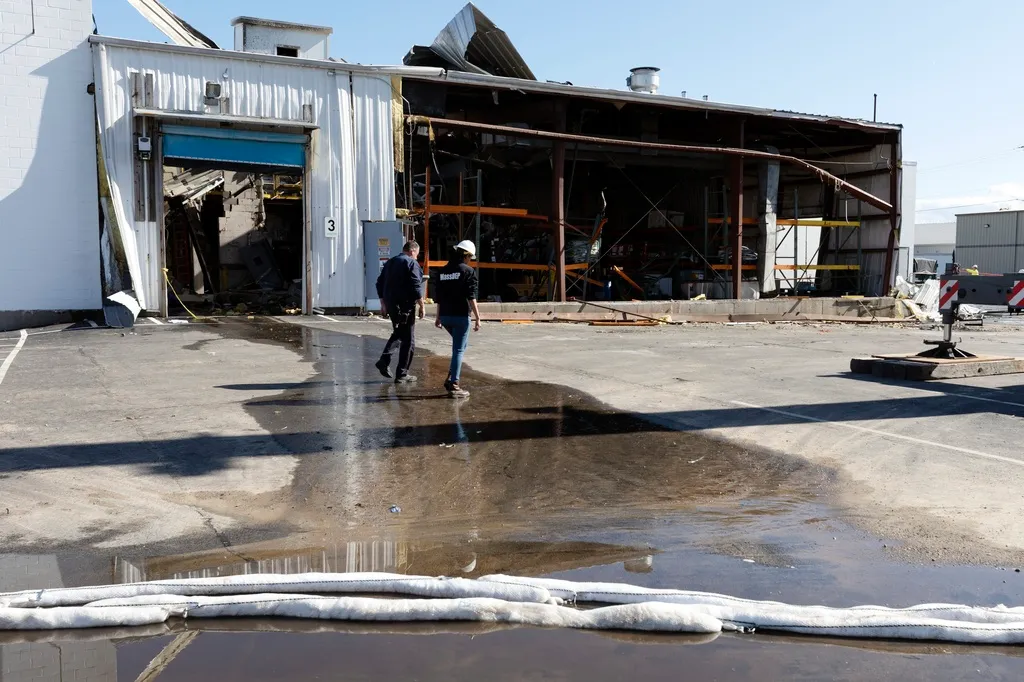
This May, a chemical tank ruptured at a paper mill in Longview, Wash ., killing 11 people. The tragedy marked the rare occasion of workplace safety making it into the national news. Most workplace tragedies, sadly, never get that attention, even though more than 5,000 people die from accidents at work every year .
Even more hidden from view are the estimated 135,000 that die from occupational diseases tied to exposures to dangerous chemicals and other factors. Millions are injured, some never able to work again.
We have come to accept this slow daily trickle of fatalities and injuries as inevitable and the cost of doing business. We ignore the urgent protections workers need and the reality that we could do more to prevent these tragedies and the destruction they cause to families and communities.
We didn’t always turn a blind eye. We once made worker safety a national priority and both parties saw the urgency. President Richard Nixon signed the Occupational Safety and Health Act in 1970 , establishing OSHA after over 300 coal miners died in 1968. Since then, workplace deaths dropped from more than 30 per day to about 15 today, even as the workforce has more than doubled. But our progress stalled more than a decade ago.
Urgency has been replaced with negligence. In 1980, OSHA had nearly 15 inspectors for every million covered workers. Today, it has fewer than six , resulting in about 740 federal inspectors overseeing 11.6 million worksites . We have also fallen woefully behind in updating protections. Former OSHA Director David Michaels estimates that 90 percent of our chemical exposure limits were developed in the 1960s . Most chemicals used in the workplace have no exposure limits.
The Mine Safety and Health Administration went for more than 50 years without updating the exposure limit for silica, the primary culprit behind black lung. A rule finally updating that standard was issued in 2024, but its implementation is now delayed , with little assurance that it will move forward.
Penalties for employers for deaths and injuries are often a slap on the wrist. Fines for serious safety violations are $4,700 on average and for fatalities, only about $20,000. One employer paid a more than $100,000 after illegally employing a 15-year-old who died on the first day at work. Just 144 workplace fatalities have been referred for criminal prosecution in the whole history of the Occupational Safety and Health Act, despite nearly half a million deaths on the job. Michaels also recently wrote about a failing workers compensation system that allows employers to shirk the costs of workplace injuries.
New challenges are being dismissed. A long-awaited heat standard is being blocked even as temperatures soar. A new wave of lung disease among countertop workers is being ignored. And no federal workplace violence standard exists.
Our economy has changed significantly since the Occupational Safety and Health Act passed. The rise of gig workers, independent contractors, temporary staffing, and business franchises have muddied the water on who is responsible for worker safety, leaving the protection of millions of workers uncertain.
State and local government employees also do not receive federal OSHA protections.
A common refrain is that protecting workers is bad for business. But better safety means lower workers’ compensation premiums and fewer claims for business owners. Healthy workers are more productive, less likely to miss work, and more likely to stay with the company. Former Alcoa CEO Paul O’Neill famously made safety the centerpiece of the company’s revitalization.
Alcoa improved upon an already outstanding safety record, created greater operational efficiency, and generated record profits.
Employee-owned companies with Employee Stock Ownership Plans also demonstrate good safety and good business can go hand-in-hand. Research shows they have safer workplaces, less turnover and higher productivity in industries such as manufacturing.
Few jobs have inherent dangers that cannot be mitigated. Most can be designed to be safe. But the fact remains that too many businesses will choose not to protect workers and we need stronger regulations. Workplace inspections are a proven tool. University of Pittsburgh Professor John Mendeloff estimates, for example, that a 60 percent increase in inspections would lead to a 5 percent decrease in fatalities in construction, which would have saved 50 lives in 2020.
But OSHA also needs the capacity to develop standards much more quickly. Stiffer penalties and reforms of the workers compensation system are needed to discourage businesses from being negligent.
AI also holds promise. From flagging high-risk worksites to detecting hazardous exposures, we can choose to deploy technology toward this end. Public-private partnerships that leverage AI to make work safer need to be encouraged if cost is a barrier.
But above all, we need policymakers to prioritize the well-being of their constituents. We need to resource OSHA adequately. An annual budget of $600 million , only a few dollars per worker, is an insult to American workers. The refusal of policymakers to extend federal protections to all workers is simply unconscionable.
Over 100,000 dying per year in any other way would normally catalyze action among policymakers and the public. But if the government’s No. 1 job is to protect Americans, it is sadly failing in the place where most spend a large portion of their days and their lives.
Imagine the productivity and innovation we could unleash if worker health and safety were a priority. More importantly, imagine the millions of family members and friends that would still have their loved ones if workers weren’t treated as disposable. We’ve tackled this problem before. It’s time to finish the work and ensure the workers who make our economy run are not forced to pay for it with their lives and health.
Matt Helmer is director of job quality and worker well-being at the Aspen Institute’s Economic Opportunities Program.
Topics in this story
Gathered from external sources. Rights to this text belong to whoever originally published it.