The 2028 Democratic presidential nominee will likely be a governor
Governors have both the responsibility to deliver for their constituents and the power to do so.
The race for the 2028 Democratic presidential nomination is underway and will intensify immediately following the 2026 midterm elections. Several Democrats have taken the early steps needed to begin what will likely be a multi-billion-dollar undertaking should he or she become the party’s nominee.
What is driving this likely multi-candidate and contentious contest is an overwhelming belief among political prognosticators that 2028 will be another in a series of change elections since President Trump’s 2016 victory. Democrats sense that Trumpism is losing altitude and voters will be looking for something very different. And those candidates who have a record of delivering real change are what voters want.
Presidential candidates who hail from the halls of Congress are unlikely to succeed. The Gallup poll finds just 16 percent of Americans approve of the job Congress is doing. And congressional Democrats don’t fare much better. Just 18 percent of all voters and 42 percent of self-identified Democrats approve of the way they are doing their job.
For Democratic members of Congress showing early signs of presidential ambition — Sens. Mark Kelly (D-Ariz.), Jon Ossoff (D-Ga.), Chris Murphy (D-Conn.), Cory Booker (D-N.J.), Chris Van Hollen (D-Md.) and Raphael Warnock (D-Ga.), and Reps. Alexandria Ocasio-Cortez (D-N.J.) and Ro Khanna (D-Calif.) — this is hardly a promising start.
Once upon a time, being a member of Congress offered a promising path to victory. During the Cold War congressional experience, especially in foreign affairs, was something voters valued, and they chose candidates who were well-versed in those issues.
John F. Kennedy, Lyndon B. Johnson, Hubert H. Humphrey and George McGovern all won their party’s presidential nominations . Congressional Republicans also scored victories at their conventions : Richard Nixon, Barry Goldwater and Gerald Ford carried the Republican standard into November. As the Cold War Atomic Clock ticked closer to midnight, voters wanted someone with foreign policy experience to have his finger on the nuclear trigger.
Things have changed. In an era where voters are tired of pie-in-the-sky promises and failures to deliver, producing actual results matters most. This year, for example, Pennsylvania Gov. Josh Shapiro (D) is cruising to victory on the promise that he “ gets s— done .”
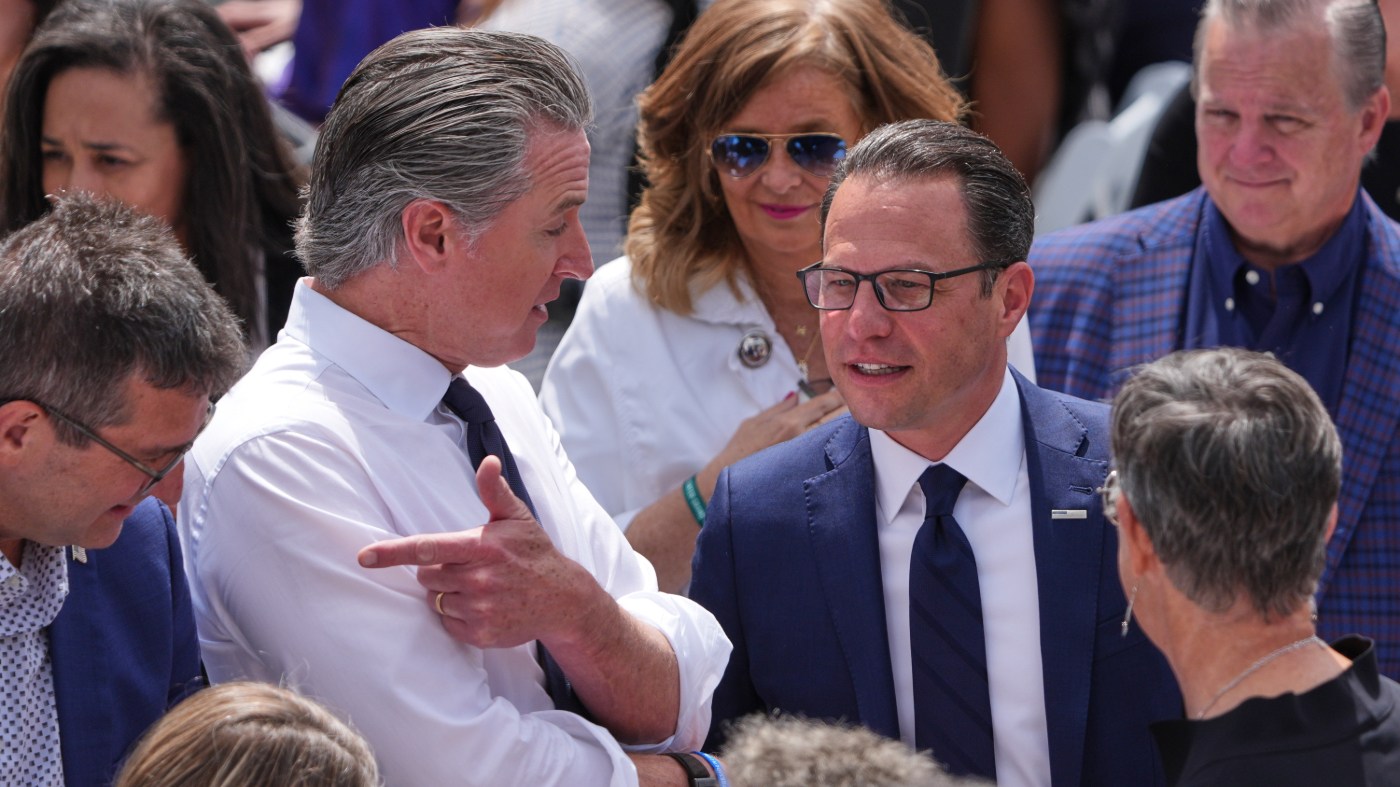
As Shapiro’s example illustrates, governors have both the responsibility to deliver for their constituents and the power to do so. He and Democratic Govs. Andy Beshear of Kentucky, Gavin Newsom of California and Wes Moore of Maryland appear on virtually every list of possible nominees. Each has written the mandatory book (or books) telling their respective stories and why they might be the best pick. And a governor who hails from a state that either Democrats must win, or haven’t won in decades, is an asset when the Electoral College remains the arbiter of presidential success.
Fundamentally, the presidency is an executive position, and gubernatorial experience is an asset. For example, Ronald Reagan biographer Lou Cannon writes that Reagan’s eight years as governor were essential preparation for the presidency. At a dinner honoring the nation’s governors in 1981, Reagan remarked that he found little difference between being a governor and being a president.
Some of the founding fathers thought governors would make good presidents. At the 1787 Philadelphia Convention, Massachusetts delegate Elbridge Gerry suggested that state governors should appoint the president because they could best determine the qualities the chief magistrate must possess.
Gerry’s idea was not approved, but a variant of it was practiced initially. Throughout much of the 19th century and into the early 20th century, several governors went from their statehouse mansions to the White House. Herman Talmadge, a former governor and later U.S. senator, once said , “A governor makes decisions and executes them. A senator makes decisions and talks about them.”
After a series of disappointing presidencies, Alexis de Tocqueville wrote : “After having had excessive pride, we have fallen into a humility that is just as excessive; we thought we could do everything, and now we think we can do nothing.”
Today, a similar sentiment has taken hold. In 2000, the late Wilson Carey McWilliams described what he called this new politics of disappointment : “Most Americans, looking backward, find it hard not to see a long, slow slide: real wages declining, society deteriorating, gaps widening between old and young, and rich and poor, the hopeful integrationism of the civil rights movement turned into a bitter politics of race.”
More than a quarter century later, little has changed. Unless the next president can reduce the income gap, provide better healthcare, childcare, and housing and lift the nation from the depths of the culture wars to a higher plane, the malaise that Jimmy Carter spoke of so long ago will surely become a permanent feature of our body politic. Electing a governor might just be the tonic the nation needs.
John Kenneth White is a professor emeritus at The Catholic University of America who writes on Substack . His latest book, co-authored with Matthew R. Kerbel, is titled “ Democracy on the Edge: The Trump Elections and the Future of American Politics. “
Topics in this story
Gathered from external sources. Rights to this text belong to whoever originally published it.