House passes Russia sanctions bill, sending it to Trump’s desk
The House on Wednesday passed legislation granting President Trump tariff authorities to sanction countries purchasing Russian energy and impose tougher sanctions against the Kremlin over its war in Ukraine. The bill will now be sent to Trump’s desk for his signature, marking the end of a more than year and a half journey for legislation…
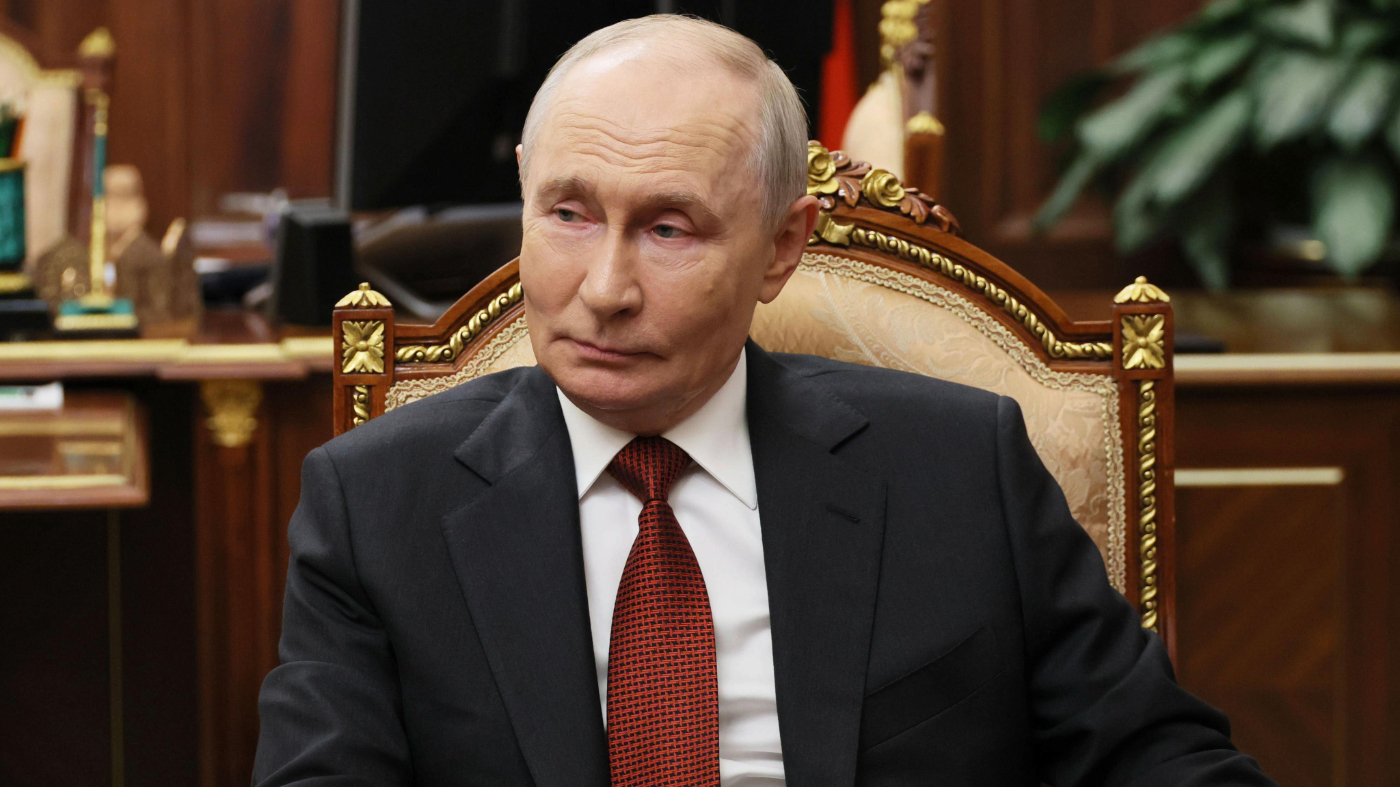
The House on Wednesday passed legislation granting President Trump tariff authorities to sanction countries purchasing Russian energy and impose tougher sanctions against the Kremlin over its war in Ukraine.
The bill will now be sent to Trump’s desk for his signature, marking the end of a more than year and a half journey for legislation — championed by the late Sen. Lindsey Graham (R-S.C.), who worked with Democrats to harness the president’s love of tariffs as a way to support Ukraine.
Its passing marks Congress’s first bipartisan legislation assisting Ukraine since an aid package passed in April 2024.
The lower chamber voted 262-159 to pass the bill, which also includes a provision extending sanctions on Iran. 203 Republicans, 58 Democrats and one Independent voted in favor of the legislation, while 7 Republicans and 152 Democrats opposed it.
Democratic opposition largely centered around the tariff authorities provided to Trump, despite their support for Ukraine. The bill calls for the president to impose tariffs of up to 100 percent on the top five purchasers of Russian energy, or on countries helping Russia evade sanctions. Democratic supporters say the legislation’s tariff authorities are narrow enough to protect against exploitation, but the argument did not gain widespread support among the party.
“Life is way too expensive in the United States of America. Why in the world would this Congress or the People’s House give this president unfettered authority to visit more tariffs on the world that will have an adverse economic impact on the American people?” House Minority Leader Hakeem Jeffries (D-N.Y.) said, explaining his “no” vote. “I can’t do it.”
Rep. Gregory Meeks (D-N.Y.), the ranking member of the House Foreign Affairs Committee, said his “no” vote regrettably but affirmed his opposition of the Trump tariff authorities.
“I don’t want to give you false hope. I want to give you real hope,” Meeks said on the House floor.
But Graham, who died suddenly in July at the age of 71, had rallied an impressive bipartisan coalition to support the bill — giving it a veto-proof majority. But the bill languished for months over opposition from Trump, who wanted greater flexibility to negotiate with Russian President Vladimir Putin.
Graham announced a breakthrough with the White House in July, shortly before his death. The late senator’s colleagues pushed the bill over the finish line in his honor in an 86 to 11 vote.
“Lindsey Graham was my friend. He was my mentor. He understood the threats facing this country and had the courage to stand up and confront them,” Rep. Michael McCaul (R-Texas) said during a Monday House Rules Committee hearing. “We shared a fundamental belief that America is strongest at home when it projects strength abroad. … This is a moral issue that requires moral courage. When we look back on this moment, I want us to be able to say that we did everything possible to end this war.”
Ukrainian President Volodymyr Zelensky wrote on the social platform X ahead of the vote that “it is important that sanctions measures in response to the war be strong.”
“This is not the time to ease the pressure. Now is the time to do everything to ensure that diplomacy succeeds through strength,” he added.
Critics of the bill who still supported its passage argued it sent an important signal of U.S. support for Ukraine as the war intensified. Ukraine is suffering under an extreme shortage of air defenses. making it vulnerable to Russian ballistic missiles strikes that are increasing the number of civilian casualties and damaging infrastructure.
Rep. Dan Goldman (D-N.Y.), one of two Democratic votes which helped advance the bill on Tuesday night, said on X that Congress “must do everything within its power to ensure that a democratic Ukraine wins the war against an authoritarian Russia.”
“As lead counsel in the first impeachment of President Trump, I am uniquely familiar with his irrational and inexplicable fondness for Vladimir Putin, and I am well aware that he has done next to nothing to implement economic penalties on Russia as president,” Goldman said. “Yet that is not a reason to oppose a bill that demands he do exactly that.”
But Ukraine has also worked to turn the tide on the battlefield, using innovations in drone warfare to spare soldiers’ lives on the frontline and reach deep inside Russia with strikes that have threatened the country’s energy infrastructure. The retaliation has hit key nodes of the Russian economy — striking warehouses related to the online selling platform Wildberries, akin to Amazon in the U.S.
“This bill sends an unmistakable message: for so long as Putin continues to inflict suffering on Ukraine, Congress will continue to impose consequences on Putin,” said Daniel Balson, Director of Advocacy at Razom for Ukraine — a pro-Ukraine lobbying group.
“The measures contained in this bill will hit Putin where it hurts most. They will strike at the heart of his war machine, weaken his economy, and target those who continue to bankroll the Kremlin by importing Russian energy,” Balson added. “Countries around the world have a choice: they can finance Putin’s war or they can enjoy access to the U.S. market but not both.”
This story was updated at 6:47 p.m. on Sept. 16, 2026.
Topics in this story
Gathered from external sources. Rights to this text belong to whoever originally published it.