GOP lawmakers challenge Trump’s nearly $1B funding clawback
Republican lawmakers are pushing back on President Trump’s decision to cancel nearly $1 billion in federal funding, setting up a new clash between the White House and members of Trump’s own party at a particularly precarious moment for the GOP. The administration announced Friday that it would use a budget maneuver known as a “pocket…
Republican lawmakers are pushing back on President Trump’s decision to cancel nearly $1 billion in federal funding, setting up a new clash between the White House and members of Trump’s own party at a particularly precarious moment for the GOP.
The administration announced Friday that it would use a budget maneuver known as a “pocket rescission” to claw back funding for a range of federal programs, especially grants through the Department of Health and Human Services that support minority students, refugee resettlement and children without legal status. The cancellation comes less than 45 days before the end of the fiscal year, meaning the canceled funds will be paused through the year’s end regardless of what Congress does in response.
The move threatens to further stiffen the government funding process, which is already mired in partisanship over how much the government should spend on defense versus domestic programs. Whether Congress can manage a regular funding procedure this winter is already in question and will be determined, in large part, by the outcome of the midterm elections.
The White House has defended the new cuts as necessary to eliminate government waste and fraud, arguing that some money originally intended for refugee resettlement is no longer needed because fewer people are crossing the southern border illegally.
But Republicans on the congressional Appropriations committees, who are supposed to be in charge of the government’s purse, have never liked rescissions. Several of them voiced concern that the White House is encroaching on Congress’s constitutional authority over federal spending.
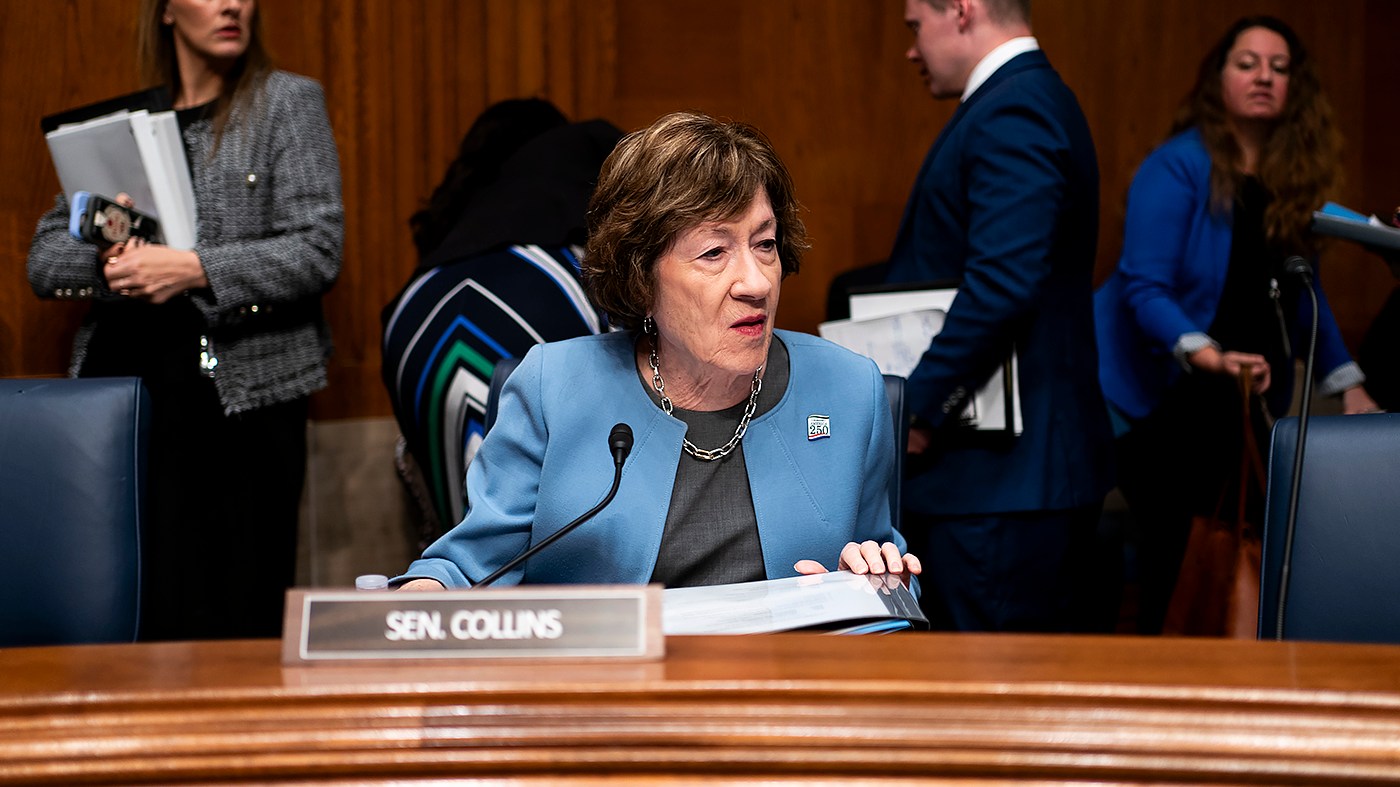
Sen. Susan Collins (R-Maine), chair of the Senate Appropriations Committee, said in a statement Friday that the move is “the most recent attempt by this Office of Management and Budget (OMB) to undermine Congress’s Constitutional power of the purse.”
“This move shows that OMB intentionally withheld these funds for months to execute this unlawful cancellation of appropriations that were approved on a bipartisan basis and signed into law,” Collins said. “Not only is the delay itself an impoundment that was not reported to Congress, but also it is a usurpation of Congress’s appropriations powers. OMB is an agency of the executive branch. It does not get to decide which programs are worth funding.”
Senate Majority Leader John Thune (R-S.D.), asked whether he agrees with Collins that the move was unlawful, said he thinks “there’s that argument for sure.”
“I think as an appropriator, she feels strongly that these are decisions made by appropriators, and that the administration doesn’t have this authority. That again is something the courts probably decide,” Thune said. “You know, I think whether you agree in substance or not with what they did and argue that they, you know, be good stewards, and some of these things may be things that many of us agree with, but the process by which they did it is one that is going to be, I assume, subject to a lot of discussion and probably some litigation.”
Collins said she will work with her colleagues to fight the rescissions, telling reporters Monday that some options include inserting language in the next set of appropriations bills to prevent something similar from happening or taking legal action.
Sen. Lisa Murkowski (R-Alaska), who is also on the committee, said while she thinks it’s possible to add more guardrails to funding in the next appropriations bills, Congress needs a more permanent fix to avoid further legal questions over federal funding authority.
She floated a long-term reform of the Impoundment Control Act, a 1974 law that’s supposed to prevent the president from freezing or reversing appropriated funds but in practice gives him more authority to do so through rescissions.
“I think we need more clarity to it,” Murkowski said of that law. “It’s something that when the OMB director first came in, he said he doesn’t think it’s constitutional. So we’ve got a debate lined up already between what he thinks he is able to do, and what we think he is able to do. So maybe we should clarify that confusion, probably not a bad idea.”
Sen. Mike Rounds (R-S.D.), another appropriator, said the rescissions move was “wrong” and that it would hamper the regular government funding process, which is already at a partisan stalemate. He stressed that that process matters because Republicans and Trump want to boost defense spending through appropriations amid the war with Iran.
“To have OMB step in like this, I think is going to cause problems,” Rounds told reporters Monday. “We’re looking at a substantial increase being proposed for defense needs that we’ve got to get through, and it’s going to make it very hard for us to actually get an outcome in the next appropriations bill because if it was me and I make a deal on things that are important to me, and OMB has the ability just to decide they’ll only take part of the deal, it does not bode well for actually getting a fair appropriations process in the future.”
Rep. Don Bacon (R-Neb.), who is not an appropriator but has become more willing to critique the administration in his last term, said that “by law, the Administration must request rescissions through its Congress.”
“His team always push the norms. The Court will rule against and then he’ll bash the Supreme Court again,” Bacon said.
The Hill reached out to House GOP appropriators for comment.
Some conservatives, especially in the House, lauded Trump’s move, as they did with his attempts last year to cut spending on foreign aid, diversity programs and what they perceived as government “waste.”
“This is America First in action,” Rep. Lauren Boebert (R-Colo.) said in a statement on Monday. “The Trump Administration is cutting wasteful spending that does not benefit American citizens. Hardworking taxpayers should not be forced to bankroll health and social services for people who broke our laws.”
The far-right House Freedom Caucus, in a post on social media, thanked Trump and OMB Director Russell Vought.
“Critics can cry all they want. The President is simply fulfilling his promise to cut waste — and he should keep going!” the caucus wrote.
Topics in this story
Gathered from external sources. Rights to this text belong to whoever originally published it.