The ‘swamp’s’ biggest growth industry is lobbying
Lobbying spending reached record levels during President Trump’s second term due to his administration’s expansive tariffs, industrial policies, and regulatory changes.
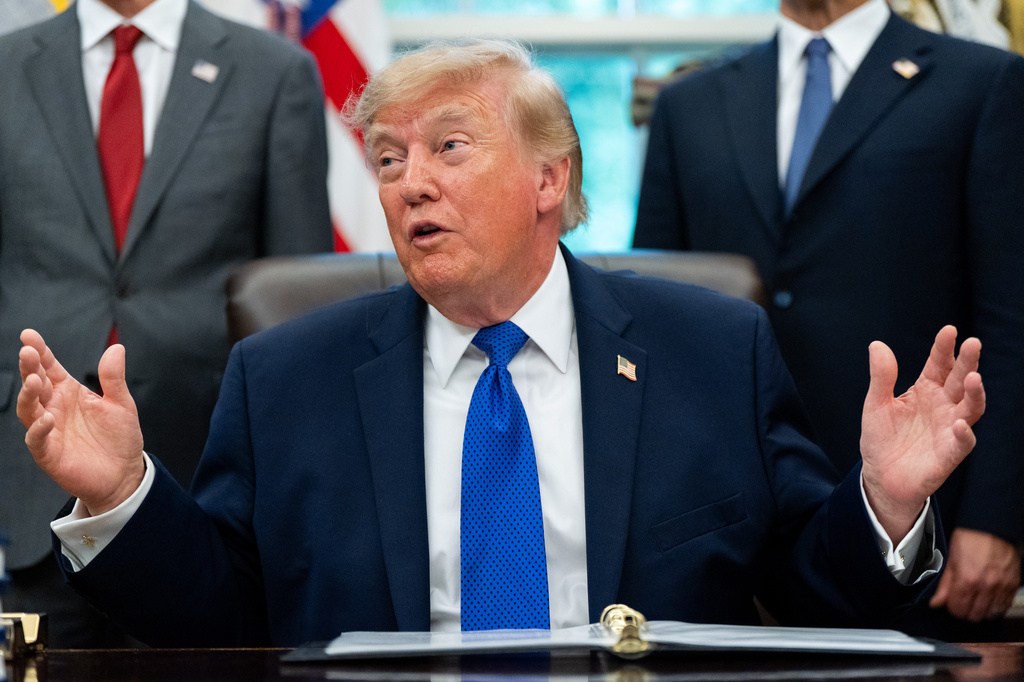
President Trump’s policies have led to an explosion of spending on lobbying — and, of course, the political donations and potential corruption that come with it. It’s “the swamp” he always talks about, but on steroids.
The bad news for the country, which is good news for lobbyists, is that we will likely see even more lobbying activity as Trump’s tariffs and industrial policies expand in his last two years.
Lobbying is a constitutionally protected activity established in the First Amendment . “Congress shall make no law respecting… the right of the people peaceably to assemble, and to petition the Government for a redress of grievances.” Citizens of a democratic society need the ability to “petition the Government” about matters of concern, especially when government’s actions affect them.
There is a positive side to lobbying. Some lobbyists are experts in their fields and can provide elected officials and bureaucrats with important information and insights that can improve any potential legislation.
But most Americans have a negative view, believing it smacks of favoritism, influence-peddling and even vote-buying. For example, the Pew Research Center wrote in 2023, “Majorities in both parties also say lobbyists, special interests and large employers in lawmakers’ districts have too much influence.”
Yet the sad fact is the more money the government spends and inserts itself into all aspects of our lives — and politicians from both parties are increasingly doing more of both — the more those affected will spend on lobbying to gain their preferred outcome.
According to Open Secrets , a nonprofit organization that tracks lobbying, Trump’s first year back in office saw the most money ever spent on lobbying: $5.13 billion. That was a 15.4 percent increase in spending over President Biden’s last year in office. And 2026 looks like it could surpass 2025, with $2.72 billion spent in the first two quarters.
Spending on lobbying remained relatively flat for a decade, from $3.5 billion in 2010 to $3.53 billion in 2020. Spending increased slightly each of Biden’s four years in the White House, from $3.78 billion to $4.45 billion. But it was bound to explode once Trump got in office because his spending, tariffs and regulatory changes negatively impact almost every industry and consumer — not to mention almost every other country.
Here’s how the system works: Once a president or Congress decides to take steps, either by an executive order or through legislation, that affect industries, companies, organizations or consumers, those affected will reach out to their trade associations and lobbying groups for assistance. The lobbyists begin working the issue, often encouraging their clients to make contributions to the appropriate elected officials. Key people may travel to Washington to meet with elected officials and their staffs, often wining and dining, in order to explain their side of the issue. This activity can go on for months, or years, and cost thousands if not millions of dollars. The money does not necessarily buy a vote, but it often buys access. We’re seeing all of that in the current debate over artificial intelligence and crypto currencies.
Trump’s tariffs affect a large swath of companies and consumers. So, spending on lobbying began increasing early last year. And understandably so. If you run a major company, new tariffs or regulations could force you to lay off hundreds or even thousands of employees. Or you could be forced to raise prices, making it even harder for consumers to buy your product or service. Kelly Blue Book reports Trump’s tariffs imposed on the automotive industry an extra $30 billion in additional costs, leading to an average retail price increase of 10.4 percent.
A CEO has a right, even a duty, to challenge arbitrary and unjust legislation or regulations that could undermine his or her company and the jobs that depend on it.
Which government agencies are receiving most of the lobbyists’ attention? Bloomberg reports for 2025, “The largest increases in filings targeted the Office of the U.S. Trade Representative, the Office of the Vice President of the U.S., and the National Economic Council.” No surprises there.
In addition, if the government is handing out lots of taxpayer money — and the Trump administration is — many companies pay lobbyists to reach out to the right people to ensure the companies get a share.
Of course, some companies are bypassing lobbyists because they’ve discovered a shortcut. They’re reportedly making the president’s sons, Eric and Don Jr. , an advisor or board member, paying them very lucrative sums even when they have little expertise. Soon we read some of those companies were awarded a major government contract.
As mentioned previously, this free flow of money doesn’t necessarily lead to corruption, but it can. More importantly, voters increasingly think it does. Gallup recently reported , “Americans’ perceptions of government corruption in the U.S. are at their highest level in 20 years, with 89% of U.S. adults saying it is widespread.”
Trump’s past pledge to “drain the swamp” now seems so 2016. The swamp — which is often associated with lobbying and influence peddling — has never been bigger, or swampier. Trump likes to mention all the industries he says are doing so well under his administration. Maybe he should include lobbying.
Merrill Matthews is the Texas state chair of Our Republican Legacy.
Topics in this story
Gathered from external sources. Rights to this text belong to whoever originally published it.