Beijing blackout: Why we may never know what happened between Trump and Xi
The recent summit between President Trump and Xi Jinping was a win-win for China — at least, as far as anyone can tell.
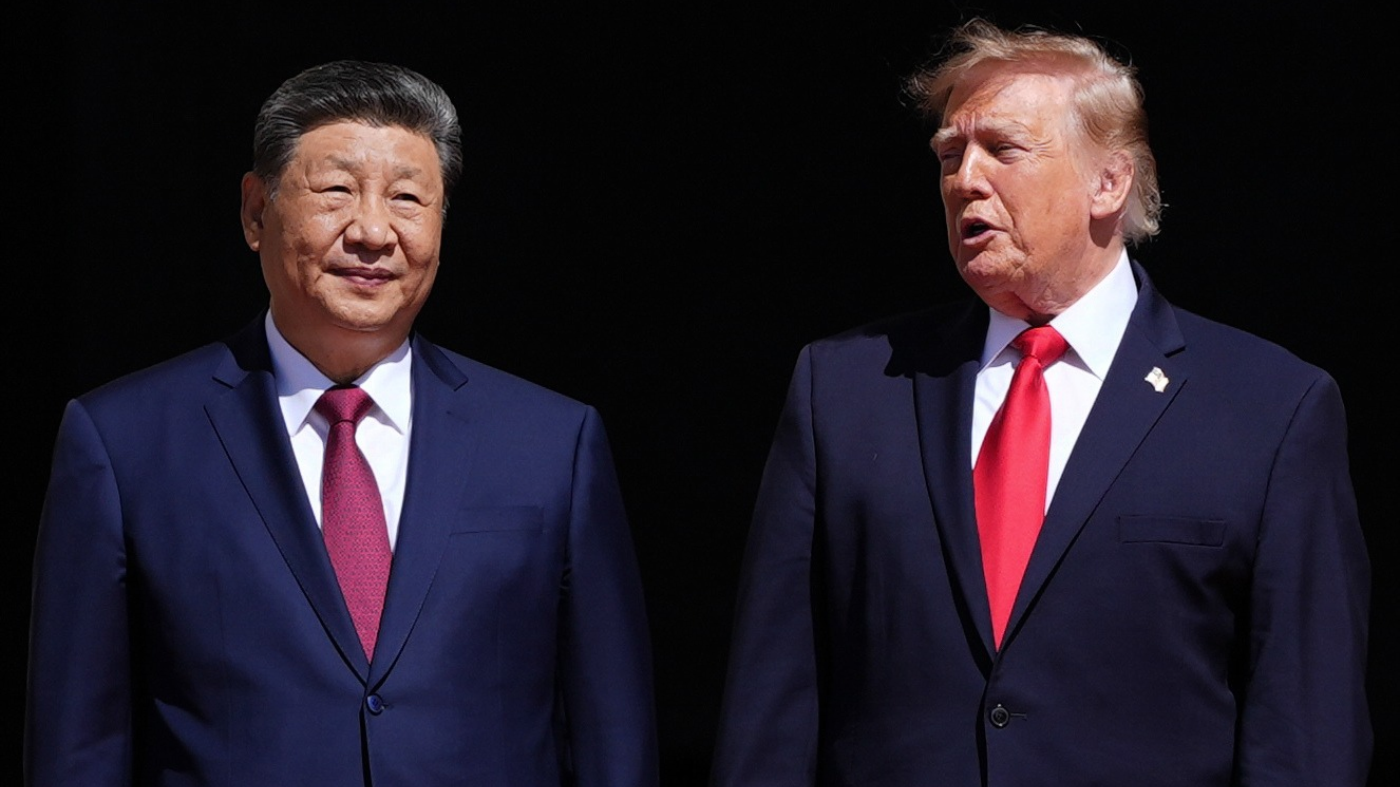
The political, economic and security competition between China and the U.S. — the world’s two greatest economies and most powerful militaries — is nothing less than a titanic struggle. The fact that the U.S. is the leader of the free world and that China now dominates the modern “Axis of Evil” that includes Iran, North Korea and Russia makes it also an existential conflict for Western civilization — with the fate of Taiwan constituting the ultimate test case.
In that context, last week’s summit meeting between President Trump and Xi Jinping was a resoundingly anti-climactic dud, apparently accomplishing nothing to resolve either Taiwan’s future or the larger issue it symbolizes. Instead, a meeting with cosmic stakes became little more than an exercise in diplomatic reciprocity between a Chinese totalitarian and an aspiring would-be dictator, in thrall to Xi and almost all the world’s other tyrants (with the notable exception of their front-line proxy , the Islamic Republic of Iran).
Xi’s objectives for the U.S. summit were three-fold.
First, he wanted validation by the American president that China is an equal player in the international geopolitical game. Xi got that with a lavish White House reception that more than matched Xi’s welcoming ceremonies for Trump in May , and an unprecedented airport welcome by Trump.
Next, Xi sought a softening by Trump of U.S. support for Taiwan, and to disabuse Taiwan of any idea that the United States can accept Taiwan’s independence over the long term. Beijing’s ultimate aim is an explicit statement that Washington “opposes” that elevation of Taiwan’s status rather than the more neutral, non-committal “does not support” independence, which can be read as a disavowal of an active U.S. role but acquiescence in such a final outcome. Xi wants the door closed absolutely and permanently — and he wants America’s complicity in closing the door.
It is not yet known whether Trump agreed to the demand, because Xi clearly succeeded in his third objective for the meeting: that nothing occur publicly that would disrupt U.S.-China relations and the atmospherics of a cooperative Xi-Trump relationship. And if Trump did bend to Xi’s pressure on Taiwan, suppression of that fact would suit Trump’s purposes as well, given his weakened political position just before the midterm elections.
Neither Xi nor Trump would welcome aggressive questioning by U.S. journalists, since it would reveal whether Trump held firm to the longstanding U.S position of avoiding commitment on Taiwan’s future. As a result, there was a virtual blackout of news on the summit’s discussions and outcome.
In fact, Trump chose the occurrence of the Xi visit to take the utterly unprecedented action of blocking access to the White House for three major news outlets: CNN. MS Now and Politico. Predictably, in professional solidarity with the Trump-excluded trio, the entire White House press corps, including Trump-friendly outlets, decided en masse to boycott the event .
We may never know whether Trump’s intent here, but Xi could not have been more delighted at the turn of events: He got his status-affirming White House welcome and avoided having to deal with the pesky American media. As the Chinese like to say, it was a win-win — but both wins went to China.
It remains to be seen whether the news blackout hid a more substantive Xi victory on the matter of Taiwan’s independence or a triumph for Trump, Taiwan and international law on the self-determination of states. In either case, violation of the First Amendment was a further stain on the Trump legacy.
Joseph Bosco served as China country director for the secretary of Defense from 2005 to 2006 and as Asia-Pacific director of humanitarian assistance and disaster relief from 2009 to 2010. He is a nonresident fellow at the Institute for Corean-American Studies, a member of the advisory board of the Global Taiwan Institute and member of the advisory board of the Vandenberg Coalition.
Topics in this story
Gathered from external sources. Rights to this text belong to whoever originally published it.