Trump not ruling out invoking Insurrection Act around midterms
President Trump said in an interview published Thursday that he has not ruled out invoking the Insurrection Act or declaring a national emergency around the midterm elections in November. “I’m not committing to anything,” Trump said in an interview with Time when asked about the limits of his presidential power. “We’re going to see how…
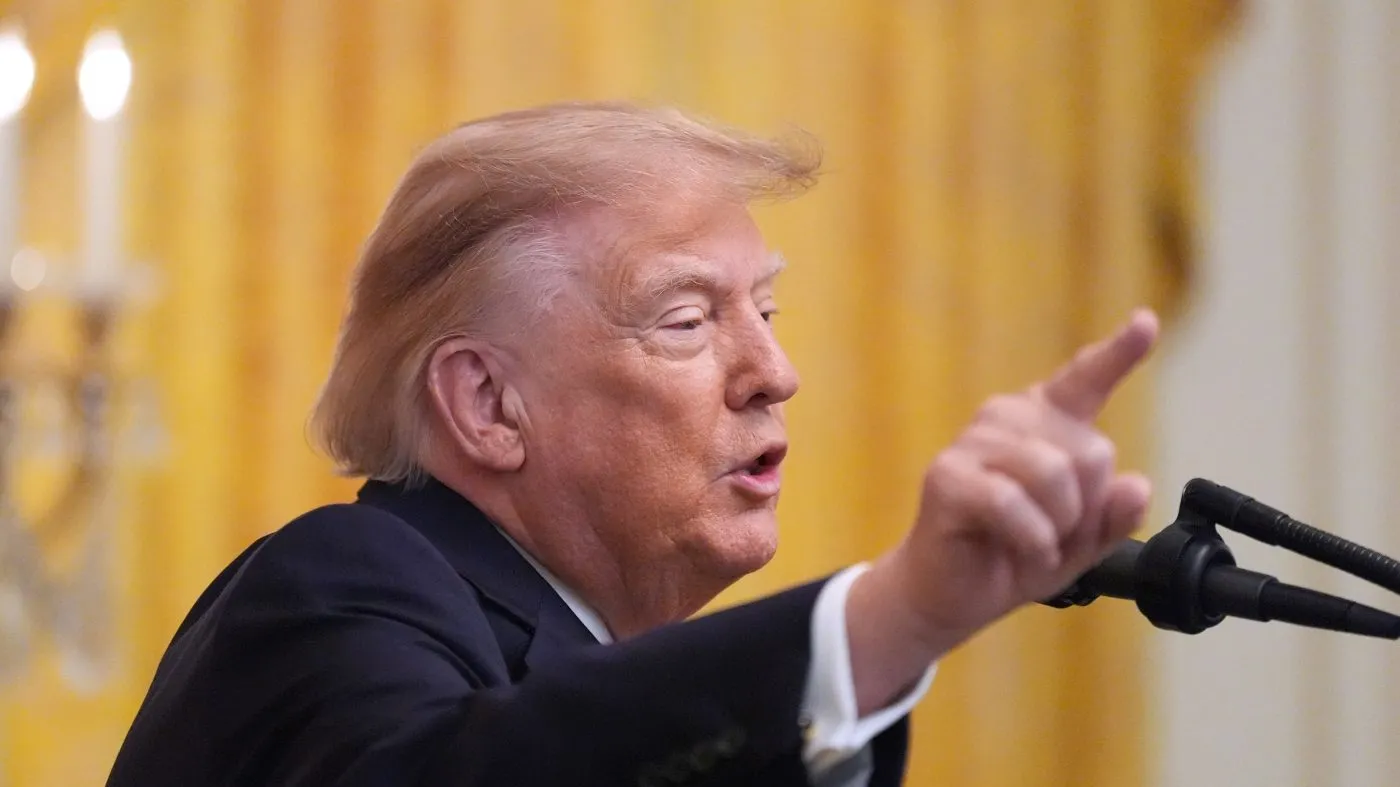
President Trump said in an interview published Thursday that he has not ruled out invoking the Insurrection Act or declaring a national emergency around the midterm elections in November.
“I’m not committing to anything,” Trump said in an interview with Time when asked about the limits of his presidential power. “We’re going to see how it plays out in court.”
The outlet reported that White House advisers have already thought about how to respond if Democrats reclaim either or both the House and the Senate. One official said the administration will “be forced to think more bipartisan.”
“I would hope that if we win, we can still do that, because for two years we’ve run a completely partisan play,” the official told Time. “When you’re looking back on your time, I don’t think that’s what you should be proud of, even if it was successful.”
Trump, however, has warned that if Democrats reclaim either chamber, they will attempt to impeach him for a third time. He dismissed unfavorable polling for him and other Republicans as being fake.
The president has a history of threatening to deploy troops via the Insurrection Act of 1807 between his two terms. He threatened to send troops to Minneapolis after an Immigration and Customs Enforcement (ICE) officer shot and killed U.S. citizen Renee Good in January, before saying there was no reason to invoke the law.
In June 2025, he said he would “certainly” invoke the act in response to anti-ICE demonstrations in the streets of Los Angeles, and he said so again about similar protests in Portland, Ore., in October. He likened both situations to “insurrections.”
Trump also said he considered sending troops to Minneapolis late in his first term after protests erupted following the murder of George Floyd by police in 2020.
The law’s history is tied to possible violence riled up by a former vice president, as former President Thomas Jefferson sought to confront former Vice President Aaron Burr’s organized venture to establish a new country in the Louisiana Territory in 1807, according to the National Constitution Center . The Insurrection Act became law after Burr was arrested in Alabama and charged with treason.
The act allows the president “in all cases of insurrection, or obstruction to the laws, either of the United States, or of any individual state or territory,” to deploy members of the military or federalize members of a state’s National Guard “for the purpose of suppressing such insurrection, or of causing the laws to be duly executed.”
Trump has relied on Title 10 to send federal troops to U.S. cities. Title 10 is a federal code that gives the president the authority to deploy the National Guard to assist local law enforcement in a supporting function.
The Insurrection Act was last invoked by former President George H.W. Bush in May 1992, in response to the Los Angeles riots, after four Los Angeles Police Department officers were acquitted of beating Rodney King, a flash point in the city’s history that was captured on videotape. Fifteen U.S. presidents have invoked it.
Topics in this story
Gathered from external sources. Rights to this text belong to whoever originally published it.