Big Oil can’t hide behind the Clean Air Act
The Clean Air Act was designed to shield Americans from harmful pollution. It was not designed to shield fossil fuel companies from legal accountability or to eviscerate states’ authority to protect their citizens from conduct that brings harm to communities and costs the taxpayers billions.
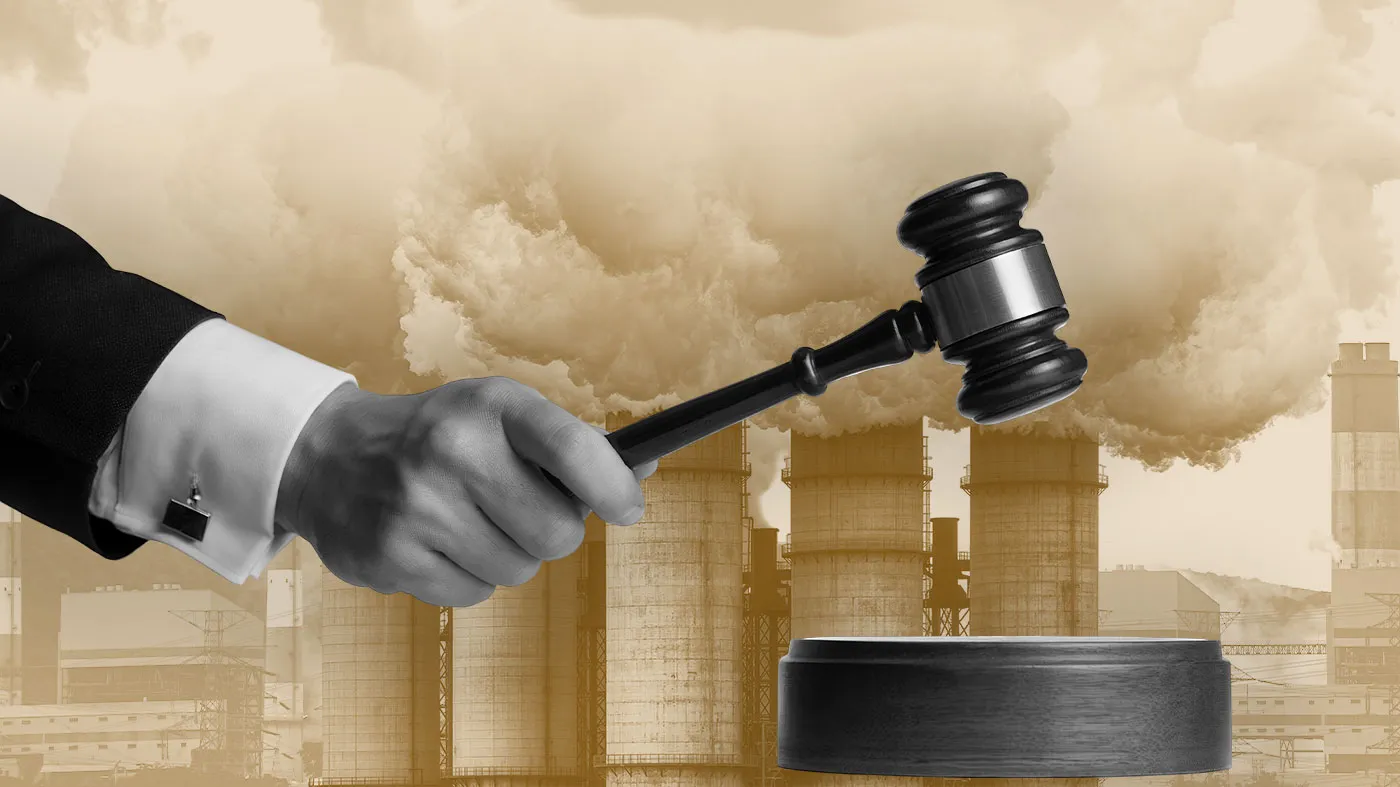
The first case that the Supreme Court will hear this term, Suncor v. Boulder , could have major consequences for state and local governments’ ability to protect their residents from tortious conduct by corporations that are knowingly putting profits over people.
In this case, the court can ensure that state and local governments from Maine to Hawaii can get a fair hearing in court to hold major oil and gas companies accountable for concealing and misrepresenting their decades-long knowledge that the unabated use of fossil fuel products would contribute to more destructive, more frequent and more extreme weather events.
Today, U.S. communities are facing billions of dollars in costs to protect residents from the onslaught of deadly fires, floods, droughts and extreme heat. The impacts from climate change are becoming increasingly prevalent and damaging, creating public health crises that threaten the lives and livelihoods of people all across our country — with the worst health impacts falling hardest on children and other vulnerable communities who can least protect themselves.
In Suncor v. Boulder, ExxonMobil and Suncor Energy are asking the justices to overturn a Colorado Supreme Court decision that allows one of those lawsuits, from the city and county of Boulder, to move forward. Though the Colorado courts soundly rejected their argument, the oil companies insist that they should not stand trial because their actions are somehow shielded under the federal Clean Air Act , the landmark law that was designed to limit air pollution and protect public health. As former senior EPA officials who spent years working to enforce the Clean Air Act, we can say with confidence that the oil companies’ arguments on this issue have no credibility whatsoever. As we explained in a brief joined by former EPA officials from both Republican and Democratic administrations, Exxon and Suncor can point to no language in the Clean Air Act that preempts Boulder’s claims. Why? Because there is none.
The city of Boulder is not seeking to regulate air pollution. It is only trying to recover monetary damages for local harms that the oil companies knowingly caused as they spewed both emissions that altered the climate and falsehoods about the consequences of such emissions.
These companies are alleged to have knowingly deceived the people of Boulder County by minimizing public health risks; as a result, the people of Boulder witnessed the destruction of 1,084 homes in the 2021 Marshall Fire and currently face extreme drought that threatens ecosystems and livelihoods. For Boulder County, the stakes in this case could not be higher.
While Boulder is explicitly not asking the court to regulate emissions or stop the production of fossil fuels, Exxon and Suncor have argued without evidence that a hypothetical ruling against them could disrupt the fossil fuel market. That argument is conjecture at best and fear-mongering at worst. It also rings hollow at a moment when the oil and gas industry is posting record profits while seeking to avoid accountability, thereby placing the burdens of their harmful practices squarely on the backs of America’s families.
Even the Supreme Court has doubts . The justices themselves have raised the question of whether they have jurisdiction to weigh in on Boulder’s claims before the Colorado courts issued a final judgment.
The people of Boulder deserve to get their day in court against the oil and gas companies that have brought direct harm to their communities. The purpose of the Clean Air Act has never been to protect fossil fuels over other energy sources or to shield fossil fuel producers from liability for deceptive business practices. State laws that prohibit corporations from misleading the public about the dangers of their products pose no obstacle to the Clean Air Act’s purpose of reducing air pollution to protect the public’s welfare.
The act empowers the federal government to set reasonable limits on carbon pollution emissions from motor vehicles, power plants, and oil and gas development, which together make up a whopping two-thirds of U.S. emissions . It does not prevent states from enforcing their own laws against companies simply because doing so may indirectly lead to a reduction in fossil fuel emissions. And in a staggering “have their cake and eat it too” move, while asserting that the Clean Air Act applies here, the current administration is doing everything it can to get the courts to say that the act does not in fact allow EPA to regulate greenhouse gases now or in the future. EPA did so just this month when it repealed the 2024 limits on carbon pollution from coal and gas-fired power plants. Similarly, some members of Congress who have filed a brief in support of Exxon and Suncor are pushing legislation to give oil companies an unprecedented and dangerous legal shield from cases just like Boulder’s. The fact that these members feel the need to introduce such a bill is in itself an admission that current federal law does not stand in the way of Boulder’s claims.
The Clean Air Act was designed to shield Americans from harmful pollution. It was not designed to shield fossil fuel companies from legal accountability or to eviscerate states’ authority to protect their citizens from conduct that brings harm to communities and costs the taxpayers billions. The Supreme Court should not block communities like Boulder from having their day in court.
Gina McCarthy is former White House climate adviser and administrator of the U.S. Environmental Protection Agency. Avi Garbow is former general counsel of the U.S. Environmental Protection Agency and founder of Fiery Run Environmental Strategies.
Topics in this story
Gathered from external sources. Rights to this text belong to whoever originally published it.