How Trump can earn the monument he so desperately desires
Pulling the world back from three crises — nuclear weapons, climate change and AI — would be the ultimate test of his deal-making skills
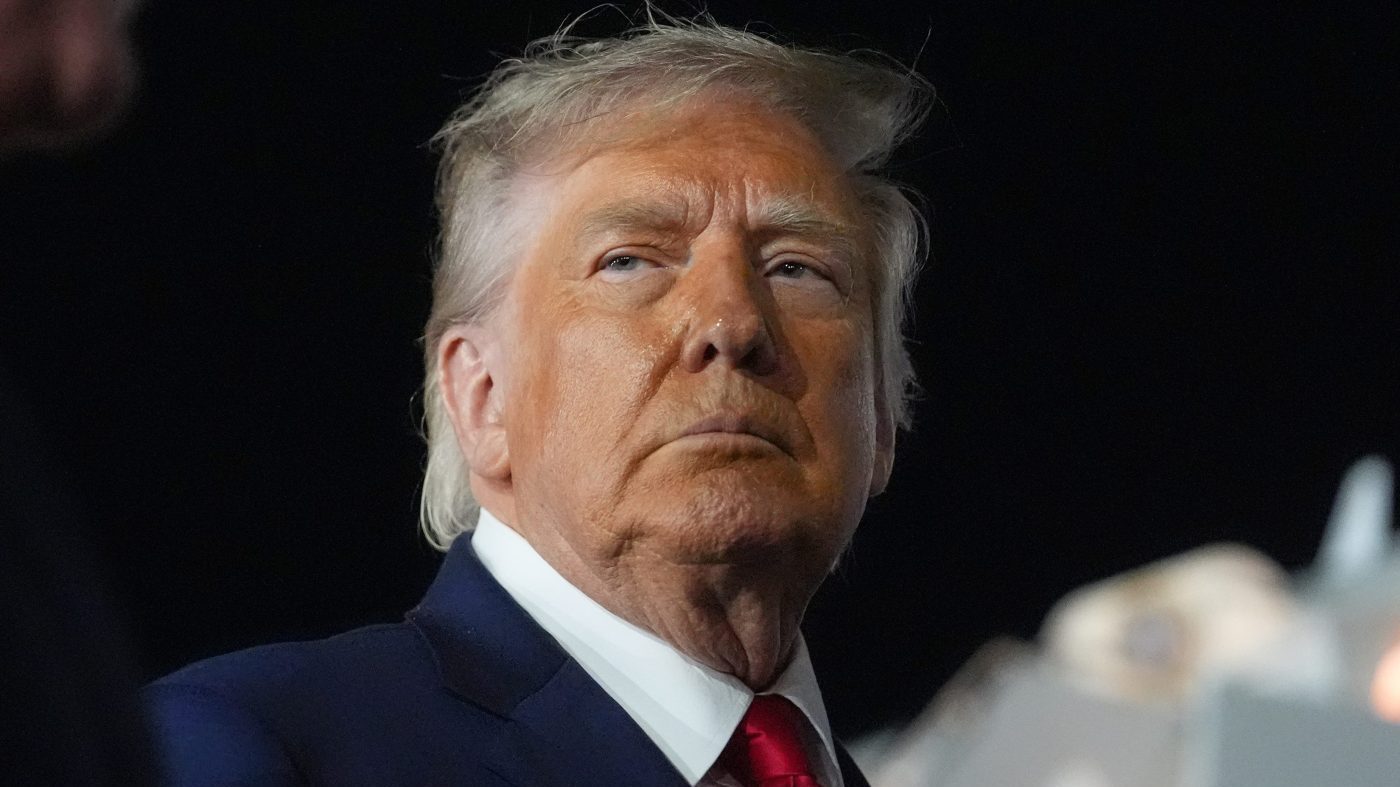
President Trump clearly wants to be remembered as a great president. However, the great builder must know that the monuments he is erecting to himself sit on foundations of sand. His name can be removed from buildings. His marble memorials can be torn down. The physical evidence of his presidency can be erased. That may be America’s retribution if he remains the president the nation wants to forget.
Yet he has an opportunity to do something great. He could earn a hero’s place in history by leading the world back from the brink of three existential crises: the escalating threat of nuclear weapons, the growing violation of the planet’s ecological boundaries, and the potential that artificial intelligence will exceed human control.
Defusing them would be a mission impossible, but one Trump should accept.
The three crises have several things in common. Each is the consequence of allowing technology to advance faster than the morality, policies and political will to control them. The United States has played a role in causing them. And the key to defusing them involves collaboration with China.
Nuclear weapons: The U.S. and Russia control nearly 86 percent of the world’s nuclear weapons. The only remaining arms-control agreement between the two nuclear superpowers expired in February . Trump has indicated willingness to reach a new agreement, but he insists that China be part of it. However, China is rapidly expanding its much smaller arsenal, and has shown little interest in joining the U.S. and Russia in setting numerical limits.
Under the 1970 Treaty on the Nonproliferation of Nuclear Weapons , nuclear-armed countries have reduced their arsenals from 70,300 warheads in 1986 to just over 12,100 today . But progress has stalled, and the world stands at the brink of a new arms race. The nuclear powers are modernizing their weapons, more nations are thinking about acquiring them, and Trump wants to build a “Golden Dome,” a theoretical new layer of U.S. defenses that critics consider unworkable and potentially destabilizing.
Instead, Trump could propose that the U.S. and China agree to limit their warheads to the minimum needed to retaliate against an attack. Then, they would approach Russia to make the same commitment. If it agreed, the three major nuclear powers could put the world back on track to complete nuclear disarmament.
Greenhouse gases: The U.S. and China have collaborated before. In 2014, President Obama reached an agreement with China’s Xi Jinping to significantly reduce greenhouse gas pollution and to cooperate on developing clean-energy technologies. Their agreement created momentum for nearly 200 countries to sign the Paris Climate Agreement the following year.
Trump could propose that he and Xi renew the 2014 agreement. He would re-enroll the U.S. in the Paris Agreement. He would stop using federal policy to suppress clean energy while promoting fossil fuels, and let the technologies compete on cost and performance. Trump would have to reverse his position that climate change is a hoax , but it wouldn’t be the first time he pivoted on a major issue. He could explain the business case for action: America’s opportunity to capture a share of the $2.2 trillion the world is investing annually in clean energy.
Next, Trump and Xi could agree to demonstrate solutions to an even larger environmental issue: the six other global life-support systems that civilization has “massively breached, ” including land system change, introduction of novel entities and ocean acidification.
Artificial intelligence: Nuclear weapons and climate change have hung over civilization like Damocles sword for generations . We have an opportunity to prevent an existential AI crisis before it develops.
Several AI industry leaders have called for slowing the development of frontier machine intelligence until they better understand how to keep it under human control. However, Trump wants to go full speed to prevent China from taking the lead. The race is reminiscent of America’s hurry during World War II to develop nuclear weapons before Nazi Germany could do so.
China and the U.S. have already agreed that AI should not be allowed to control nuclear weapons . In July, China signed an agreement with 28 other countries to promote international cooperation and global governance of AI in a “beneficial, safe, and fair direction .” Trump could embrace that goal and propose that the U.S. and China collaborate to slow Frontier AI but accelerate what could be called “Bounded AI” — narrow but mutually beneficial applications like analyzing climate data to verifying compliance with international treaties.
Assuming he finishes his term, Trump has two years left to earn the place in history he so badly wants. Pulling the world back from these three crises would be the ultimate test of his deal-making skills — and a legacy much more deserving than the monuments he’s building to himself.
William S. Becker is co-editor of and a contributor to “ Democracy Unchained: How to Rebuild Government for the People,” and a contributor to “ Democracy in a Hotter Time .” He previously served as a senior official in the Wisconsin Department of Justice. He is currently executive director of the Presidential Climate Action Project.
Topics in this story
Gathered from external sources. Rights to this text belong to whoever originally published it.