Christa Pike: Timeline of botched Tennessee execution
The state of Tennessee failed to put Christa Pike to death Wednesday after two doses of a lethal drug were administered following a stay granted by a lower court before the Supreme Court allowed the execution to proceed.
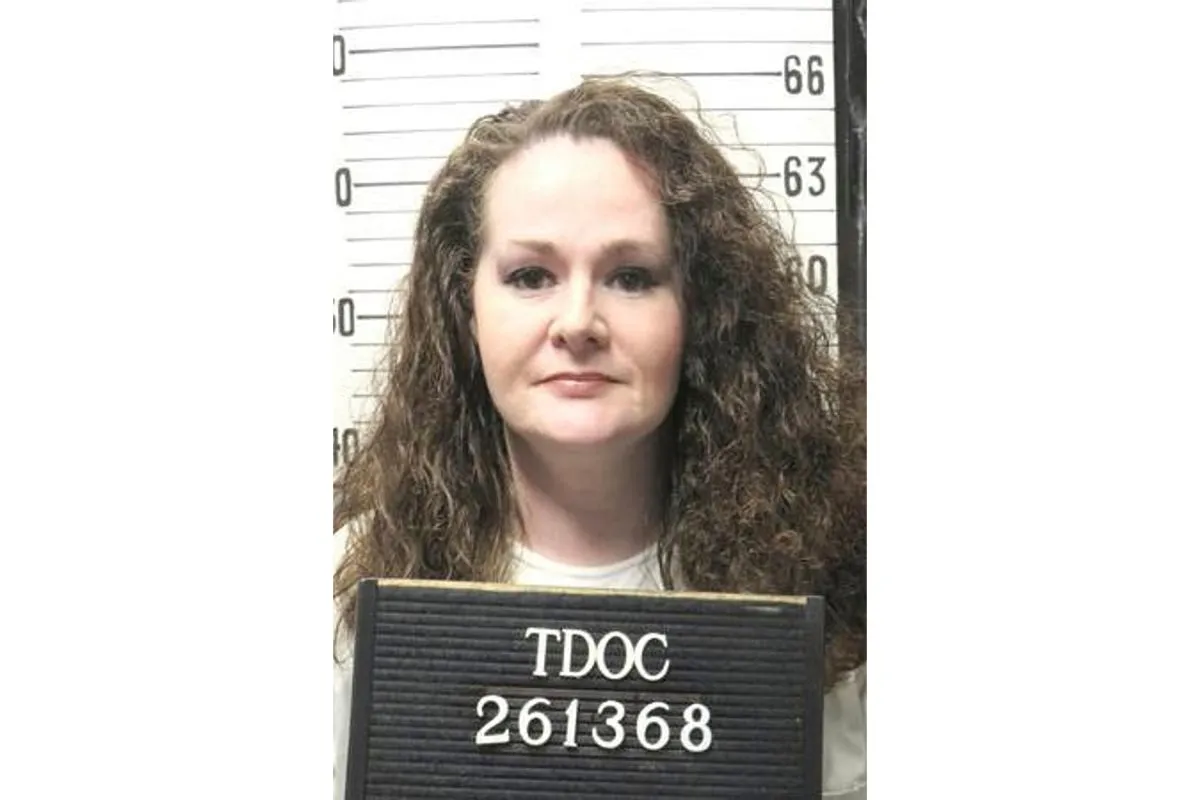
NASHVILLE, Tenn. ( WKRN ) — The state of Tennessee failed to put Christa Pike to death Wednesday after two doses of a lethal drug were administered following a stay granted by a lower court before the Supreme Court allowed the execution to proceed.
According to media witnesses, Pike, 50, was alive and snoring when they were escorted from the death chamber. She was taken from Riverbend Maximum Security Prison in an ambulance to a Nashville-area hospital, where her condition is unknown.
Pike was given two doses of pentobarbital. Her attorneys released the following statement:
Tonight the State of Tennessee once again failed to carry out a lawful execution. We take no pleasure in being right, but the concerns raised by Ms. Pike proved to be true: difficult vein access, blown veins, degraded pentobarbital, no emergency medical care available when things inevitably go wrong, all under a protocol that remains veiled in secrecy. Randy Spivey and Kelly Gleason from the TN Office of the Post Conviction Defender, and Stephen Ferrell and Luke Ihnen from Federal Defender Services of Eastern Tennessee
Tonight the State of Tennessee once again failed to carry out a lawful execution. We take no pleasure in being right, but the concerns raised by Ms. Pike proved to be true: difficult vein access, blown veins, degraded pentobarbital, no emergency medical care available when things inevitably go wrong, all under a protocol that remains veiled in secrecy.
Tennessee Gov. Bill Lee (R) has delayed the remaining execution this year for Gary Wayne Sutton, who was scheduled to be put to death on Dec. 3.
Journalists from local media outlets who were selected to watch the execution spent all day at the prison. They provided a comprehensive timeline of the execution once they were released.
6:41 p.m. Media witnesses were let into the observation room next to the death chamber. They were allowed to hear what happened in the room through a microphone system.
7:15 p.m. Witnesses who have previously watched executions noted it was taking longer than normal to begin.
7:27 p.m. Curtains to the execution chamber were raised and Pike was strapped to a gurney with an IV in her right arm.
Pike gave her last words and began to sing with her spiritual advisor while he patted her head, and they exchanged words.
7:31 p.m. Pike said, “The vein in my arm feels like it’s about to bust,” and asked her spiritual advisor if this is normal.
7:34 p.m. Pike asked her spiritual advisor to tell someone she loves him.
7:41 p.m. The rock was placed in the observation window for the first time.
The significance of the rock is not exactly known, but it is believed to signal that the lethal drug has been administered and the waiting process has begun.
7:43 p.m. Pike was seen grinding her jaw.
7:44 p.m. Pike took a deep breath and continued to speak.
7:46 p.m. The curtains are closed for the first time.
7:49 p.m. The curtains are reopened and Pike is seen with her mouth open. She can be heard snoring by the witnesses. Her spiritual advisor, who had been removed from the room, was ushered back inside.
7:51 p.m. Choking sounds can be heard along with more snoring. Alarms believed to be from dying batteries of TDOC employees can be heard.
7:54 p.m. Pike grunted, lifted her head and continued snoring.
7:56 p.m. Pike lifted off the gurney so her body made a V shape.
8 p.m. Faint sounds of breathing were heard.
8:01 p.m. The rock was placed in the window for a second time.
8:02 p.m. Louder snoring was heard from Pike.
8:05 p.m. The curtains are closed for a final time. Witnesses asked repeatedly if the curtains could be reopened since Pike could still be heard snoring.
8:53 p.m. The microphone was cut off after the warden asked the witnesses to exit the area.
Pike was scheduled to be executed at 9 a.m. Wednesday, before the Sixth Circuit Court of Appeals approved a last-minute request for a stay of execution.
The Tennessee Attorney General’s Office appealed to the Supreme Court, which allowed the execution to proceed.
Pike was convicted of brutally killing 19-year-old Colleen Slemmer in Knoxville in 1995 when she was 18. She would have been the first woman put to death in Tennessee in more than 200 years.
Prosecutors said Slemmer was lured into a wooded area before being tortured and killed by Pike and her then-boyfriend in 1995. Pike told prosecutors she believed Slemmer was trying to steal her boyfriend.
“Carrying out a lawfully imposed sentence is among the State’s most serious responsibilities, and the people of Tennessee expect it to be done in a manner that is not only legal and constitutional, but is effective. I have ordered a comprehensive, third-party review to determine exactly what occurred. Therefore, the remaining scheduled execution will not be carried out this year.”
The Tennessee Department of Correction also issued a statement hours after the failed execution attempt:
“ The Tennessee Department of Correction followed every step of the State’s lawful, established execution protocol approved by the Attorney General’s Office. The lethal injection chemical in the protocol has consistently been effective, and the protocol does not allow for additional procedures beyond what was carried out this evening. Christa Pike has been transported to an off-site medical facility. “
Tennessee’s execution protocol calls for a second set of syringes to be administered “if the inmate is not deceased” after the first.
Seven people have survived medical problems due to an execution team’s failure to access a vein to administer lethal injection drugs, but no one has stayed alive after receiving the drugs used in such executions, according to the Associated Press.
This is the second time in 2026 Tennessee has been unable to carry out an execution: In May, state officials called off the execution of Tony Carruthers after executioners failed to place an IV to administer the lethal injection.
Since the Supreme Court reinstated the death penalty in 1976, 18 women have been put to death, representing about 1 percent of all executions, according to the Death Penalty Information Center.
Pike would have been the 30th person executed in the U.S. this year.
Tennessee announced in 2024 it was switching from a three-drug series for lethal injections to the single drug pentobarbital. That came more than two years after Tennessee abruptly halted the execution of Oscar Smith and acknowledged it had failed to ensure its lethal injection drugs were tested properly.
The Associated Press contributed to this report.
Topics in this story
Gathered from external sources. Rights to this text belong to whoever originally published it.