Federal Reserve delivers unwelcome news to Trump
President Trump received unpleasant news on Wednesday after Federal Reserve Chair Kevin Warsh moved to raise interest rates despite the president’s calls for rates to come down. The Federal Reserve announced on Wednesday that it will hike interest rates by 0.25 percent to 4.0 percent, marking the first time the body has raised rates in…
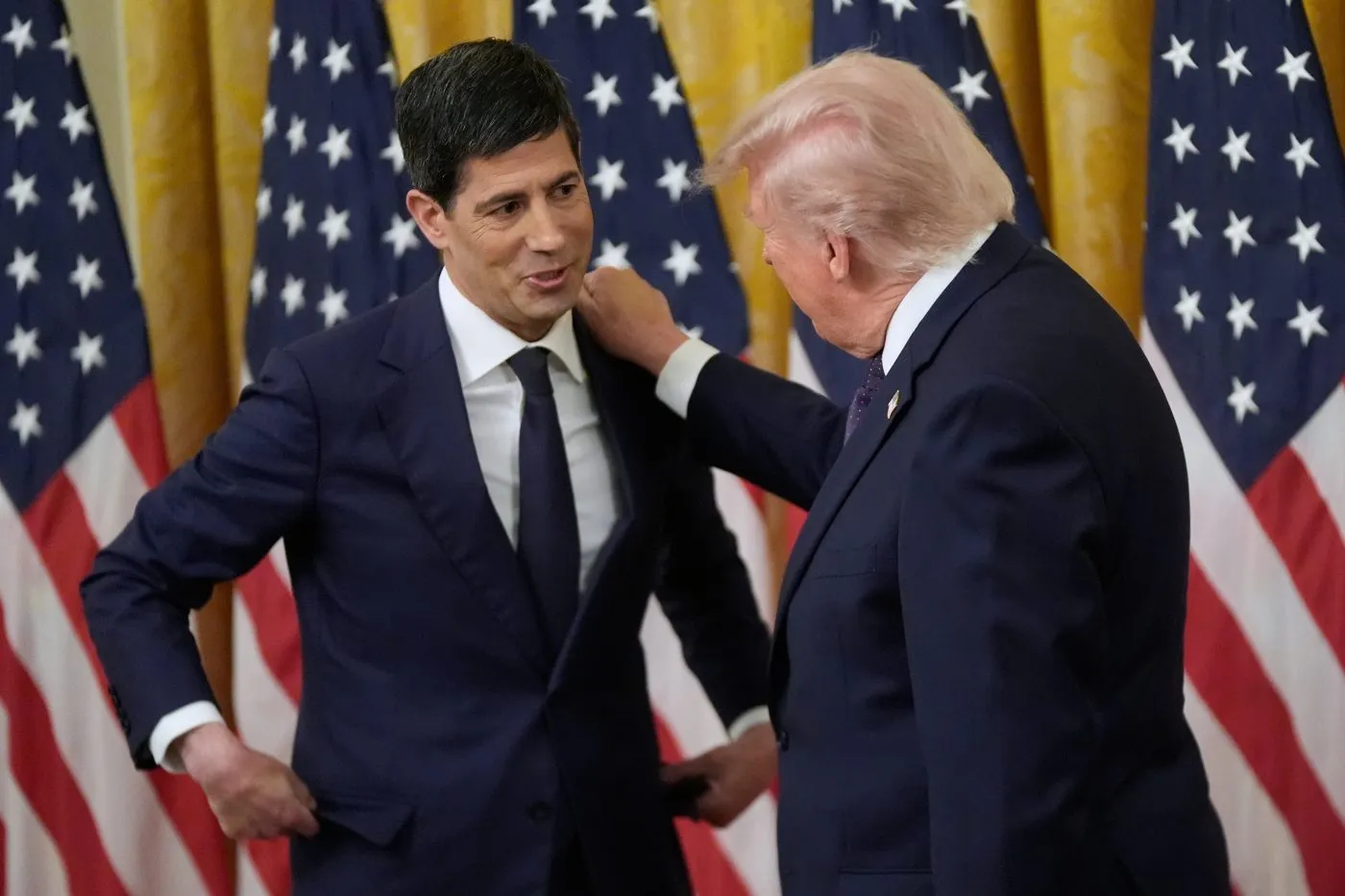
President Trump received unpleasant news on Wednesday after Federal Reserve Chair Kevin Warsh moved to raise interest rates despite the president’s calls for rates to come down.
The Federal Reserve announced on Wednesday that it will hike interest rates by 0.25 percent to 4.0 percent, marking the first time the body has raised rates in three years.
The move to hike rates for the first time since the Biden administration puts Trump at odds with Warsh, as the president has pressed the Fed to lower interest ahead of November’s midterm elections.
Both economists and political strategists note that the rise in interest rates is a recognition that inflation continues to persist, which appears to contradict the administration’s message that the economy is experiencing an economic boom.
“Today’s decision by the Fed to hike its target interest rate is a recognition of reality, and the reality is that inflation remains far above the two percent supposed target level,” said Joel Griffith, a senior fellow at Vice President Mike Pence’s think tank Advancing American Freedom.
One former Trump administration official predicted the hike would not make a major difference in the election just two months out. However, the same official argued it creates somewhat of a messaging problem for Trump and Republicans looking to tout the state of the economy.
“I suppose you could make the argument that the Trump-appointed chair is trying to do all he can to tame inflation, and that is good,” the official said. “But doing that sort of admits there is inflation, which I don’t think is consistent with White House messaging right now.”
Trump issued a fiery response to the decision on TruthSocial on Wednesday, and reupped his previous calls for the U.S. to stop trading with every country that it has a deficit with.
“We are ‘carrying’ almost every country in the World, and that cannot go on any longer. LOWER THE INTEREST RATES FOR THE UNITED STATES OF AMERICA, AND FAST!” Trump demanded.
The president and Republicans are under pressure to overcome Democratic messaging on the economy as the Iran war rages on and gas prices remain high. The national gas price average sits at $4.36 per gallon, while inflation is 3.40 percent.
Republicans argue that the inflation rate is considerably lower under Trump than it was under former President Biden, when it reached a high of 9.1 percent in June of 2022.
However, polls show Americans remain frustrated with Trump’s handling of the issue and passing that frustration along to Republican candidates.
A New York Times/Siena College poll released this week found that 62 percent said they disapproved of the way Trump was handling the economy, while only 36 percent said they approved. When asked which party they trust to do a better job on the economy, 51 percent said they favored Democrats while 45 percent said the same about Republicans. Another 51 percent said they trusted Democrats to handle the cost of living better while 43 percent chose Republicans.
“The economic data backs up that polling,” Griffith said. “Inflation is accelerating, and right now year over year, incomes have not kept up with the rise in prices.”
The issue of interest rates has been particularly sensitive for the president. Trump railed against former Federal Reserve Chair Jerome Powell for months over his decision not to raise interest rates, frequently referring to him as “Too Late” Powell.
Trump picked Warsh to succeed Powell, whose term ended in May. His Justice Department had launched an investigation into Powell’s handling of two of the central bank’s buildings in Washington, D.C. amid Trump’s criticism, but it was later dropped.
While Trump has spoken highly of Warsh, he appeared eager for an interest cut while speaking to reporters in Ireland over the weekend.
“We should be paying the lower interest rate in the world, regardless of [the Fed’s] formulas,” Trump said.
And earlier this month, Trump aired his frustrations over inflation in the Oval Office despite receiving a positive August jobs report.
“Growth does not cause inflation. Stupidity causes inflation,” Trump told reporters. “We have to change our ways because we had fantastic job numbers today, and the stock market should go up.”
One source close to the White House told The Hill that Warsh was in a “damned-if-you-don’t position” and that the Fed Chair chose the option that “secured his credibility over his credentials in the West Wing.”
“Is it great to have a rise in interest rates? No. But will it be a blessing in disguise for other looming economic issues? Potentially,” the source said.
The source argued that it may be time to “try something new since not much has been working in our favor.”
“Chair Warsh should be praised by all the naysayers who were ready to jump down his neck expecting he’d lower interest rates to appease the president, yet chose not to — but we all know that won’t happen,” they said.
Warsh chuckled when asked by reporters if he had a message for Trump on Wednesday.
“I’ve got nothing for you on a discussion with the president,” Warsh said, dodging the question.
However, Warsh touted the independence of the Fed when asked about Trump’s threat to cut off trade to certain countries unless interest rates are lowered.
“Part of the independence of the Federal Reserve is we stay in our lane,” Warsh said.
“Independence is a two-way street. We’ll let people that do trade policy and fiscal policy stay in their lane too. That’s how we can stand up here and call them the way we see them.”
Topics in this story
Gathered from external sources. Rights to this text belong to whoever originally published it.