Hispanic voters turn toward Democrats in redistricted Texas, Florida
Hispanic voters swung to the right in the last election, but Republicans appear to be losing ground with the key voting bloc, potentially complicating the party’s path to victory in the redistricted red strongholds of Texas, Florida and beyond. Recent polling has signaled that Hispanic voters who helped propel President Trump to a second term…
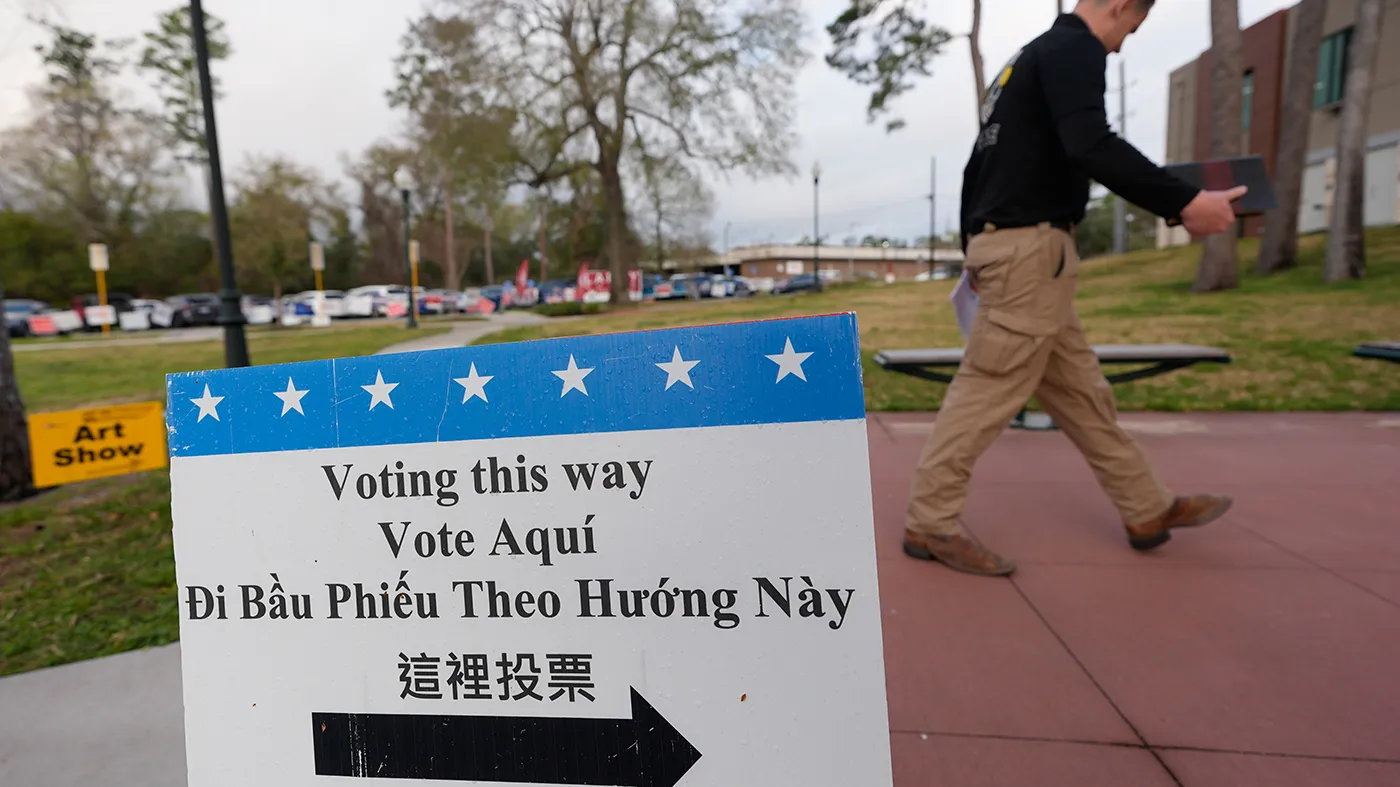
Hispanic voters swung to the right in the last election, but Republicans appear to be losing ground with the key voting bloc, potentially complicating the party’s path to victory in the redistricted red strongholds of Texas, Florida and beyond.
Recent polling has signaled that Hispanic voters who helped propel President Trump to a second term are shifting toward Democrats for the midterms, frustrated by the White House’s handling of the economy and controversial immigration policies.
Democrats are eager to recapture those voters as they fight to flip the House and Senate — particularly in Texas and Florida, the red states with the highest Hispanic populations in the country, and where Republicans redrew congressional maps to give themselves a midterm boost.
“In Texas and Florida, Republicans are losing ground with many of the Hispanic voters with whom they made major inroads in 2024. As a result, heavily Hispanic seats in South Texas and South Florida that voted for Trump by double digits are now hosting highly competitive races,” Cook Political Report analyst Erin Covey wrote on Friday as the election handicapper moved three Florida House races and three Texas House races toward Democrats.
Hispanic voters, who make up 16 percent of the national electorate, sided with former President Biden by 25 points in the 2020 presidential election, but former Vice President Kamala Harris won the group by just 3 points as the Democratic standard-bearer in 2024, according to Pew Research . In 2024, Trump carried the Latino bloc in Texas by about 10 points and in Florida by roughly 13 points .
Now, however, a Cook Political Report/Televisa Univision survey found that 18 percent of Hispanic voters who supported Trump in 2024 disapprove of the job he’s doing — and 22 percent do not support a Republican House candidate on a generic ballot.
Decision Desk HQ’s (DDHQ) latest polling averages also show that Democratic Senate candidate James Talarico’s lead among Hispanic voters has jumped from 8 points this spring to a 23-point advantage over Republican Ken Paxton, with a similarly stark increase for Democrat Gina Hinojosa in the governor’s race.
This shift comes as the Latino electorate in Texas has more than doubled since 2000 , according to the Latino Policy and Politics Institute at the University of California, Los Angeles, to roughly 32 percent of the state’s eligible voters.
“There’s no question” the bloc has moved strongly toward Democrats in Texas since 2024, said Jon Taylor, a political science professor at the University of Texas at San Antonio. “I think this is why there was such an impetus on the part of Trump and Abbott to do this mid-decade redistricting.”
Lone Star State Republicans kick-started the national redistricting fight last year when they reshaped their House districts to give the party a five-seat boost, based on the 2024 results, including Hispanic Texans’ rightward shift.
But Republicans may ultimately gain nothing from the national back-and-forth over district lines, according to a DDHQ analysis last week, with Latino voters in Texas potentially playing a big role.
“As for why Texas Republicans aren’t adding as many seats as they hoped, potential Democratic holds (or gains) in red-leaning but heavily Latino districts in South Texas are the chief factor,” Geoffrey Skelley, DDHQ’s chief elections analyst, wrote.
“The biggest embarrassment for the Republicans will be these Texas races that they gerrymandered because they assumed that these Hispanic voters would perform the same way they had just a year ago for Donald Trump, and so that may end up being a dummymander,” said Chuck Rocha, a Hispanic Democratic strategist who’s served as a senior adviser to campaigns up and down the ballot, including Sen. Bernie Sanders’s (I-Vt.) presidential bids and Talarico’s Senate bid in Texas.
Similar shifts could be underway in Florida, where Republican-friendly redistricting has targeted as many as four Democratic-held seats. Latino voters make up roughly 29 percent of the Sunshine State’s population, according to census data.
In a late May poll from UnidosUS, 20 percent of Hispanic voters in Florida who backed Trump in 2024 said they would not repeat their vote. And a New York Times analysis this week found that, if the latest polls bear out, Florida could see multiple red seats swing sharply toward Democrats.
Rep. Maria Elvira Salazar (R-Fla.) put a spotlight on Latino voters’ importance in Florida last week when she asserted in a campaign advertisement that Trump had gone “too far” with federal immigration enforcement operations.
“The same Hispanics who helped you get to the White House in 2024 feel betrayed today,” said Salazar in the ad for her reelection bid in the 27th Congressional District, which is projected to “lean Republican” by Cook Political Report. Trump said last week that he disagrees with Salazar, stressing that his tough stance on the southern border “probably at least partially won the election.” The congresswoman later said that Trump was “ very receptive ” to her warning.
House Republicans’ campaign arm has hailed this cycle’s GOP-friendly redistricting and continues to stress its cash advantage and airwave blitz as November nears, arguing that “House Dems are fighting to catch up with the limited resources they have.”
But Maria Cardona, a Democratic strategist who has long specialized in Hispanic outreach, argued that the GOP’s redistricting in Texas and Florida will “backfire” because “they were convinced that the gains that they made in ‘24 were permanent, and … anyone who thinks that has no clue about how Latino voters work.”
Alongside frustration over the White House’s immigration crackdown, economic concerns dominate. Pocketbook woes drove the blue-leaning bloc’s rightward shift in 2024 — and they now appear to be turning Hispanic voters back to Democrats.
“The exact same thing that is driving Hispanics away from Republicans is what drove them away from Democrats just two years ago,” said Mike Madrid, a Trump critic and Republican strategist who specializes in Latino voting behavior and trends.
“This is overwhelmingly about affordability, cost of living, and falling behind, and not being able to make it again as working-class people in this economy.”
The Cook Political Report survey showed that Hispanic voters in Texas rate economic concerns as more important to them in the election than immigration or Immigration and Customs Enforcement by a 2-to-1 margin.
Of course, turnout will be key to helping Democrats capitalize on Hispanic voters’ frustrations with the GOP. To that end, candidates such as Talarico in Texas are making notable investments in Spanish-language ads and other outreach efforts aimed at capturing disaffected Hispanic Texans.
But even if Hispanic voters do move toward Democrats in November, experts cautioned that the bloc could swing again if Democrats aren’t responsive to Hispanic voters’ concerns about the economy and other top issues.
“I think there’s a realignment. I think they’re frustrated with both parties, but right now, … Democrats are benefiting from the frustration,” Rocha said.
“I think that the Latino voter is going to become the new soccer mom, and everybody’s going to be trying to figure out how to get a swing voter in their camp, especially with 2028 on the horizon.”
Topics in this story
Gathered from external sources. Rights to this text belong to whoever originally published it.