Americans don’t trust Congress to fight corruption — here’s how to change that
Congress must assert its oversight of the executive branch, not to pursue political agendas, but to establish the facts and ensure accountability.
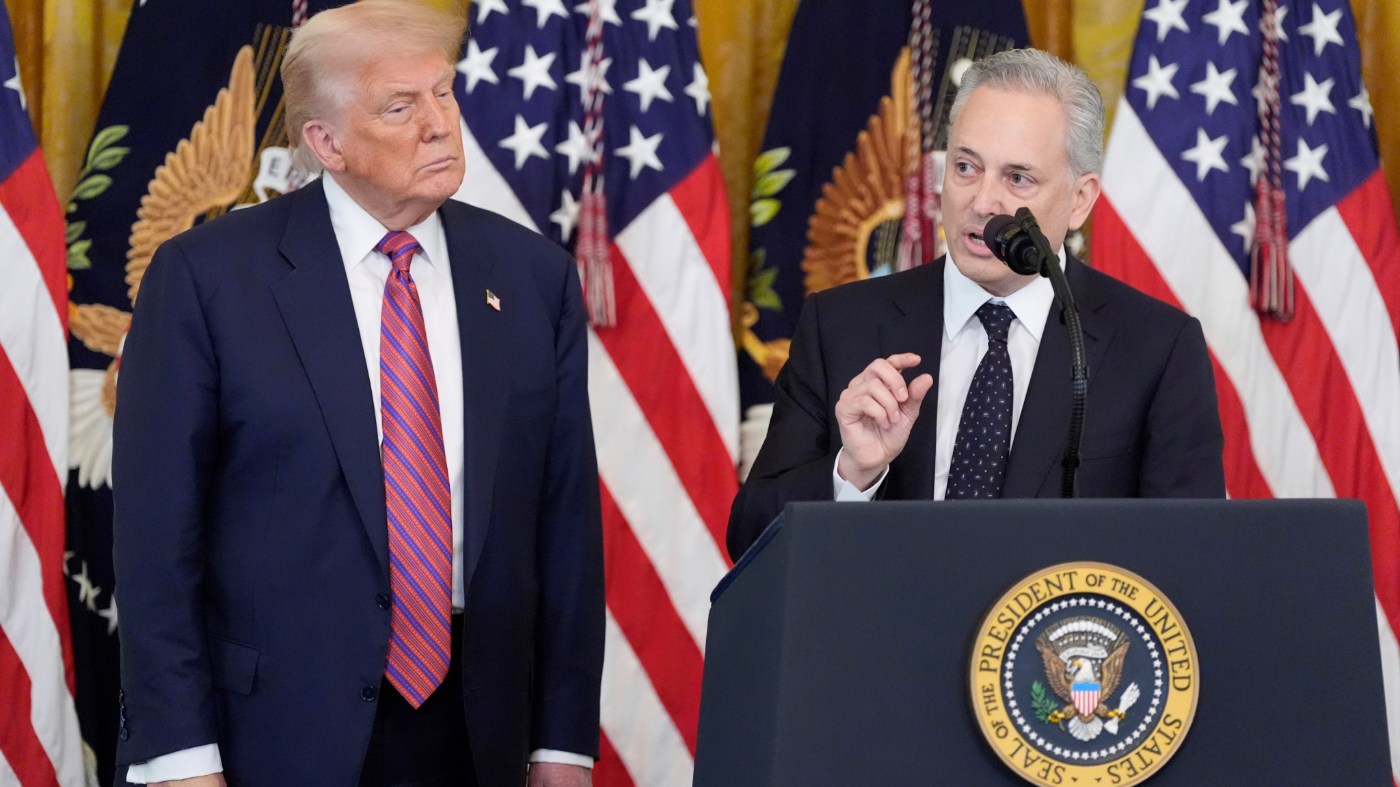
Last month, Sen. John Curtis (R-Utah) took a brave and principled stand. Following reports that a Russian oligarch had bankrolled Donald Trump Jr.’s lavish wedding party in the Bahamas, Curtis urged the Senate Judiciary Committee to investigate presidential families abusing power, calling for subpoenas of Trump Jr. and Hunter Biden.
An investigation would be a great first step toward helping Americans make sense of what has been happening in the country and rebuilding public trust in Congress.
Revulsion toward corruption is a cross-partisan issue . However, most Americans have little faith Congress will do anything about it. Congress’s near-total inaction in the face of brazen reports of executive branch self-enrichment over the last year has only deepened Americans’ mistrust. And a new ProPublica report about a shelved FBI pay-to-play investigation into Congress seems to confirm the public’s worst suspicions.
Congress needs to shift gears fast. Especially at a time when the Justice Department has gutted its anti-corruption capacity, including purging the FBI’s elite public corruption unit and forcing out the prosecutors who ran its public integrity section.
Congress must assert its oversight of the executive branch, not to pursue political agendas, but to establish the facts and ensure accountability. That starts with investigating the following serious patterns of apparent executive branch corruption.
First is self-dealing. We already saw the huge, cross-partisan public outcry this summer over the proposed “ anti-weaponization fund ” — an IRS slush fund which involved the president making decisions in his own case, and potentially directing huge sums of taxpayer money to people who had been convicted in connection with the Jan. 6 riot at the U.S. Capitol.
The Washington Post has reported that companies Trump Jr. and Eric Trump have invested in have landed $3.2 billion in Defense Department awards and $3.1 billion in future contract options — including five companies that got their first-ever federal contracts only after the Trump sons invested. In an even more alarming example, three months after Trump Jr.’s firm invested in a startup, Vulcan Elements, it landed a $620 million loan from the Defense Department’s Office of Strategic Capital, apparently after a phone call from the White House .
Getting to the bottom of what happened here matters to everyone. These are taxpayer funds, at a time when Americans are struggling with rising inflation and the country faces a growing national debt , a foreign war and ballooning Defense Department budgets .
Next is regulation in self-interest. The Trump family has been raking in profits from their investments in crypto, prediction markets and AI, even as the administration has been slashing regulations and installing regulators favorable to each of those industries. Commerce Secretary Howard Lutnick’s reported net worth has roughly doubled, to an estimated $7 billion , also largely due to his family’s new crypto investments. David Sacks reportedly remained invested in 449 AI companies while he was White House AI and crypto czar.
Whatever our views on regulation, most Americans agree that decisions should not be driven by policymakers’ personal bottom line.
Here, too, the stakes are high. Experts are calling for oversight of AI to prevent catastrophic harm, many Americans on the left and right are protesting growing numbers of data centers and people are losing huge sums to crypto scams or in prediction market trading .
Congress must also examine sales tied to the executive branch. The minority on the House Judiciary Committee has already put out a report about “pay-to-play” pardons, secured via fixers connected to the administration, especially for people convicted of white-collar fraud. The pardons in several cases wiped out restitution owed to victims and allowed fraudsters to keep illegally acquired funds.
Another example is the administration’s approval of chip exports to the United Arab Emirates shortly after its national security adviser invested in the Trump family’s crypto venture , World Liberty Financial. The U.S. had previously refused to approve the exports because of concerns the United Arab Emirates would share the chips with China. The Trump administration’s approval is especially striking, now that the administration is arguing the U.S. can’t afford to slow AI development because China might get ahead.
At their core, these are stories about insiders getting rich by making decisions that harm regular people and put American national security at risk.
Finally, Congress must close loopholes. Today’s corruption builds on decades of loopholes and eroding accountability of government to the people. Major problems include the Supreme Court’s weakening of anti-bribery laws and the lack of conflict-of-interest restrictions on the president. They also include the systemic influence of money in politics and widespread gerrymandering that have weakened voters’ ability to hold our leaders accountable.
Lawmakers across parties need to grapple with their own role in this system. That means offering a real plan on the biggest pain points and taking credible action to fix them — starting with areas like congressional stock trading and prediction market insider trading, where legislation is most feasible in the current environment.
None of this should be a partisan issue. Americans are largely united in despising corruption. They just don’t believe politicians will do anything about it.
Congress can change things. It starts with building on just a couple of core American principles: Nobody should be above the law, and the government should serve the people, not just the powerful.
Maria McFarland Sánchez-Moreno is CEO of RepresentUs, a grassroots anti-corruption organization.
Topics in this story
Gathered from external sources. Rights to this text belong to whoever originally published it.