Supreme Court sides with GOP in fight over TV ad rates; Jackson dissents
The Supreme Court on Friday lifted a ruling that prevented party committees from accessing cheaper advertising rates in the lead-up to November’s elections, siding with Republicans, for now, in an emergency case that drew staunch Democratic opposition. Federal law mandates that broadcast stations offer their lowest available rate in the 60 days preceding a general…
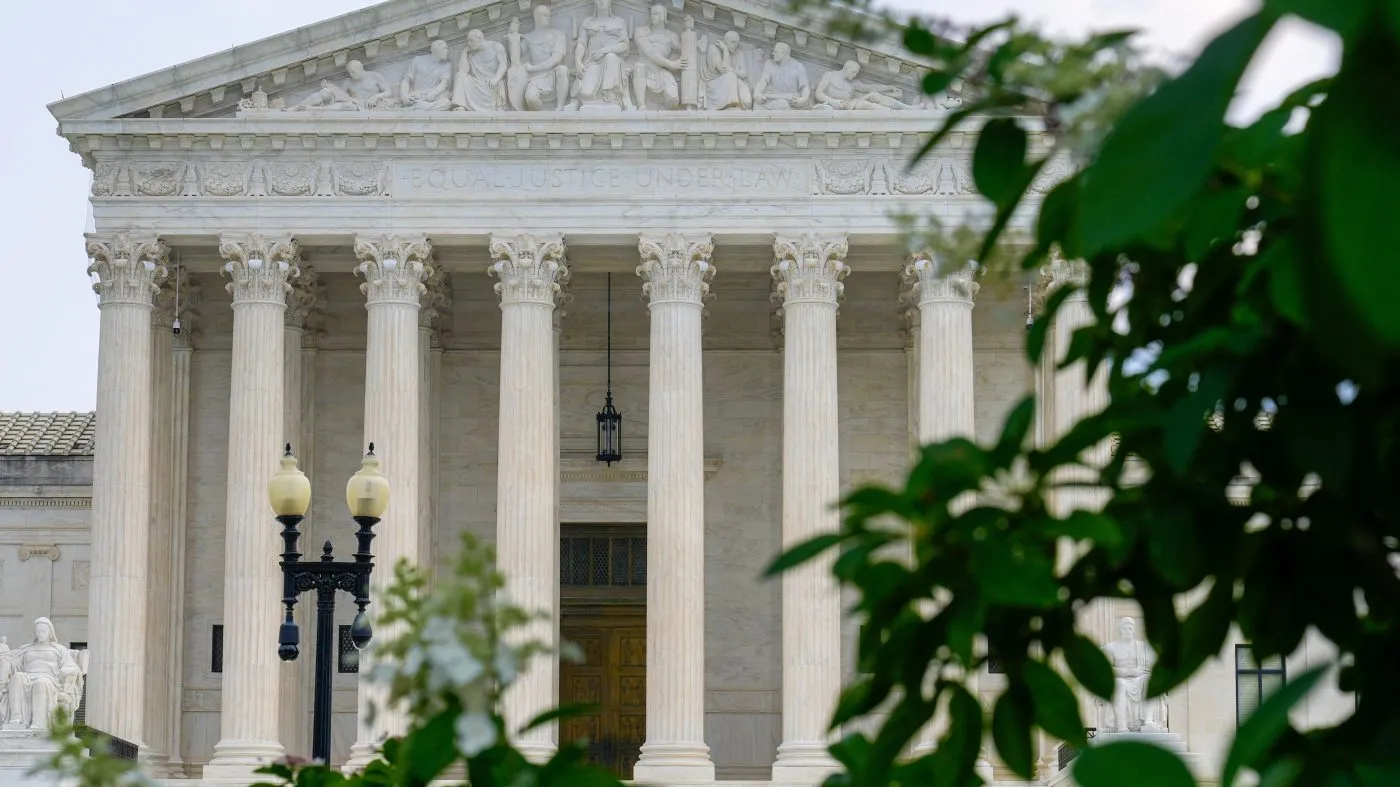
The Supreme Court on Friday lifted a ruling that prevented party committees from accessing cheaper advertising rates in the lead-up to November’s elections, siding with Republicans, for now, in an emergency case that drew staunch Democratic opposition.
Federal law mandates that broadcast stations offer their lowest available rate in the 60 days preceding a general election. Everyone agrees candidates get the discount, but whether political parties and joint fundraising committees can, too, has come under question.
The court appeared to split 8-1, though the justices don’t have to disclose their votes in emergency decisions publicly. The majority said that federal courts had no authority yet to intervene in the dispute.
Justice Ketanji Brown Jackson, the court’s junior liberal justice, publicly dissented. In a one-paragraph opinion, she explained the lower panel likely had authority to move ahead.
Republicans’ Senate and House campaign arms — boasting a cash advantage and backed by the Trump administration — brought the fight to the Supreme Court after Democratic candidates sued to stop them from accessing the cheaper rate.
The Supreme Court majority on Friday said the challengers couldn’t come to the federal judiciary yet because their review petition with the Federal Communications Commission (FCC) was still pending. The majority went on to agree that party committees would suffer irreparable harm if they didn’t intervene.
“Current and future recissions will require the party committees to pay more for advertising space, thereby hampering their efforts to reach the electorate in the critical weeks leading up to the midterms,” the court’s unsigned opinion reads.
Democrats won before the U.S. Court of Appeals for the 4th Circuit. In a 2-1 decision, the panel ruled the FCC’s notice asserting the committees could enjoy the discount wasn’t legal.
In their Supreme Court filings, Republicans largely centered their case on the notion that the judges had no authority to get involved, describing the notice as a “staff-level guidance document.”
National Republican Senatorial Committee (NRSC) Communications Director Joanna Rodriguez reacted to the ruling by calling the lawsuit “frivolous and partisan.”
“The NRSC structured itself and our campaigns to maximize the fall of coordinated spending limits and achieve unprecedented cost-sharing on polling, research, critical infrastructure, advertising, and direct mail,” Rodriguez said in a statement. “Today’s decision ensures those efforts will be even further strengthened as the candidate rate on our coordinated television spending stretches our hard dollars further than ever before.”
Republicans’ emergency appeal garnered support from the Trump administration, which similarly told the high court the lower courts had no authority.
“The challengers claim, and the court of appeals agreed, that the notice injures them by making it cheaper for their opponents to run campaign advertisements,” Solicitor General D. John Sauer wrote to the justices. “But the notice does not grant favored treatment to one side or the other; instead, the notice’s interpretation offers the same benefit to all sides”
Democrats insisted to the justices the lower courts acted properly and had power to intervene.
“On both reviewability and the merits, Applicants and the United States want to talk about everything except the text of the directly pertinent statutes. That is because on both questions, the text directly supports Candidates,” they wrote in court filings.
Topics in this story
Gathered from external sources. Rights to this text belong to whoever originally published it.