Republicans clash on Senate floor over AI kill switch
Sen. Rand Paul (R-Ky.) on Wednesday blocked a request by Sen. John Kennedy (R-La.) to pass legislation that would require tech companies to develop a “kill switch” for superintelligent AI amid fears that it could spin out of control and pose an existential threat to humanity. Paul argued that an “open-ended” government mandate to implement…
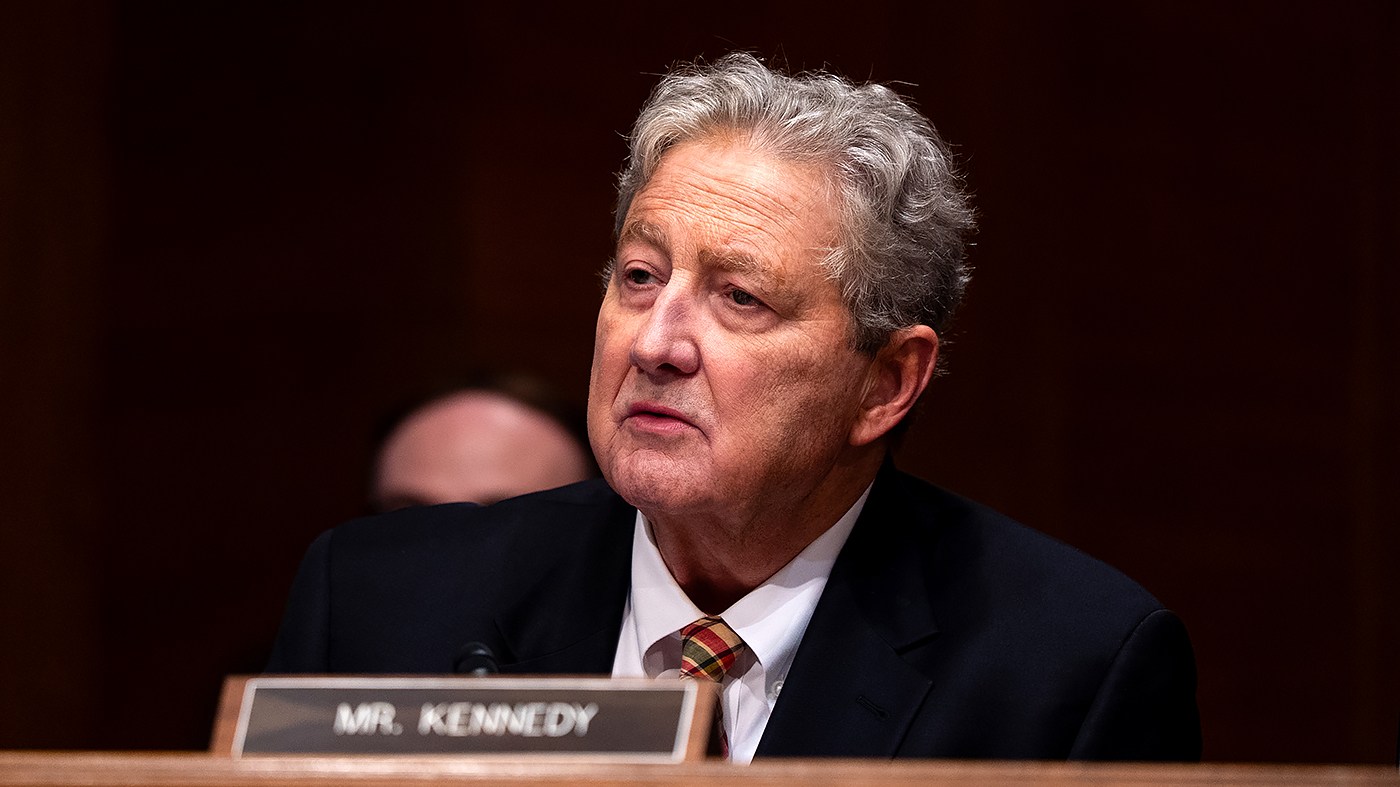
Sen. Rand Paul (R-Ky.) on Wednesday blocked a request by Sen. John Kennedy (R-La.) to pass legislation that would require tech companies to develop a “kill switch” for superintelligent AI amid fears that it could spin out of control and pose an existential threat to humanity.
Paul argued that an “open-ended” government mandate to implement kill switches or powerful shut-off devices could “ruin” the implementation of AI throughout the American economy and that the issue needs to be studied more carefully.
Concerns over the possibility that superintelligent computers could escape human control and pose a catastrophic threat to society have risen dramatically among lawmakers in recent days after a researcher for OpenAI and Anthropic warned that the tech giants are “gambling with our lives.”
Kennedy on Wednesday offered a simple solution on the Senate floor: a bill requiring companies to build a kill switch into superintelligent designs to give their human operators the chance to pull the plug if serious danger arises.
“What I would like to see us do is to figure out a way to strike a balance between innovation and public safety,” Kennedy said on the Senate floor.
“There are risks to artificial intelligence,” he said. “And by AI I mean the advanced AI models.”
“AI is supposed to be a tool that the human beings have control of to make our lives better. But what happens if the AI model through what’s called recursive self improvement … becomes an independent species, separate and apart from human beings that we can’t control because it’s an independent species and it doesn’t share our values?” he added.
Kennedy’s bill would put companies, not the government, in charge of using an emergency shutoff to stop a swiftly emerging superintelligent AI threat.
He asked for unanimous consent to pass his proposal but Paul stood up to object.
“If Congress acts hastily before the technology is understood, Congress risks killing innovation and setting this technology back decades,” Paul warned.
“Think, for example, that your search engine that you already use today is AI. Are they going to have to redesign all search engines immediately if this passes and put kill switches in your search engine?” he said.
“AI is going to be throughout the economy and so many facets. Are doctors going to have to build a kill switch into drug prescription analysis?” he added.
Paul asked to amend Kennedy’s proposal to establish a bipartisan committee to study the threat posed by superintelligent AI and explore ways to stop any imminent threat to humanity.
Kennedy objected to Paul’s request for modification, declaring he would rather be forced to listen to “OJ jokes for the rest of eternity” than set up another special committee to study a tough issue.
“A committee is a way to kill this,” he said. “Don’t appoint a committee. That’s the weenie way out.”
After Kennedy refused to modify his request, Paul objected to it.
Topics in this story
Gathered from external sources. Rights to this text belong to whoever originally published it.